Information! Information!

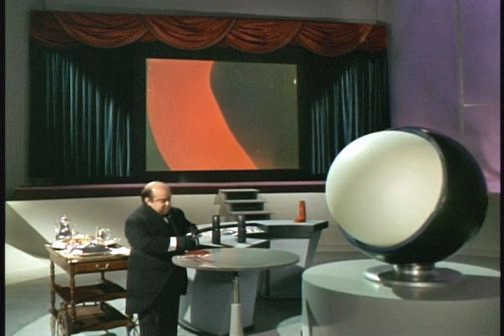
… and yes, you’re right, that post title needs to be read in a booming voice. (Don’t turn around now, by the way – there’s a giant white inflatable ball right behind your chair!)

While the title is prompted by us having only one more episode of The Prisoner to watch (my thoughts will follow in an upcoming post), this is actually more of a “Did you know that you could waste hours by following these links?” kind of post, plugging the following two things:

  1. XKCD, a self-described “webcomic of romance, sarcasm, math, and language” – although I think that their recent comics have been somewhat hit-and-miss, the new feature What If? is quite inspired at times, addressing important questions such as “What would happen if everyone on earth stood as close to each other as they could and jumped, everyone landing on the ground at the same instant?” (nothing, at first, but what follows is fascinating!) and the surprisingly poignant “What if everyone actually had only one soul mate, a random person somewhere in the world?” If you’re even mildly nerdy and sort of miss those student conversations at 2pm after a couple of glasses of wines every now and then, well worth checking out!
  2. How long has it been since I’ve plugged anything HBO-related? The A.V. Club‘s John Teti has just finished his series of reviews-cum-analysis of the second season of Six Feet Under. Some of the most insightful writing I’ve seen on the series and especially on Nate and Brenda – and it’s made it clear that it’s time for me to watch the series again in its entirety.

Heavy heads and hollow crowns

When I was at Uni studying (and later teaching) English Literature, the BBC Shakespeares were spoken of in hushed tones as the most boring thing this side of a Romanian stop-motion remake of Solaris dubbed by a narcoleptic with a speech impediment. Want to make your students hate Shakespeare as much as the average UK pupil does on leaving school? Have them watch the BBC Shakespeares! In spite of actors that have proven to know their way around a iambic pentameter or two, these television versions of Shakespeare’s complete dramatic works made from the mid-’70s to the mid-’80s were complete duds, dramatically speaking, at least according to English Department legend.

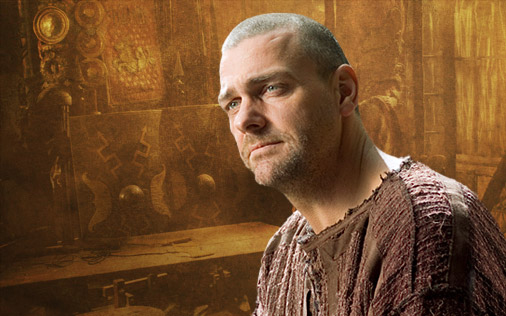
Fast forward to 2012, the year that Brits try to put the ‘Great’ back into ‘Great Britain’ with the help of Sir Simon Rattle, Rowan Atkinson and a skydiving Queen Elizabeth. Two years before the 450th anniversary of Shakespeare’s birth and produced by Sam Mendes (the erstwhile Mr. Kate Winslet and director of the upcoming Bond flick Skyfall), the BBC got together an impressive set of actors, including Ben Whishaw, Julie Walters, Patrick Stewart, Jeremy Irons, Tom Hiddleston and a guy last seen having sexual intercourse with a pig, for big budget TV versions of the four history plays Richard II, Henry IV Part 1, Henry IV Part 2: Henry Harder and Henry V: The Sequeling. And while I can’t speak for the horrors of the earlier BBC Shakespeares, these four TV versions definitely don’t have to hang their heads in shame – as teachers the world over will be ecstatic to hear, since they can fill two to three school lessons with the watching of one of these.

The Hollow Crown, as the quartet was named after what may be the most famous (and rightly so) monologue in Richard II, was fairly entertaining to watch, though very much improved when the subtitles kicked in – being able to read Shakespeare’s lines while listening to the actors definitely helps my comprehension. Not perfect, and some of the character choices were weird: does Richard II make more sense by being turned into the most queenly king since Marlowe’s Edward II, with Whishaw in the title role channelling both Gloria Swanson and Katherine Hepburn? Also, having seen Michael Gambon as a very funny, charming and ultimately poignant Falstaff, I found Simon Russell Beale’s take on the character too low-key to make his relationship with Prince Hal all that credible and his eventual fate as moving as it ought to be.

My main two bones of contention with Mendes’ BBC Shakespeare have to do with the language, though:

1) Too many of the actors try to make the iambic pentameter sound like regular, realistic TV dialogues – and that just don’t fly. Ignore that Shakespeare’s language is stylised and you end up with clumsy, overly earnest delivery that actually comes across as less realistic rather than more. Accept the language for what it is, play the metre, and don’t keep making short pauses to indicate, “I’m thinking about what words to use here!” and the language comes alive. Actors are often told to fresh-mint the language, to speak it as the words came to them that very minute – and that’s true… to an extent. Fresh-minting Shakespeare’s words doesn’t require an actor to stop, start, hesitate, wait a beat, continue, pause some more. Tom Hiddleston, whose acting I otherwise enjoyed a lot, tended to be particularly guilty of this.

2) Shakespeare tends to have his stage directions hidden in plain sight – that is, he puts them in the lines. “Why look’st thou so fearfully and pale?” reminds the actor it’s addressed at that he should look scared, for instance, in case he’d forgotten. (And yes, that line is made up, but the plays are full of similar – though undoubtedly less clumsy – lines.) The lines in effect are prompts, both for the actors and for the audience – if something cannot be shown fully, speak it so the audience can imagine it. It’s one of the elements that, if done well, engages the audience more fully, asking them in effect to become part of the mis en scene: they’re props masters as well as stage designers, filling in the blanks with their imagination as prompted by the actors. The four Hollow Crown parts, as is so much TV, are done in a realistic style, showing what is shown, from armies (although, admittedly, the armies don’t have the CGIed numbers of the Battle of Helm’s Deep) to castles to ships on the ocean – yet the plays aren’t stripped of such lines, so we end up both seeing the armies, castles and ships while being told about them, rendering too many of Shakespeare’s lines redundant. To my mind, the productions should either have dared to veer from their somewhat restricting realism at times or they should have dared to cut the language to a much larger extent. As it is, it’s difficult not to come away from these films thinking, rather unfairly, “Gosh, that Shakespeare guy must’ve been paid by the word! You could’ve left out half that stuff!” This is especially apparent when it comes to the Chorus in Henry V, who quite literally tells the audience repeatedly, “We can’t show all of this, so I’m describing it for you to imagine!” while the images on the screen showed you exactly those things. They tried to make it work with some sleight of hand involving one of the peripheral characters, but the trick only served to highlight the redundancy of it all. Want to do a realistic made-for-TV Shakespeare? Accept that you’ve stripped a third of the lines of their purpose and cut them.

In spite of these two things, which probably bug me more because otherwise the productions were smart and well crafted, The Hollow Crown was fascinating for the impressive cast, but it mostly felt like proof of concept. If they look critically at what worked and what didn’t – which I hope they will – and learn from these things, whatever follows this historical quartet might end up quite glorious.

You’re (not) a good man, Walter White

When we left everyone’s favourite chemistry teacher/meth manufacturer at the end of Breaking Bad‘s second season, he was a figure of monstrous, murderous self-pity and passivity. This continues well into season 3 (sometimes to hilarious effect). Colour me surprised (in a nice meth blue, mayhaps) when, as the third season’s penultimate episode comes to a car crash of an end, I couldn’t help sitting there and thinking, “Damn… That. Was. Badass.” Breaking Bad does a lot to make Walt first a more hateful, irredeemable figure, and it then pulls him back to the brink of redemption, even heroism.

And then he turns around and pushes the person he became a murderer to save, his Jiminy Cricket – he pushes him over the edge. Blam.

It’s amazing how far Breaking Bad came in its second and third series. Its first season was well acted and cleverly written, but it didn’t indicate that the series would be one for the ages. Good, yes. Memorable, definitely. Up there with, say, The Sopranos? Nope. To be honest, looking back I still consider the series’ first year not just its weakest but also something of a liability. Its main antagonist, Tuco, is one of Breaking Bad‘s weakest characters, he’s over the top to the point of becoming a cartoon, although I can’t quite make up my mind whether that’s due to the actor, the writing, the direction or all three. There are plot strands that feel like they’ve walked in from a weaker series, and that are dropped (unless we’ll get back to them when we least expect it – a trick that Breaking Bad has a fondness for), such as Marie’s shoplifting. And there’s the biggest problem, as far as I’m concerned, that Walt kills a man in cold blood, much too early in his descent to a personal hell. In hindsight, much of season 1 feels like a rougher, more sketchy series with a handful of missteps without which the setup for later seasons would be stronger.

However, if season 2 made me forgive these missteps, season 3 practically made me forget that they were made by the same series. It ratchets up everything: the tension, the comedy (and for such a dark series it’s amazing how funny Breaking Bad can be – not least compared to actual comedies…), the personal stakes, even the action. While I think that the Sopranos comparison has become increasingly valid as the series goes on, Breaking Bad covers a wider range of styles and even genres, and it does this well. Without ever sacrificing the integrity of its characters, the series manages to take characters that should be as cartoony as Tuco and turns them into frightening antagonists. It presents us with what may be one of the most heartstoppingly tense action sequences ever put in a TV show. And, more than that, it uses the sequence to add depth to a character – definitely no mean feat in any genre or medium!

To my mind, Breaking Bad also manages to drop the occasional facile cynicism it affected in its early days in favour of a more rounded, more human range of tones. I’ve mentioned the comedy – and Saul Goodman is an amazing creation – but the way the series’ writers, directors and actors juggle this with Breaking Bad‘s increasing darkness and its genuine tragedy is quite breathtaking at times.

Okay, enough with the hyperbolic enthusiasm. Let’s just say that Walter White isn’t a good man, not by a long shot, and it’s likely he’ll never again be a good man… but boy, it is good – and getting better by the season – to follow his rise and fall.

Empathological behaviour

On most message boards, forums and online communities that I’m a part of (all… let’s see… 3 1/2 of them) I probably post most frequently in threads relating to films, TV series, novels, plays, comics and other media that are largely dedicated to storytelling, characterisation and the like. One recent discussion I took part in was about the HBO series Game of Thrones, and while many of the topics were predictable (OMG sexposition! Just how much does Tyrion rule? Is there such a thing as posting that animated GIF of Joffrey being slapped too often?), one caught me by surprise: a poster criticised that there’s barely anyone in the series to root for.

The reason for my surprise was this: I realised that ‘rooting for someone’ has never been a measure of whether I enjoy a story or not. Of course I root for the Indiana Joneses and John McClanes, the Bastian Balthasar Buxes and… I’m actually finding it difficult to come up with more examples, which is quite telling. Some kinds of stories necessitate a ‘good guy’ to root for, but this isn’t anything I’m looking for in storytelling. On the other hand, what I am looking for is the potential to empathise with the characters whose lives I’m following. And that’s something I find quite easy – you could go so far as to say that I’m a bit of an ’empathy whore’. I’ve never really rooted for Tony Soprano, Richard III, even a Darth Vader – or, for that matter, a Cersei Lannister, not exactly one of the nicer characters in a series that isn’t exactly famous for its many loveable protagonists.

It’s one of the reasons why I’ve greatly enjoyed series whose protagonists do questionable, petty, selfish things all the time, from the characters in Six Feet Under (as the series goes on, Nate becomes more and more selfish in his actions, yet that never makes me care about him any less), to the shades-of-grey cast of any season of The Wire (yes, I even care about Rawls, while fully acknowledging what a dick he is) to the moral monsters of The Sopranos. Which is also why the flip-side of rooting for a fictional character is something I very rarely do – I often read about other forumites wanting this or that character to die horribly, to get knifed in the back or thrown off a cliff or get a bullet in his head, which I just don’t get. I don’t get the vehemence and sadism with which these things are often formulated (and yes, I do understand that wishing death on a fictional character is not the same as wanting a real person to die), but more than that, whether a character is morally reprehensible or not doesn’t have anything to do with whether I want to continue watching them. Al Swearengen is a Machiavellian monster, happy to kill, or have killed, anyone who stands in the way of his plans, yet I can think of few characters who are as enjoyable to watch as him. Tony Soprano made The Sopranos must-watch TV for six seasons, even in the worst episodes. Even generally likeable characters like The Wire‘s Bodie or Rome‘s Titus Pullo do horrible, heinous things. It’s not just that I don’t get why or how the moralities of their actions would influence my wanting to watch them: it’s that their flaws, their ambiguity, often make them more interesting characters for me. (Obviously my enjoyment of the characters also has a lot to do with how they’re written and acted – I want to watch an Al Swearengen at least as much because of Ian McShane’s performance as because he’s a fascinating, complex character, and the same’s definitely true for Breaking Bad‘s Walt White and the fantastic acting by Bryan Cranston.)

However, there are characters – very few, but they exist – that don’t evoke any empathy on my part. There are some that I dislike so much I wouldn’t mind something horrible happening to them. I’ll admit it right here and now: every time I watch One Flew Over the Cuckoo’s Nest, I hope that McMurphy will succeed in strangling Nurse Ratched to death this time round. I guess that while I’m a bleeding heart of the worst kind when it comes to fictional characters as well, there’s still a tiny little reactionary inside me wanting to get out and flip the switch.

Doctors and vampires and ghosts, oh my!

Okay, time for a confession: although I have a UK passport, I fail the Brit Purity Test on several counts. 1) I don’t like football. 2) I am painfully indifferent to cricket. 3) I neither love nor hate Marmite.

The most egregious, though, is this: 4) I don’t get Doctor Who.

Let me repeat that: I don’t get Doctor Who. Admittedly, I’ve only seen a handful of episodes, but what I’ve seen has left me… non-plussed, I guess. Somewhat confused at what all the fuss is about.

Let’s start at the beginning. My mum, the born-and-bred Brit in the nuclear family, was never much into sci-fi, and she told me at an early age that Doctor Who was a load of rubbish. Living in a country far, far away (let’s put it like this: we can see Europe from here!), it was never on TV, at least as far as I could tell, so I was never able to catch an episode as a kid. I had some faint awareness of the series and its trappings: that weirdo blue phone box-looking thing, a ’70s guy with curly hair and a long, multicoloured scarf, and low-rent, evil R2D2-alikes going “Exterminate! Exterminate!” like so many homicidal Stephen Hawkings. But I’d never seen an episode.

Growing up, I picked up info about the series here and there – but it was only a few years ago, when Doctor Who got the Christopher Eccleston treatment that I thought perhaps I should check it out. A few years later I got a three-episode DVD set for Christmas, which had been gathering dust on a shelf until a week or two ago, when I decided that The Time Had Come. I was going to check out the series and finally get an idea of what all the fuss is about. (For the record, the three episodes I’ve seen are the first episodes featuring Eccleston as the Doctor.)
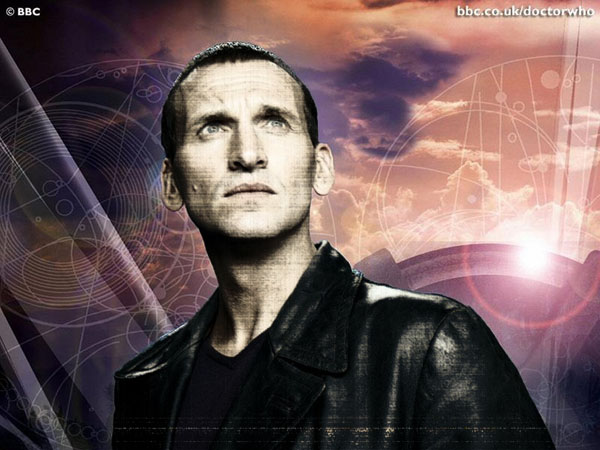
For the first two episodes (“Rose” and “The End of the World”), I simply didn’t get it at all. The acting was broad, the writing lacked wit, Billie Piper… actually, Piper, an actress I don’t usually like, was probably the best thing about it, keeping things relatively grounded. My main problem, though, was that the series seemed to be firmly aimed at kids. I understand that it’s something of a UK tradition for children to watch the series while hiding behind the sofa because it’s allegedly scary (hundreds of thousands of British kids must’ve grown up afraid of plastic trashcans…), but since so many of the people extolling the virtues of Doctor Who were in their 20s and 30s, I expected something more, well, mature? I don’t mind tongue in cheek, but the winking, isn’t-this-a-lark tone reminded me mostly of Christmas pantos. The humour mostly fell flat, and the cheesy production values didn’t feel charming so much as smugly self-satisfied, less idiosyncratic style than shtick.

I came this close to getting it, though, with the third episode, “The Unquiet Dead”, featuring Charles Dickens (acted by Simon Callow with genuine charm) and space zombies. The ingredients were the same – moderately scary villains with a sci-fi slant, tongue-in-cheek humour, Billie Piper’s mouth hanging open – but Mark Gatiss’ scriptworked, added to which the episode knew well enough to take its central conceits seriously enough. With the tone a lot less all over the place, I could see why people would take to the character and to the series’ mix of sci-fi, mild horror and British eccentricity. (In fact, I hope this Gatiss fellow finds some more writing jobs – if only there was another BBC series about an eccentric, intellectually brilliant main character with a loyal companion where the man could use his talents…)

I might end up checking out more episodes, in the hope that they are more along the lines of “The Unquiet Dead” – but I’m not sure I trust the series to balance its tone so it doesn’t come across feeling silly rather than charming and pandering rather than scary. We’re currently watching another BBC series that to my mind has similar problems with tone: Being Human. I enjoy the series well enough, but it is very hit-and-miss in how it combines high-concept, whimsical sitcom, horror clichés, Neil Gaimanesque supernatural-meets-the-mundane and character-driven drama.
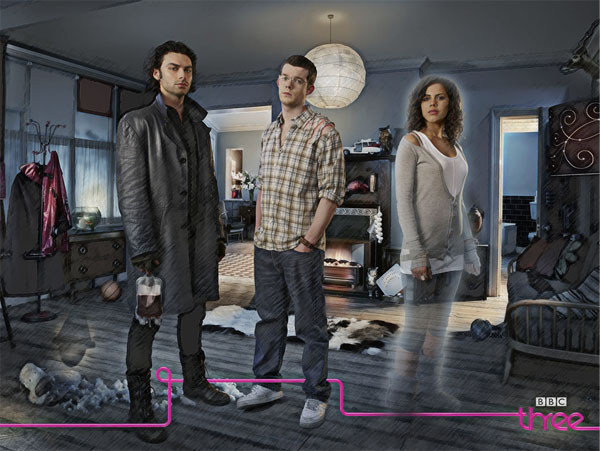
In fact, both of these series have given me a new appreciation for Joss Whedon’s work on Buffy. Whedon isn’t always perfect, and when he’s bad he’s ghastly – but he is amazingly deft when it comes to juggling wildly different tones and managing to be funny, poignant and scary at the same time. While his sense of humour is also very ironic, it maintains the integrity of his characters and what they’re going through; the occasional wink to the audience is handled well enough for the audience to chortle but still take the protagonists seriously. And all of this in spite of similarly cheesy production values as in Doctor Who.

So there it is, good people. Give me Whedon instead of Time Lords in Tardises (Tardii?). The question remains: where do I hand in my passport?

P.S.: None of this would’ve happened if I had been raised on a steady diet of Doctor Who, The Ashes and Man U. But I did watch Casualty religiously for several years – shouldn’t that count for something?
The Good Man of Albuquerque

It took me a while to warm to Breaking Bad – and the main reason for this is that it took me more than a season to understand what the series is doing. I’m fairly late to the game, only just having started watching season 3, and one of the main reasons for this is that I’d heard so much hyperbolic praise for the series: “Best thing currently on TV!” I’d heard that sort of thing before – but it rarely held up in any way. Seriously, Dexter? Heroes? Entertaining TV, perhaps, at least initially, but neither of those series was anywhere close to the Pantheon of The Sopranos, Deadwood, The Wire and their HBO brethren.

So anyway, Breaking Bad. The premise intrigued me – it’s one of those stories that appeals to my pinko liberal, borderline socialist self: only in America…! Healthcare, shmealthcare, right? If the healthcare system barely deserves that name, cooking meth is a perfectly sane alternative, isn’t it? To my mind, Walter White was a fundamentally decent human being driven to doing something downright insane because of The System, Man, and everything followed from that. Crime, murder, secrets and lies, matrimonial crisis.

Thing is: Walter White is not a fundamentally decent human being. Yes, life has screwed him over – lung cancer when he doesn’t even smoke? – and he doesn’t deserve the hand he’s been dealt. Yes, for much of the first season he doesn’t have time to stop and think about what he’s doing; he’s reacting to the fallout of his first, fateful decision. But once we see Walter make decisions that don’t happen under intense pressure, and we realise: it isn’t cruel fate that makes him do what he does. It’s his own self-pity, self-centredness, and his downright monstrous sense of pride. In fact, in the way he rationalises his increasingly dubious actions, he is a brother in spirit to that greatest of all TV villains believing themselves to be anti-heroes: Tony Soprano.

Note: If you haven’t seen the series at least to the end of the second season, this video won’t make much sense to you – but it will spoil a fairly big plot point. In other words, do not watch unless you know what I’m talking about!

Having said all this, the series does take roughly an entire season to become great. Much of the first season doesn’t exactly know what it wants to be: comedy, drama, bit of both? Are the characters realistic, caricatures or something else altogether? I’m also somewhat doubtful whether the series creators were right to have Walt commit a major crime (no, I’m not talking about some piddly meth cooking) within a couple of episodes of its beginning. Season 1 was entertaining and showed more promise already than, say, the Dexters and Heroes of TV Land, but it’s only in the series’ sophomore season that Breaking Bad fully comes into its own. And now I’m hooked, more so than on any current-gen HBO series – the series is my blue meth.

And as far as poor, decent, selfish, evil, monstrous Walter White is concerned, I’m sorry, Walt, you can’t blame the US healthcare system at this point. I believe Novalis said it best: Character is fate.

What have the Romans ever done for us?

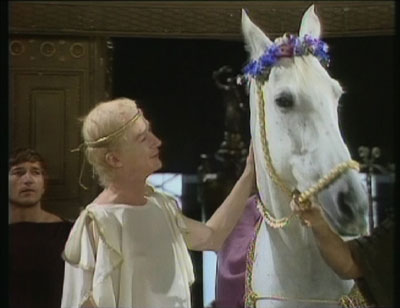
When we were watching HBO’s Rome, I heard whispers and rumours of one that was greater: I, Claudius, these voices hinted, and then (sounding ever so slighly like histrionic Nazgul) BBC… Derek Jacobi! “Pshaw,” I said, with an emphasis on the “Psh”, but since when had I ever been able to resist the lure of cheap boxsets on Amazon?

Anyway, as so often happens, that boxset had been sitting on the shelf for years, while we watched Rome and many other series… but then, a few weeks ago, I thought it was finally time to check out a good old BBC classic. After all: Derek Jacobi, but also Patrick Stewart! John Hurt! Brian “GPS” Blessed!

The first episode of I, Claudius came as a bit of a shock. After Rome, a series whose production values were clearly visible on the screen, the ’70s series looked decidedly drab and dowdy, its colours faded. Worse perhaps, the acting felt extremely mannered, as if enunciation was supposed to do double duty for characterisation as well. (I remember seeing the RSC Macbeth from around the same time on video and thinking that the likes of Ian McKellen and Judi Dench had never seemed this fake.) I was positively yearning for the likes of Titus Pullo and Lucius Vorenus, for the glories of Cinecittà.

But then, we thought, it’s only 12 episodes. Surely there will be at least some historical interest, or we might spot someone who’d later turn up as a bent copper on Prime Suspect or that aging but handsome doctor on Casualty. Hey, we’d seen Steven Spielberg’s Taken, and after that a bit of over-enunciation and fruity British thespianism can’t beat us, can it?

I’m glad we stuck with the series; yes, it does take some getting used to, especially for modern audiences, and yes, you cannot expect the production values of HBO at its most extravagant. The acting is clearly not what we’re used to – but I wonder sometimes how seemingly naturalistic acting of the 21st century will seem to audiences in thirty, fourty years. Most likely, Rome is still my favourite of the two series, although that may at least partly be because it came first: in terms of acting, I, Claudius definitely catches up – and where it beats its nipple-happy great-grandchild is in terms of its overarching story. Rome‘s great weakness is its story and how it fails to be paced well in season 2. Obviously the early cancellation of the series is to be blamed, but regardless of that the HBO series fails to bring a compelling story arch to what history more or less dictated to its makers. Caesar’s rise and eventual assassination is compelling to watch, but once that story has been told Rome becomes a series of “And then…” Things happen because they happen, not because they make for a strong plot.

In comparison, I, Claudius has an overall arch. It has themes. It feels like something that is both historical and a story written by a writer who knows where he’s going and what he wants to achieve along the way. And while I love Pullo and Vorenus to bits as characters, they are a bit like Rosencrantz and Guildenstern: fun to be with, but essentially peripheral to the larger story. I’m not sure that Rome, especially in its second season, really managed to get the most out of its Upstairs, Downstairs parallel storylines; I, Claudius doesn’t feature the commoner’s perspective, but it is more of one piece as a result. And the acting, once you become acclimatised to the style, is very strong. Hell (Dis?), you even get that rarest of beasts: a subtle performance by Brian Blessed that consists of more than fruity bellows. Even when it comes to sex on screen, one of Rome‘s trademarks, its ancestor isn’t all that coy: it’s difficult not to think that I, Claudius must have driven Mary Whitehouse to righteous frenzies back in the day.

Oh, and then there’s John Hurt’s Caligula. Trust me, after this you’ll never be able to look at him with the same eyes.

No shit? Sherlock!

Yeah, I know… That subject header is both corny and a bad joke. Sorry. Anyway, Sherlock. While I loved how the BBC series started its second season, I found the following episode – “The Hounds of Baskerville” – a bit of a disappointment. Entertaining, yes, but also not nearly as clever or charming as “A Scandal in Belgravia” had been. (Preferring naked yet tastefully presented Irene Adler over a hoary CGI hound? Perish the thought!) In that respect, season 2 shaped up to reflect the pattern set by the first three episodes: one good, one weak… one brilliant?

In hindsight, season 2 did mirror the first season – inverting the episodic quality as a mirror would. “The Reichenbach Fall” was definitely a good episode, but it was no “Scandal”… and it showed that a little Moriarty goes a long way. Sherlock‘s flamboyant take on the Napoleon of Crime was perhaps its most controversial take on Arthur Conan Doyle. Was he effective or annoying? While I haven’t read many reviews praising Andrew Scott’s camp Irish master villain, I was a big fan of his in “The Great Game”. His Moriarty’s over-the-top flamboyance struck me as an overt performance covering a ruthless, utterly amoral and frighteningly insane nemesis for everyone’s favourite be-cheekboned sociopath. (Check out his “If you don’t stop prying, I’ll burn you. I’ll burn the heart out of you. ” at 5:45 in the following clip.)

Thing is, there are so many scenes featuring Moriarty in “The Reichenbach Fall”, it frankly becomes a bit boring… and yes, his shtick does begin to grate. He still has many effective moments and a highly surprising exit from the episode, but there was a scene about halfway into the episode that I was hoping to end sooner rather than later.

The second issue I have with “The Reichenbach Fall” is this: set up an ending that signals this clearly that there’s some sort of trick involved and it’s very difficult to become involved in the character’s emotional journey. I’m sure it comes as no major spoiler that at the end of the episode, as in the Sherlock Holmes story it’s based on, our consulting detective seems to fall to his death… but the great sleuth manages to trick death somehow. Thing is, Martin Freeman’s wonderful take on Everyman John Watson makes him an obvious identification figure for the audience, but in the final moments of “Fall” we’re not empathising with him: we’re wondering how Holmes pulled it off. Freeman’s emotionally truthful scene at his friend’s grave is wasted because the previous five minutes were so clearly signalled to be some sort of sleight-of-hand trick. Which, incidentally, also means that the series’ writers will have a hell of a job with the payoff: they won’t get away without an explanation, but chances are that the explanation will be too elaborate to feel satisfying to the audience – the most amazing magic trick is rendered clumsy and inelegant by an “Oh, so that is how they did it… Hmm. Blimey. Cor… And we’ve waited a year for that?”

Having said all of that, the episode was entertaining and, at least to my mind, better than “Hounds” – and it did one thing exactly right: when the whole world turns against Holmes, they don’t go for the tired old “Even his best friend doesn’t trust him…” Watson, the sort of friend Holmes may not deserve and quite possibly isn’t smart enough to wish for, never gives up, never buys Moriarty’s fabrication. And that’s what I’ll be tuning in for when Sherlock returns: not the reveal, not the cases. Holmes and Watson.

Damn… I’m turning into the modern-day equivalent of a Mulder/Scully ‘shipper, aren’t I?

January Variety Pack (3)

And, just in time, here’s the third and last variety pack for this month. We’ve been to the cinema a couple of times already this year, and while I wasn’t completely bowled over by any of the movies, it’s still nice to get the whole ritual: getting popcorn, sitting down, the lights dim, the curtain opens, trailers… It helps that none of the shows had a predominantly teenaged audience. (I’m slowly getting to the age where I get a warm and fuzzy feeling if I can still honestly say I’m one of the younger people in the audience.) So, what did we watch?

Sherlock Holmes: A Game of Shadows

Oh, Sherlock. Sherlock, Sherlock, Sherlock. You’ve got a lot to answer for. My near-constant thought during the first hour of the Guy Ritchie/Robert Downey Jr. sequel was this: “Sherlock does it better.” I sat there missing the smartness and the wit of the BBC series. Was the first Sherlock movie as much of a dumb actioner? I remember thinking at the time that for all of the rollicking action, the first film didn’t make me feel like I should have handed in my brains at the entrance. It wasn’t Proust, obviously, but it had a smart script and great chemistry between the leads. By comparison, Sherlock 2 felt for a long time like its subtitle should be Mr Downey Jr. Pays His Rent. The action sequences were long and overstayed their welcome. The plot took forever to get going.

A Game of Shadows fares better in its second half, and it does feature a few very nice scenes – I especially enjoyed the final confrontation between Holmes and Moriarty, and Stephen Fry’s Mycroft Holmes is fun throughout the film – but it still fails on one crucial point: not only do I think I would have enjoyed most episodes of BBC’s Sherlock better, I don’t think I would have enjoyed rewatching the first film any less. And that’s rather sad, I think. Whatever works in the film (Mycroft, Moriarty, one or two of the setpiece scenes), it’s put to the service of a sequel that doesn’t for one second justify its existence.

The Ides of March

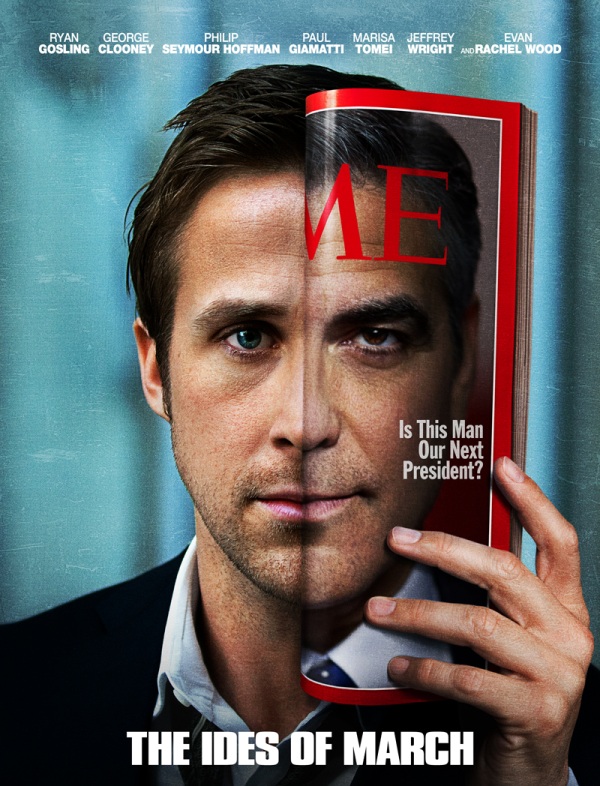
So, how to make myself feel smarter again? Shouldn’t a political thriller/drama directed by George Clooney, starring the current golden boy Ryan Gosling and based on a stage play do the trick? It should, but somehow it doesn’t. The Ides of March isn’t a bad film; in fact, it’s a handsomely made, nicely acted, reasonably smart film – the problem is that with those actors it should be so much better. Instead it is adequate. It is lukewarm. I enjoyed it well enough while watching it, but the film doesn’t add up to much other than yet another statement that politics corrupt. That idealism cannot survive in politics. Well, bugger me with a fish fork, who’d have thunk?

It would be unfair to say that all of the film is merely satisfactory. Phillip Seymour Hoffman’s performance is strong, as always (but it’s such a monumental waste to have him in a film with Paul Giamatti and not give the two of them a good, juicy scene together), and Ryan Gosling’s character is interestingly ambiguous. Is he an idealist or is he smug, self-righteous and the most corrupt of the bunch? Is he changed by what happens, or does what happens reveal the rotten core underneath? Still, the film rarely becomes more than a finger exercise, Clooney showing that he knows his craft – and after I loved his first, Confessions of a Dangerous Mind, I would have expected something more than that.