I
What did Tom Hanks say to his wife the other day? Continue reading
I
What did Tom Hanks say to his wife the other day? Continue reading
Each Friday we travel back in time, one year at a time, for a look at some of the cultural goodies that may appear closer than they really are in The Rear-View Mirror. Join us on our weekly journey into the past!
Despite its reputation as the first full length feature with synchronised sound, The Jazz Singer is a silent for most of its running time. When Sam Warner of Warner Brothers bought Vitaphone in 1925, despite the misgivings of his brother Harry, it was not because he thought that “Talkies” were the future: it was because they could record a film’s music, making a full orchestra unnecessary for showings. The process was complicated and ponderous. But the future did belong to the Talkies, and so The Jazz Singer is still famous today for being the first of its kind.

By Mege. – Friday 13th. What a coincidence. It was the day the Swiss authorities told us that we should all keep our distance from one another, that we should work from home if at all possible, that congregations of more than 100 people were a no-go and that we should self-quarantine if we felt sick. (Please note that these measures are only valid for Switzerland and are already obsolete anyway. Check with your own authorities.) Most shops and restaurants were still open. The situation seemed serious, but not really desperate. I still thought that my week-long holiday in Berlin might really happen. Hah. Continue reading
On the one hand, I hesitate to call For Sama a movie, because there is no artifice, no script, no second take. There is a woman called Waad Al-Kateab, who shoulders her video camera and films the day-to-day chaos as she finds it. She lives in Aleppo, Syria, in the middle of a war zone, and nothing and nowhere is safe. If there are no Russian planes dropping bombs on the neighborhood, there are the snipers outside to worry about, or food shortages, blackouts. She is surrounded by friends who have not yet left, maybe because they feel rooted there, maybe because they are more afraid of leaving than they are of staying.
Each Friday we travel back in time, one year at a time, for a look at some of the cultural goodies that may appear closer than they really are in The Rear-View Mirror. Join us on our weekly journey into the past!
 It still gets me, that scene. I think I must have been ten or so, and there was nothing to prepare me for what would come on the telly. No-one in my family was any kind of art-house movie nut, so it must have been a coincidence that Buñuel’s short Un Chien Andalou was on. And then that razor cuts through the woman’s eye. It took me days to recover. Not many other movie moments have stayed with me because of their violence, and none as long as this one. Continue reading
Each Friday we travel back in time, one year at a time, for a look at some of the cultural goodies that may appear closer than they really are in The Rear-View Mirror. Join us on our weekly journey into the past!

The Divorcee begins with a group of friends which make up the in-crowd of New York society. Jerry (Norma Shearer) and Ted (Chester Morris) are in love. They decide to get married. Paul (Conrad Nagel), who also loves Jerry, is firmly relegated to the friend zone. Gutted, he proceeds to get drunk and gets into a car accident that disfigures one of the other women of the group: Dot (Judith Wood). Ur-‘Nice Guy’ that he is, he marries her out of pity. Wedding bells and domesticity, sacrifice and unrequited love. So far, so Hollywood. Female facepalm. But then halfway Shearer delivers the following searing monologue:
Continue readingEach Friday we travel back in time, one year at a time, for a look at some of the cultural goodies that may appear closer than they really are in The Rear-View Mirror. Join us on our weekly journey into the past!

Trouble in Paradise might be, in the words of film historian and podcaster Karina Longworth, the “pre-codiest of pre-code movies”. Before the Hays code came in to effect, filmmakers took full advantage of the lack of regulation surrounding topics of sex and morality in American movies. In the case of Trouble in Paradise, a film by the much beloved Ernst Lubitsch, it results in a surprisingly adult movie about, well, sex. But not in the way we, modern audiences, are used to. No soft-focus from-the-hips-up shots of people doing the actual deed. But the implications? They’re spicier than that.
Continue readingEach Friday we travel back in time, one year at a time, for a look at some of the cultural goodies that may appear closer than they really are in The Rear-View Mirror. Join us on our weekly journey into the past!
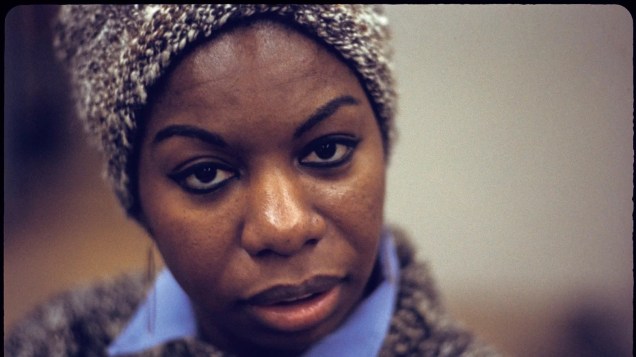 I was in Berlin last summer, getting my bearings back, and I walked past a bar where someone played a live version of Nina Simone’s take on Sinnerman. Honestly, my friends, there cannot be many more songs such as this one getting under my skin like that. She wants to make light because the rhythm of the song wants to sound so jolly, and it does, but then that voice comes in and puts a damper on the cheer, warning about what is going to happen, turning the rhythm from jolly to urgent. And yet there is hope somewhere, not much, but just enough. Continue reading
After the Oscar’s celebrations and upsets, and they are all incredible films, let’s focus on a film which wasn’t nominated, although it should have been. 2019 was a wonderful film year after all, and extremely competitive in terms of awards. But for those focusing on the Academy Awards, some treasures might be overlooked...
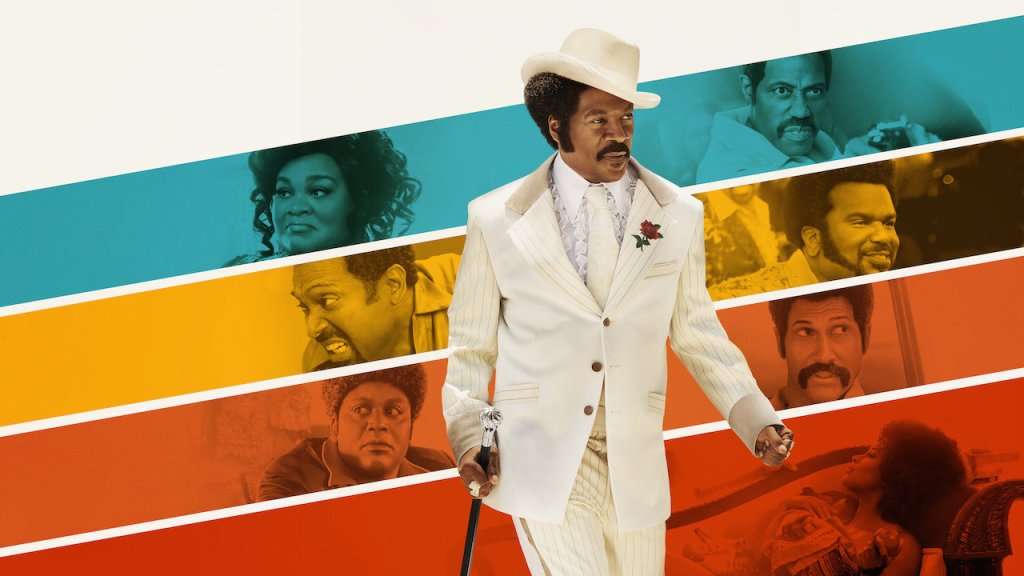
Dolemite Is My Name is essentially a film about the passion of making film. It is, essentially, a biopic of Rudy Ray Moore, as played by Eddie Murphy in an authoritative performance. The film also sports a fantastic supporting cast with, among others, Da’Vine Joy Randolph, Craig Robinson and Wesley Snipes.
Continue readingThe film version of Ingmar Bergman’s Scenes from a Marriage is almost three hours long, but watching it roughly one month after finishing the TV series, my first and foremost impression is this: the film feels fast. Not rushed, necessarily, but watching it is a sharper, more focused experience than watching the six episodes of the series, but also one that feels strangely breathless. It makes me wonder why Criterion decided on that particular sequence; my recommendation would probably be to watch the film first and then the TV series. I am curious, though, what the experience would have been like the other way around, something I’ll never know now.


 A Damn Fine Cup of Culture