Tyrannosaurus wrecks

Some men know precisely where the fine line between right and wrong lies. That doesn’t prevent them from stepping across it. Joseph seems to be a borderline case. He kicks his dog to death outside the betting shop, and immediately regrets what he’s done. Later, he collects his unemployment money at the post office, spouting forth racist crap at the Pakistani behind the counter who tells him not to come back here. That scene must play out regularly because he might have been out of a job for a long time. Joseph apologizes immediately, and I think he means what he says. Outside the shop, he finds a rock and throws it through the shop window. That scene reminded me of a Roger McGough poem: I am sorry, but this is the way things are.

Joseph is not a racist – worse, he hates everybody. One day, he hides behind the clothes rack in Hannah’s second-hand store in order to escape a beating. She lets him stay and offers him tea. He insults her with precise, well-aimed words. He comes to apologize the next day. She throws him out, but he is… curious about her. He sees her and wants to clean up his act. Then she turns up with bruises on her face.

This is the point where the movie gravitates towards a temptingly easy solution. Joseph could give Hannah’s husband a good thrashing – just as a warning to stay away, of course – and hook up with her. She would feel safe, and he could let his shoulders slump. They would make a nice couple. A lesser movie would go for that solution. “Tyrannosaur” has other plans for its characters. At first, I thought the title referred to Joseph’s predatory nature. It doesn’t. He crumbles in the presence of Hannah’s good side. There is a spellbinding scene where Hannah prays at his dying father’s bedside while Joseph is looking on. She does what he should do, but can’t. Maybe he can return the favour, but he knows she will never agree to him beating up her husband. Their need to find help is overpowering to them both, and if they cannot help each other, they must help themselves, or it might be too late.

“Tyrannosaur” is Paddy Considine’s first movie. It’s about violence and guilt, but doesn’t get bogged down in either. It sidesteps all the cliches of similar movies: Joseph and Hannah are alcoholics, but they behave erratically also when they are sober. Drink is not the trigger, but the drug to numb the pain and the guilt so they can go on for a little while longer. None of the characters reveal their past and present us with the reason they are the way they are. There are hints at Joseph’s family, but they don’t even begin to explain him. The same is true for Hannah. That’s as it’s supposed to be. What if the reason you are the way you are comes from a trivial event? What if the fact that you cannot change your past breaks your spine? What if the reason for your behaviour has gone missing or been forgotten? What if there isn’t any, and that is just the way you are – abusive and violent? In most cases, atonement is impossible. There is no closure – closure is for those who need a shiny cover. You don’t miraculously heal thyself. You go do what you have to – sometimes that means revenge, sometimes it means leaving for good. You have to live with the fact that you might be past saving.

Joseph and Hannah don’t play house, pretending everything is fine now, because they still are who they are. They don’t sleep with each other. They don’t take in the boy from across the street who is afraid to go home because of his useless step-dad’s pit-bull. Joseph tells Hannah in no uncertain terms to leave after she has taken refuge in his living room, and she complies with his demand because she understands him, and she understands what having her in his house means to him, and to her.

The performances are flawless. Peter Mullan has a way of projecting hurt and guilt while only standing there. His Joseph is a man who is twisted back on himself because of all the rage he carries around. Olivia Colman has only turned up on my radar with this movie, but she is on my watchlist now. Eddie Marsan goes to unknown human depths with his role as the husband. There is a scene where he apologizes to Hannah for having beaten her. Listen to how he speaks rather to what he says. Then watch Hannah’s face. Paddy Considine may know that neighborhood – it is only three doors down from Shane Meadows’ “Dead Man’s Shoes,” in which Considine played the lead.

The ending caught me cold, but movies like this are not about their ending. If you need a happy ending, look elsewhere. In situations like this, almost any change is an improvement. There is no real ending to stories like this, and the movie’s ending is far from happy, but not one of the characters would ask for happiness; they get some kind of relief, and must be content.
Misinformed? Uninformed? By hook or by crook…

As I mentioned in my last post, we were just one episode away from finishing The Prisoner – the original UK series starring Patrick McGoohan, that is, not the remake with Ian McKellen and Jim Caviezel. The Prisoner may just be one of the Top 3 cult series of all time; it’s up there with the likes of Twin Peaks. And, as with so many things that are given the ‘cult’ label, it’s difficult to come to them with fair, realistic expectations, isn’t it?

Well, to begin with: you have to make allowances for the series’ age. Even though everyone talks about how original and revolutionary the series was and still is, in some ways it’s very much a product of its time. Sometimes that’s charming – as in the ’60s art and costume design, making the Village perhaps the hippest prison resort ever – but sometimes it is tiresome, as in the pacing (few of the episodes need to be 50 minutes long, and most would have benefited from cuts) or the fight scenes, which are tame, repetitive and overly long, not least because we’ve all seen better, more exciting fights by now. I imagine that these are less of an issue if you’re revisiting the series wearing nostalgia goggles, but then, they’re not my main problem with The Prisoner.

The thing is, the series was undoubtedly a pioneer – it’s still rare to find much on TV that mixes mystery, politics, psychology and metaphysics as The Prisoner does, and that is as willing, or indeed eager, to keep clear-cut answers from the audience. The series definitely wants us to think along and to form our own ideas on what is happening to McGoohan’s Number 6. At times it’s almost like watching a spy thriller penned by Samuel Beckett. However, looking at the series, its world and its puzzles more closely, I think that one of the main reasons why it raises so many questions is that it has little to no internal consistency: to be quite frank, much of the mystery stems from The Prisoner’s overall mythologybeing an incoherent mess. Remember all the accusations levelled at Lost, especially as they were approaching the finale? “They’re making it up as they go along!” Well, the very same seems to be true when it comes to its older fellow puzzle box of a series. It establishes few rules that it is content to stick with, which may work at the beginning as Number 6 is trying to escape the Village but is foiled over and over again because, well, the deck is stacked against him – but the longer the series goes on, the more it feels like The Prisoner‘s universe is random and arbitrary.

As a result, it became increasingly difficult for me to engage with or care about what was happening on screen. Why think along if the series can just put on a monkey mask and make fun of your wish, if not for answers then for some sort of internal logic? I’ve mentioned Beckett before, and I think there’s a definite similarity between his cruel, bleak and at times strangely funny universe and The Prisoner – but while I may have the patience and will to sit through 1 1/2 hours of Beckett (and even then only if the acting is impeccable), I’m not sure I could sit still for more than one episode of Endgame: The Series. (Oh, wait: I just did. Doesn’t mean that I was happy to, though.)

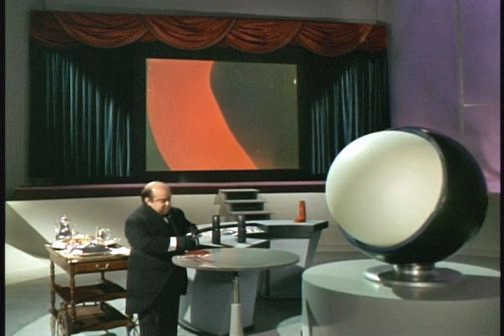
It’s a shame, because there are a lot of scenes and ideas that are fascinating. There are moments that are great, like Rover sitting (does a giant white ball even sit?) in Number 2’s chair or the sheer silliness of kosho (a sport played by Number 6 that makes sumo wrestling look dignified), there are some fascinating characters, and at times the mood is as menacing as in The Wicker Man (though with less Christopher Lee in drag). There’s a lot of ambition in the series and a rebellious spirit that a lot of TV programmes would benefit from even today. It’s just that these rarely come together to form something coherent – and as a result I’m left to wonder whether the people who profess to love The Prisoner see something in it that I’m blind to or whether there’s an element of weirdness worship going on, where the series is loved uncritically because it’s just so different. It’s very well possible that The Prisoner broadcasts much of its goodness on frequencies that I’m not able to receive, but even then I think it’s fair to say the series is deeply flawed, with its first four or five episodes being pretty exchangeable, the final four suggesting that the producers were getting tired of the format (leading to their use of a rather Trekkian conceit, the Western Episode), and the entirety of the series never quite deciding whether Number 6’s adversaries, the constant procession of new and improved Number 2s, are always a step ahead of him or whether they’re playing a futile game of catch-up, with the titular character just being so much smarter than all of them.

Oh, and don’t get me started on a computer that’s blown up by being asked the Deep, Unanswerable Question: “Why?”

Why indeed.

Information! Information!

… and yes, you’re right, that post title needs to be read in a booming voice. (Don’t turn around now, by the way – there’s a giant white inflatable ball right behind your chair!)

While the title is prompted by us having only one more episode of The Prisoner to watch (my thoughts will follow in an upcoming post), this is actually more of a “Did you know that you could waste hours by following these links?” kind of post, plugging the following two things:

  1. XKCD, a self-described “webcomic of romance, sarcasm, math, and language” – although I think that their recent comics have been somewhat hit-and-miss, the new feature What If? is quite inspired at times, addressing important questions such as “What would happen if everyone on earth stood as close to each other as they could and jumped, everyone landing on the ground at the same instant?” (nothing, at first, but what follows is fascinating!) and the surprisingly poignant “What if everyone actually had only one soul mate, a random person somewhere in the world?” If you’re even mildly nerdy and sort of miss those student conversations at 2pm after a couple of glasses of wines every now and then, well worth checking out!
  2. How long has it been since I’ve plugged anything HBO-related? The A.V. Club‘s John Teti has just finished his series of reviews-cum-analysis of the second season of Six Feet Under. Some of the most insightful writing I’ve seen on the series and especially on Nate and Brenda – and it’s made it clear that it’s time for me to watch the series again in its entirety.

August Variety Pack: Special Edition

So, what’s special about it, I hear you asking? (Yes, I hear your voices in my head, because that’s how I roll. At least when I haven’t taken my meds.) The specialitude of this post comes from the following: you’re unlikely ever to check out any of what I’m writing about below, because it’s all about this year’s Edinburgh Fringe – so, unless you’ve already seen some or all of the shows I’ll be talking about, you’ve missed them! Ha! Cue comment about the fleeting, ephemeral nature of art, followed by silence as the tumbleweeds roll by.

Assassins

“Everybody’s got the right to be happy… everybody’s got the right to their dreams.” Sounds like common, especially American, musical fare, doesn’t it? Cheerful, inspirational, and simplistic hogwash, most likely? Well, in Sondheim’s Assassins, the protagonists’ right to be happy finds its expression in killing the President of the United States, or at least doing your darnedest to reach that goal. The show we caught – and it was sheer luck, down to two wonderful people who didn’t pick up their tickets for some reason – wasn’t perfect, not least because we sat more or less right next to the small orchestra, which made the non-mic singing difficult to understand at times… but even under these circumstances it’s clear that Sondheim’s musical is sharply written, very funny, and surprisingly chilling. If your culture is founded on the lie that you can make it if you really try, that even a nobody from a small town can become a millionaire – or a president – where does that leave you when your dream just won’t come true? Does it leave you permanently disaffected – or do you pick up a gun and show that you can make a difference because, after all, this is America?

Statements After An Arrest Under The Immorality Act

The title of this play by South African playwright Athol Fugard almost rivals that of my favourite deconstructivist western of the last, let’s see, forty or fifty years – but the play itself isn’t unwieldy or overly long in the least. Performed by a amazing, fearless cast in an effectively minimalist staging, Statements is a beautiful, poetic and essentially tragic story about lovers who, by decree of the state, shouldn’t be. Even 40 years after it was originally written, addressing the racial segregation under Apartheid, the play feels fresh, relevant and utterly touching.

http://vimeo.com/33584206

We saw two further South African productions – a raw, sweltering Mies Julie (adapted from Strindberg) and Woza Albert!, but it’s Statements that made the deepest impression.

… last but not least

Where to begin? Not everything we saw was brilliant, and a couple of plays were dismal (The Intervention, I’m looking at you!), but there were lots of moments of magic, from the beautiful, sad and endlessly inventive The Fantasist (manic depression, with puppets! see below for a trailer) to Centralia (equal parts WTF?!, mad giggles and poignancy) to Rites and Regulations (a fairly simple but moving play about funeral rituals in Singapore, pressing all my funereal buttons), from Educating Ronnie (about a young man’s exploration of friendship, charity and guilt – another trailer waiting below) to Pierrepoint (about Britain’s last hangman – again, great performance and chilling ending – and another trailer, seriously, when did stage plays start having trailers?) and Planet Lem (socio-critical sci-fi – on stilts! did you know that Polish people are a bit off their trolley?). All in all, to anyone who’s got an interest in theatre and what it can do, Edinburgh during the Fringe is well worth visiting – we’ve seen 25 shows in one week and feel utterly invigorated. Well, we would, if it weren’t for that nasty cold bug we picked up travelling back on easyJet…

Grisly Death Key…

… reads one of the legends of this infographic, which definitely made me look up – the good people at the Guardian have come up with a neat graphic detailing how people die in the works of Edgar Allan Poe. I loves me a good infographic… (Click on the image to enlarge.)

I’ll be on vacation the next two weeks, so chances are I won’t get around to posting any updates. Here’s hoping that I’ll be back bursting with bloggy inspiration at the end of August!

Heavy heads and hollow crowns

When I was at Uni studying (and later teaching) English Literature, the BBC Shakespeares were spoken of in hushed tones as the most boring thing this side of a Romanian stop-motion remake of Solaris dubbed by a narcoleptic with a speech impediment. Want to make your students hate Shakespeare as much as the average UK pupil does on leaving school? Have them watch the BBC Shakespeares! In spite of actors that have proven to know their way around a iambic pentameter or two, these television versions of Shakespeare’s complete dramatic works made from the mid-’70s to the mid-’80s were complete duds, dramatically speaking, at least according to English Department legend.

Fast forward to 2012, the year that Brits try to put the ‘Great’ back into ‘Great Britain’ with the help of Sir Simon Rattle, Rowan Atkinson and a skydiving Queen Elizabeth. Two years before the 450th anniversary of Shakespeare’s birth and produced by Sam Mendes (the erstwhile Mr. Kate Winslet and director of the upcoming Bond flick Skyfall), the BBC got together an impressive set of actors, including Ben Whishaw, Julie Walters, Patrick Stewart, Jeremy Irons, Tom Hiddleston and a guy last seen having sexual intercourse with a pig, for big budget TV versions of the four history plays Richard II, Henry IV Part 1, Henry IV Part 2: Henry Harder and Henry V: The Sequeling. And while I can’t speak for the horrors of the earlier BBC Shakespeares, these four TV versions definitely don’t have to hang their heads in shame – as teachers the world over will be ecstatic to hear, since they can fill two to three school lessons with the watching of one of these.

The Hollow Crown, as the quartet was named after what may be the most famous (and rightly so) monologue in Richard II, was fairly entertaining to watch, though very much improved when the subtitles kicked in – being able to read Shakespeare’s lines while listening to the actors definitely helps my comprehension. Not perfect, and some of the character choices were weird: does Richard II make more sense by being turned into the most queenly king since Marlowe’s Edward II, with Whishaw in the title role channelling both Gloria Swanson and Katherine Hepburn? Also, having seen Michael Gambon as a very funny, charming and ultimately poignant Falstaff, I found Simon Russell Beale’s take on the character too low-key to make his relationship with Prince Hal all that credible and his eventual fate as moving as it ought to be.

My main two bones of contention with Mendes’ BBC Shakespeare have to do with the language, though:

1) Too many of the actors try to make the iambic pentameter sound like regular, realistic TV dialogues – and that just don’t fly. Ignore that Shakespeare’s language is stylised and you end up with clumsy, overly earnest delivery that actually comes across as less realistic rather than more. Accept the language for what it is, play the metre, and don’t keep making short pauses to indicate, “I’m thinking about what words to use here!” and the language comes alive. Actors are often told to fresh-mint the language, to speak it as the words came to them that very minute – and that’s true… to an extent. Fresh-minting Shakespeare’s words doesn’t require an actor to stop, start, hesitate, wait a beat, continue, pause some more. Tom Hiddleston, whose acting I otherwise enjoyed a lot, tended to be particularly guilty of this.

2) Shakespeare tends to have his stage directions hidden in plain sight – that is, he puts them in the lines. “Why look’st thou so fearfully and pale?” reminds the actor it’s addressed at that he should look scared, for instance, in case he’d forgotten. (And yes, that line is made up, but the plays are full of similar – though undoubtedly less clumsy – lines.) The lines in effect are prompts, both for the actors and for the audience – if something cannot be shown fully, speak it so the audience can imagine it. It’s one of the elements that, if done well, engages the audience more fully, asking them in effect to become part of the mis en scene: they’re props masters as well as stage designers, filling in the blanks with their imagination as prompted by the actors. The four Hollow Crown parts, as is so much TV, are done in a realistic style, showing what is shown, from armies (although, admittedly, the armies don’t have the CGIed numbers of the Battle of Helm’s Deep) to castles to ships on the ocean – yet the plays aren’t stripped of such lines, so we end up both seeing the armies, castles and ships while being told about them, rendering too many of Shakespeare’s lines redundant. To my mind, the productions should either have dared to veer from their somewhat restricting realism at times or they should have dared to cut the language to a much larger extent. As it is, it’s difficult not to come away from these films thinking, rather unfairly, “Gosh, that Shakespeare guy must’ve been paid by the word! You could’ve left out half that stuff!” This is especially apparent when it comes to the Chorus in Henry V, who quite literally tells the audience repeatedly, “We can’t show all of this, so I’m describing it for you to imagine!” while the images on the screen showed you exactly those things. They tried to make it work with some sleight of hand involving one of the peripheral characters, but the trick only served to highlight the redundancy of it all. Want to do a realistic made-for-TV Shakespeare? Accept that you’ve stripped a third of the lines of their purpose and cut them.

In spite of these two things, which probably bug me more because otherwise the productions were smart and well crafted, The Hollow Crown was fascinating for the impressive cast, but it mostly felt like proof of concept. If they look critically at what worked and what didn’t – which I hope they will – and learn from these things, whatever follows this historical quartet might end up quite glorious.

July Variety Pack (2)

Have I mentioned before that Criterion is planning to ruin me financially? As a matter of fact, I have my suspicions that the company was created entirely for that purpose. This guy’s version of a honeytrap? A life-long subscription to Criterion. I just haven’t figured out yet what the incriminating pictures would look like – although now that I’ve brought it up, I sort of wish I hadn’t…

The thing about Criterion (often in combination with the A.V. Club or with DVD Verdict) is this: it gets me to watch stuff I wouldn’t even have heard of otherwise, like A Night To Remember (discussed here). Or…

Make Way For Tomorrow

… a film that, if I’d read a plot synopsis beforehand, I would probably have avoided, because it sounds like sheer melodrama (even more so in black and white): an elderly couple losing their house and ending up separated, each staying with another one of their less than understanding children, and their final day together before they’re split up permanently. Yet it’s turned out one of the most poignant and sad films I’ve seen in a while, and the sadness of its last half hour doesn’t bear a trace of melodrama. Don’t let the text panel at the beginning fool you into expecting a moralising story about how children should honour their parents – the film is astute about the difficult relationship between parents, especially of the elderly kind, and their grown children, and it doesn’t ignore that its two protagonists aren’t the easiest of people to be with. What elevates the film from a good, though probably not special film to something great is the final act, which doesn’t make any concessions to an audience expecting a happy ending – or at least a clear denunciation of the children and an easily understood lesson in morality along the lines of “Thou shalt…” and “Thou shalt not…”. Instead what we get is an emotional honesty that hurts by being entirely unvarnished.

Jane Eyre

“Cary Fukunaga… Didn’t he do that film about gang brutality in Mexico, Sin Nombre or something? Sounds like just the right guy for that Jane Eyre flick we’re doing!” I don’t know what the producers were thinking when they hired Fukunaga for their adaptation of Charlotte Brontë’s classic – but they were absolutely right to do so, as the result proves. Jane Eyre is difficult to do right, as there’s a major temptation to streamline it into a generic historical romance, Jane Austen with less humour and more madwoman in the attic. The casting of two misfits who supposedly aren’t conventionally attractive with Michael Fassbender and Mia Wachowski would have suggested an audience-pleasing approach, but Fukunaga, his cast and his crew, while cutting their source down to the essentials (you can’t afford not to, unless you’re doing a BBC-style miniseries) get to the heart of Brontë’s novel. The casting and acting work wonderfully, the script is respectful of the original novel without being beholden to it, and the cinematography is breathtakingly gorgeous at times. I’ve sometimes described films as the moving equivalents of paintings – you’d want to frame them and put them on the wall, but you don’t necessarily want to pay attention and listen to them. Fukunaga’s Jane Eyre is the sort of film you want your eyes to feast on but there’s plenty to listen and pay attention to as well. And for all its beauty, it’s not your conventional pretty costume drama, thank god.

Benny’s Video

I know that at least one occasional reader of this blog hated this film with a vengeance when she saw it years and years ago. Myself, I wouldn’t say I’m a fan of Haneke’s, but I’ve found all of his films intriguing. It’s easy to get pissed off at what the films often do at a first glance: there’s something both didactic and smug about their themes and tendencies, as if Haneke judges you for watching, say, Funny Games and dares you to switch it off, while at the same time wanting you to continue watching to validate its thesis. At the same time, there’s usually more going on underneath the surface, and Benny’s Video is a good example of this. Going in, I expected a film about a young man desensitised to violence by the videos he watches, and there is some of that – but at the same time the videos are partly a red herring, as especially his parents prove at least as compromised as him, and they don’t have the convenient excuse of “Slasher flicks made me do it!” The film has some rough edges and some of the director’s decisions are questionable – at times the characters and their actions are sketched too cursorily, turning ambiguity into muddledness – but even at this early point in his career Haneke is masterful at staging scenes clinical yet uncomfortable without pushing any gratuitous viscera in your face. Even when I end up angry at Haneke’s manipulations, he makes me think more than most directors do… so perhaps he’s not doing such a bad job at being didactic after all.

Great visuals…

… shame about the writing – especially since I’m talking about the adaptation of a novel.

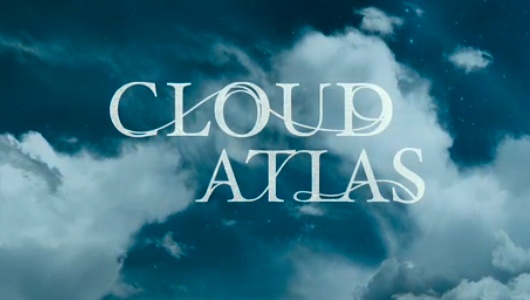
I’ve just watched the Cloud Atlas trailer, and it looks amazing. It would look even better if I hadn’t also been listening to the lines from the film that are intoned in the trailer – most of which strike me as portentous yet facile drivel. Was the book like this? I have to admit I don’t remember; when I read Cloud Atlas, it didn’t particularly click with me. Still, the trailer is well worth looking at. Visually the film would seem to risk becoming garish, but it definitely looks very intriguing.

Link to the Cloud Atlas trailer on iTunes Movie Trailers (sorry, not on YouTube yet!). Make sure to go HD!

P.S.: There’s a Variety Pack coming soon(ish) – watch out for it by next Wednesday!

A League too far?

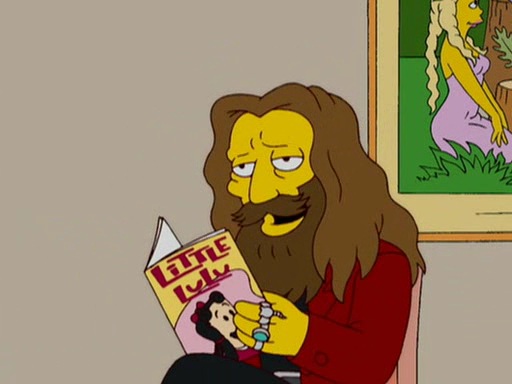
Has it finally happened? Have I gone off Alan Moore? What’s next: will I stop liking rare steak? (I admit, I like good quality beef and my carbon footprint looks like nothing so much as a gigantic hoof-print…)

Well, what has happened is this: I used to get most if not all new Alan Moore comics by default, and after reading League of Extraordinary Gentlemen: Century: 2009: Are there any more subtitles coming this way? that’s simply not the case any more. I haven’t liked any of Moore’s recent works as much as those created during his heyday – masterworks such as Watchmen, From Hell, V for Vendetta – but I’ve found enough things to like even in decidedly lesser Moore such as Smax, his Top 10 spin-off.

For the record, I think that the first two League of Extraordinary Gentlemen volumes are fantastic examples of strong storytelling and characterisation. Thematically they may not be as complex and rewarding as the works that made Moore famous, but they’re still examples of an author at the top of his craft. The continued adventures of the League though… To my mind Moore made two mistakes: one being that his ambition to create a world where all fictions are true overrode any wish he had to tell a good story with great characters, the other that the closer the story came to our present the less Moore had to say about the culture he was riffing on. 1910 and 1969 are still well crafted, and the latter even manages to intrigue as a story, but 2009 simply doesn’t say anything much of interest about modern pop culture. Its critique is shallow and lazy, making the Grand Old Madman of Comics come across as an old coot going, “You kids, get off my lawn!”

The greatest crime, though, is that a series that once featured extraordinary characters written with depth and sympathy (for the most part) – well, that series ended up with versions of the surviving characters that were uninteresting and exchangeable. Mina and Alan, as the century rolled on, were reduced to pale shadows of their former selves, in ways that made them boring to read rather than resonating thematically, which may be what Moore was aiming for.

It’s a shame, because throughout Century there are scenes that show Moore has still got it, and one of my favourite bits in all of the League is the deus ex machina he employs at the end of 2009, managing to be funny and chilling at the same time. But it doesn’t quite make up for the increasing tendency in the comics to indulge in Where’s Waldo-style “Spot the reference!” games – and, what is worse, games that lack the gleeful joy of earlier instalments. Too much of 2009 feels perfunctory. So, quite seriously, has Alan Moore become too much of a caricature of himself?

Sadly, even Kevin O’Neill’s art feels lacking in 2009 – perhaps because the (near-)present is a less exciting playground than the fictional past. He’s still got some great visuals, but both in terms of writing and art 2009 feels tired too much of the time. Perhaps it’s time for Moore to take a holiday? Watch some good TV? Get over himself?

Artifice, authenticity, affectation

If there’s one word I wouldn’t mind seeing banned from use for the next, hmm, fifty years, it’s this one: authenticity. Yup, that’s the one, the word I’ve come to dislike as much as its closeish relative, the phrase “Based on a true story!” What’s my beef with it? It’s either phony, self-aggrandising or both. A certain doddering old father once told his son, “To thine own self be true,” and as a motto it sounds quite nice, except – I think this notion of an “own self” to which you should be true is silly. Do something because you want to do it, because you think it’s right to do it – but talking about an authentic self that you should honour? That’s fine, as long as your “own self” is one of the good guys – but what if you consider your authentic self to be that of a xenophobic bastard who hates those bloody foreigners? Does the notion of authenticity* ennoble your arseyness? People’s identities, their characteristics, are fluid, and pretending that there’s a ‘real you’ inside you that’s a yardstick for all your actions is romanticised claptrap at best, disingenuous bullshit at worst.

If you’re still reading after this rant, you’re probably wondering: why does a geek blogger who usually writes about movies, games, books and comics post a diatribe against the word “authenticity”? Doesn’t he have first-person shooters to play and pretentious wankery to write about them afterwards? Bear with me, gentle reader – relevance (of some sort) is just around the corner. It’s basically this: the overuse of the A word extends to art critics and the culture pages of newspapers and magazines. “Authenticity” is used as a word of praise for movies, when usually writers use it as a way of making their “it’s, like, for real, man!” comments sound sophisticated. Let’s be frank: authenticity in art – including any art form that’s primarily about narrative fiction – is an effect. It’s an artifice. It’s like a Photoshop filter: turn up the authenticity to 10, eh? It’s the fashionable, and often trite and superficial, name given to works that used to be described as being in the style of realism or naturalism. It’s an author’s conscious choice on how to present their material. It’s a style, an artifice, pretending not to be one.

So, what’s brought on this tirade? Probably the fact that I recently re-watched Drive, a film I greatly enjoyed the first time and downright loved the second time. How does it tie into this extended waffle on authenticity? Pretty much by eschewing the Authenticity Effect altogether. Nicholas Winding Refn uses a decidedly theatrical style – perhaps not as much as in his earlier film, Bronson, but Drive is still markedly focused on its own artifice, in its visuals, its central performance, its choice of music. The director’s hand is visible throughout. Refn is clearly not interested in the pretense of reality – yet his film, for all its artifice, resonates with me. While I’m watching it, the Driver feels real to me – not in spite of the artifice but because of Refn’s immense skill at using artifice as one of the colours on his palette.

Art, at its best, doesn’t try to replicate the look of reality in a facile way. It embraces its own stylisedness, using whatever style is most suited to achieving a certain effect – and yes, that effect can be realism or naturalism… but neither of those automatically makes a film more authentic, unless our understanding of authenticity is hopelessly naive. “Based on a true story” doesn’t make that story more real, documentary visuals don’t render the subject more authentic. After all, what we’re looking at here is art, and the moment art denies its own artifice, it becomes schizophrenic or shallow. If art wants to be true to its own self, then it is most authentic when it accepts its own dependence on skilled, intelligent, passionate artifice.

*I seem to dislike the word so much I keep spelling it as “authenticify”… To mine own self spell true, eh?

P.S.: Having grown up in the ’80s, the aesthetics of Drive may very well feel more ‘real’ to me, because that’s what my childhood, filtered through TV, looked and sounded like.