Christmas Variety Pack – of one!

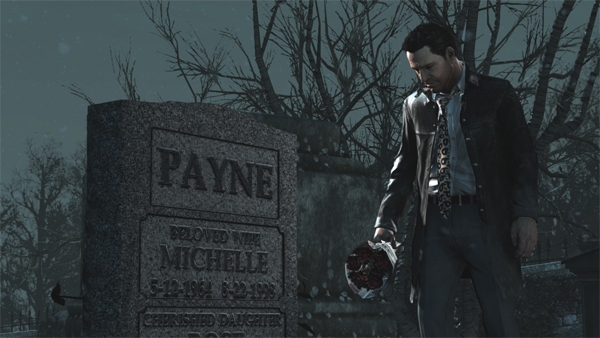
I’ve managed to catch a few films at the cinema in the last few weeks and I wanted to get them off my plate before a big steaming turkey landed on said plate… or something to that effect. Possibly something less ewwy. However, since WordPress just played a naughty pre-Christmas trick on me, gobbling up what I’d written for the second and third item, here’s a shorter variety pack, featuring the silliest picture of Brad Pitt in a long, long time.

Killing Them Softly

For anyone who’s forgotten one of the zillion times I’ve mentioned it, Andrew Dominik’s The Assassination of Jesse James by the Coward Robert Ford may just be my favourite film of the last ten years. I was accordingly excited when I heard that its director and star were getting back together for a darkly comic gangster flick, and the trailer looked intriguing – as well as pushing several of my movie- and TV-loving buttons. James “Tony Soprano” Gandolfini? Richard “Late Nate” Jenkins? Henry Motherfucking Hill himself, Ray Liotta? Count me in!

Talk about killing a film, not softly, but with unrealistic expectations. I loved The Assassination… for its sure-handed direction and for Pitt’s performance (although it’s Casey Affleck and Sam Rockwell who were the biggest revelations), but also for its elegiac tone, its hauntingly beautiful images, the writing largely taken from the original novel. Killing Them Softly may have been directed by the same man and shares the star of Dominik’s earlier film, but it is entirely different in tone and setting. It’s grimy, and it rarely evokes any emotions for its characters other than sarcastic pity. They’re a largely pathetic gang of losers, and Pitt’s pragmatic blue-collar hitman is the best of a sorry bunch. Which is exactly what the script requires and what Dominik goes for, and he’s very effective at this – but I wasn’t exactly engaged by all of this. Several Sopranos alumni turning up didn’t exactly help, replacing one set of expectations (something that would pull me in as much, and in similar ways, as The Assassination… had) with another (will this ever crawl out of the shadows of The Sopranos?).

Maybe someone should tell him that Bob Marley was black?

Is Killing Them Softly a good film? I didn’t mind watching it, even while my expectations deflated like a sad seaside toy punctured by an urchin. Does it do anything special or new? Not particularly. There’s a sustained political subtext, a commentary on today’s America that, at least in my opinion, doesn’t work and comes across as fairly facile. There is a beautifully tense robbery scene, and the mis-en-scène is generally interesting – but damned if I know what, if anything, Killing Them Softly adds up to. Perhaps that’s the jaded, cynical point.

And that’s it for now. Tune in soon for my thoughts on Argo and Skyfall – and in the meantime, happy holidays, one and all!

Just don’t mention Auntie’s MPD!

In its many years of service, the Beeb has done some terrific drama. The Singing Detective, Edge of Darkness, Pride and Prejudice, or, going back to the ’70s, I, Claudius. Its recent output has been all over the place, but I enjoyed last year’s Page Eight and The Hour (in spite of some flaws).

The second season of The Hour finished a couple of days ago. The series kept some of its problems, mainly the uneven quality of the writing, with some scenes very effective and others rushing headlong into hamfisted melodrama, clumsy exposition or silly cliché. Nevertheless, it was a definite improvement on the first series – exciting, engaging, and every scene with Peter Capaldi and Anna Chancellor a revelation. Come Awards season, if Auntie doesn’t pat itself on the shoulder for putting those two on a sound stage together and letting them show what they’re capable of, I hope that Malcolm Tucker unleashes hell on the people responsible.

One of these you don't want to be stuck in an elevator with...

So, that’s BBC at its… well, perhaps not best, but definitely good. If this is the standard of British television drama, I think Britain could do a whole lot worse.

Cue Hunted.

It’s easy to see what they were going for: an entertaining, fast-paced yet moody spy thriller set in a world of shifting allegiances and moral ambiguities. What they got was one of the most half-baked, clichéd TV shows I’ve seen in a long while. Laughably bad writing – the premise should have been a warning, with the main character, Sam Hunter, becoming (dun dun DUN!) the hunted! The aesthetics were all early 2000s gone HD, but the plot and characterisation were on par with your average ’80s series, except this didn’t even have the giddy sense of fun that some of those shows had.

And this may reveal me as sorely lacking in testosterone, but I’d rather watch Peter Capaldi go OCD on his desk for an hour (pun only semi-intended) than Melissa George trying to infuse her undercooked character with personality by bringing out her most potent duck-faced pout ever. I’ve seen George do much better work with stronger material, but her Sam Hunter is insipid, as are most of the characters, whether they’re played by veteran actors or not. Someone should have told the makers of Hunted that conflicted doesn’t equal dour, dour doesn’t equal glum, and glum doesn’t equal moodily bored.

In the end it’s a race: what does the series in? The one-dimensional characters? The charmless acting? The glossy yet drab visuals? The writing that’s either done by idiots, for idiots or both? The final episode that provides less resolution than an episode of Eastenders? Or the BBC, deciding that Frank Spotnitz would have a better chance taking his pet project somewhere else?

Just pucker up your lips, 'cause this blows...

Love in the unconditional

Michael Haneke is what I would call the anti-Spielberg. He is a director who consistently avoids even a trace of sentimentalism or pathos. Based on the Haneke films I’ve seen, his goal is primarily to make people think – and when he wants to make them feel, he never dictates the specific feelings they should experience. Haneke’s work has been described as cool, distant, even clinical.

Amour

His most recent film Amour, winner of the Cannes Palme d’Or, doesn’t exactly break with this tradition; the film maker’s style, both in terms of his direction and his writing, is still very much in evidence. Nevertheless, I’ve found Amour one of the most affecting, profoundly emotional films, definitely of the year and possibly of the century so far. It is brutal and raw as much as it is tender and loving, and it is perhaps one of the best cinematic examinations of what it is like to watch a loved one die.

The immediate praise must certainly go to his duo of actors, Jean-Louis Trintignant and Emmanuelle Riva, both of whom don’t show a trace of obvious acting: they simply are the characters on screen. It is impossible to say which one is more impressive; while Trintignant captures the anguish, frustration and fear of a husband who can only be there for his dying wife but not help her (except in one way, ultimately), Riva is uncannily convincing as the wife who, after first one stroke and then another, slowly crumbles away and fades into the darkness like a latterday Eurydice. They occasionally share the screen with other characters, primarily the high-strung daughter played by Isabelle Huppert, but the film is entirely theirs.

Amour

For me, it was impossible to watch the film and not be reminded of my mother’s death three years ago. I’ve talked to others who found it brought back the death of their loved ones: parents, grandparents. Yet while Amour captures something that seems universal about death and bereavement, at least in our culture and society, it is at the same time entirely specific to these characters. It does not go for vague, and essentially rather cheapening, generalisations along the lines of “Aren’t we all…” and “Don’t we all…”. And differently from some of Haneke’s earlier works, it never feels didactic or cruel. Its unflinching eye on the process of dying is hard to take at times, but it’s this commitment to the act of bearing witness that is finally tender and beautiful.

November Variety Pack

I was originally going to write about Michael Haneke’s Amour here, a film that I wouldn’t hesitate to call one of the best I’ve seen this year, but I think I may need to think a bit more about Haneke’s latest and how I feel about it. So, to play for time and keep my fingers warm in the meantime, here’s a Variety Pack to go with the bookbag I posted recently.

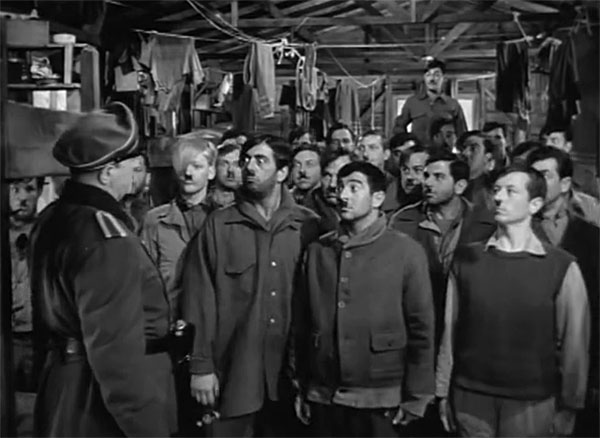
Stalag 17

I wouldn’t say I’m an expert on Billy Wilder by any means, but I definitely appreciate the man’s work – although if there is something to that deleted scene from Pulp Fiction, if there are Some Like It Hot people and The Apartment people, I belong firmly in the latter group. There are a number of Wilder films I’ve never seen, though, in spite of hearing a lot about them, one being his DDR comedy (that oldest of genre chestnuts!) One, Two, Three, the other Stalag 17. (Perhaps it’s a case of The Great Escape having taken up the slot of POW camp film in the DVD collection in my heart.) However, while One, Two, Three still remains unseen by me, I’ve now filled in that other gap in my Wilderography.
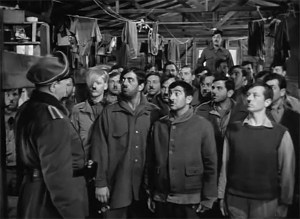
The film’s an odd one, especially in terms of tone. Wilder often mixed comedy and drama, and to great effect – The Apartment is sweet and funny, but one of its central plot points is a suicide attempt, and Some Like It Hot begins with a Valentine’s Day Massacre-inspired scene that gets the film’s story started. Similarly, Stalag 17 begins with a doomed escape attempt that sees two American prisoners of war shot by the German camp guards – but differently from several other films by the director, I don’t think this one is as successful at blending different tones. It’s especially the characters, several of which are too broadly drawn and too cartoony to evoke much empathy, something that distinguishes the Wilder films I like best. Yes, they’re cynical, and yes, they use moments of slapstick and broad comedy, but the characters are usually still human, even the most excessive ones such as Norma Desmond. There are a handful of such characters in Stalag 17, but the film spends most (and, in my view, too much) of its time with the clownish comic relief characters, to the extent where it feels more like the meat of the plot is the dramatic relief from POW clownery. William Holden is great, both his character and the acting, and there are some beautiful, witty scenes (one involving more Hitler moustaches than you can shave your whiskers at), but the writing on the whole is uneven, making the film feel like lesser Wilder to me. But then, as mentioned, perhaps that’s just because the place in my heart reserved for POW camp movies was taken decades ago by The Great Escape.

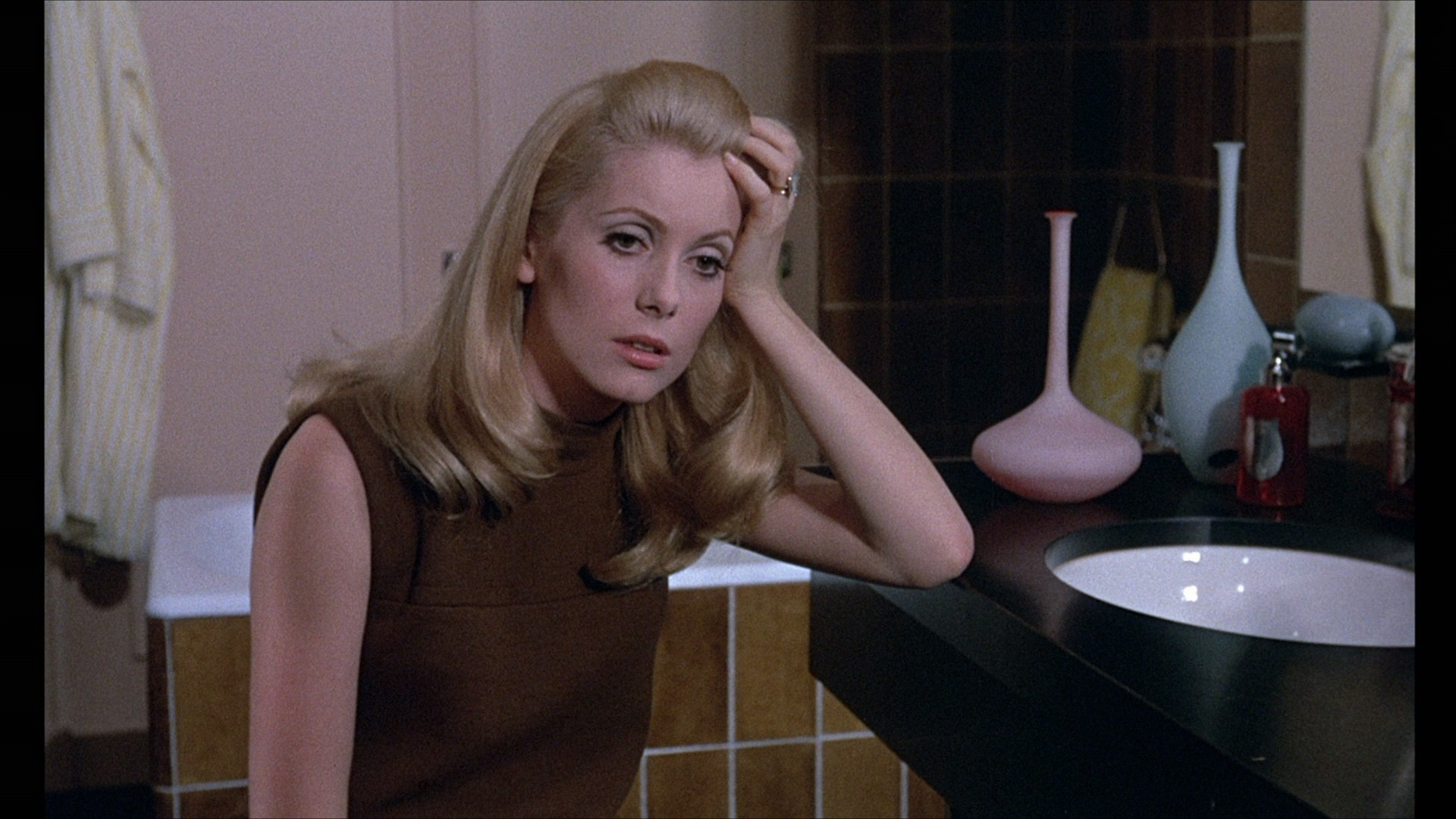
Belle de Jour

For being a film nerd with a certified diagnosis of Criterion Addiction Syndrome, there are a number of notable gaps in my library, such as Pasolini… and Buñuel. I’m not 100% certain, but I think I’ve even avoided Un Chien Andalou, although it is just about possible that I saw it when I was an insomniac teenager and they were showing it on some forlorn TV channel at 2am and I’ve been repressing the memory ever since.

So, when Criterion brought out Belle de Jour on Blu-ray, I pounced. A satire of the bourgeoisie, repressed sexual fantasies coming to life, Catherine Deneuve… what’s not to like?
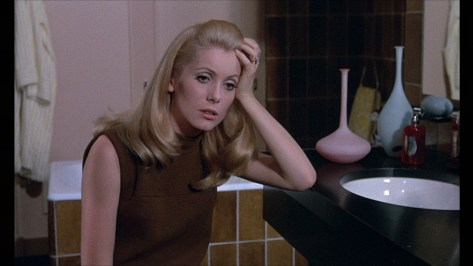
One Blu-ray later, colour me disappointed. The film is interesting, it’s well shot, it’s got actors that are worth watching – but why oh why does it feel so tame? Why do Deneuve’s character and her sexual explorations seem so trite? I expected a film with the power to shock, but apart from being moderately intriguing Belle de Jour didn’t shock me – nor was I sure it was trying to. If the film’s satire intends to make fun of even the most repressed sexual fantasies of bourgeois housewives being fairly banal, it succeeded – perhaps you need to be a member of the ’70s bourgeoisie to be shocked by the film.

It’s still an interesting work and has some effectively surreal moments, not least in the dreams that the protagonist has, whose weirdness is amplified by their deadpan presentation. But trés choquant? Pas vraiment.

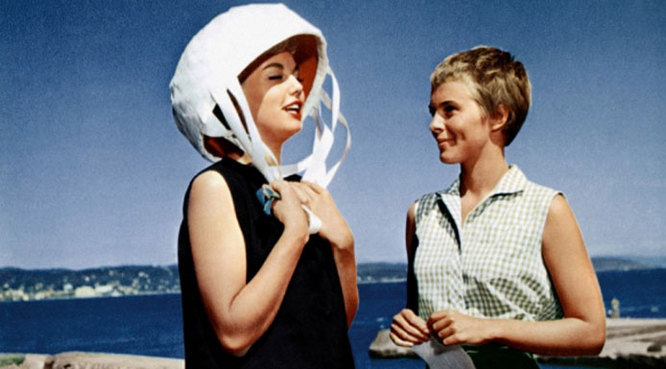
Bonjour Tristesse

How’s this for bookending this blog post: Otto Preminger plays the camp Kommandant (ooh-er, missus!) in Stalag 17 and he directed the third movie in this variety pack. It’s almost like I have a plan here! (Briefly ponders renaming this blog “Cylons on Pogo Sticks”…)

Bonjour Tristesse is an odd duck in one particular way: all the characters are supposed to be French, yet the main characters, the aging Lothario dad and his precocious teen daughter, are played by Brit David Niven and American Jean Seberg, neither of which sounds in the least French – though the French people surrounding them for the most part have French accents. What is strange, though, is that after the initial irritation this works fairly well: the two characters are so much in a world of their own creation, in which they are somehow the only real people… or, by the end of the film, the only ones as thin and flimsy as paper.

Perhaps it’s because this is an American film and doesn’t come with the same sort of baggage as Buñuel’s Belle de Jour, but I found Bonjour Tristesse more, well, not shocking so much as simply able to make me think, feel and have some sort of reaction beyond being mildly intrigued by its treatment of sexual themes, even though the film is much more overtly tame. It also manages a fairly difficult trick, namely making the audience care about selfish, callow characters who use others unthinkingly and whose charm is shown to be increasingly threadbare.

Another effect the film had on me: I now want to rewatch A Bout de Souffle, Goddard’s turn at being infatuated with Seberg. I didn’t particularly like Goddard’s film when I first watched it, but he said himself that A Bout de Souffle can be seen as a quasi-sequel to Bonjour Tristesse. Perhaps the earlier film will make me appreciate the later one more by tickling my intertextual taste buds! If it does, I’ll make sure to let you know.
November Bookbag

With all the films I watch and games I play, do I even get around to that most old-school of activities, i.e. reading? I do, definitely – although I have to admit that I miss having a job where I could just spend an entire day (or even week, when I was lucky!) reading, whether it’s novels, plays, poems, articles or reviews. Them were good days!

That’s one of the things I enjoy most about holidays, and where I sometimes think that expensive travel is wasted on me: I often get most of a kick out of the travelling done in my head. During a recent vacation I got to finish not one but several books, so here are some thoughts on them for my first ever Bookbag!

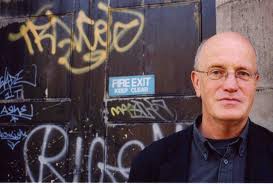
Lights Out for the Territories (Iain Sinclair)

Sinclair first popped up on my cultural radar when his character Andrew Norton, the Prisoner of London, appeared in Alan Moore’s League of Extraordinary Gentlemen: Century. Then, when I recently started a teaching assignment at university, I found Sinclair’s Lights Out for the Territories lying on a shelf. Conditioning through repetition working as well on me as it does, I made Amazon happy by ordering the book.

Is it a good holiday read? I’m not sure I’m the best person to answer that, as I’m the kind of reader who might go for War and Peace for the poolside in Sharm El Sheikh. Sinclair’s book is not the sort of thing to read in one go, tough; for one thing, it is a collection of essays originally published separately and as such doesn’t benefit from being read as one coherent work, for another it’s insanely dense. Sinclair’s approach is basically to ‘read’ London as a great, multiform text, approaching it from different angles, from sifting through the detritus of (sub)urban  culture while walking the city to scrying the signs at Ron Kray’s funeral. Is this psychogeography? Shamanism? The rants of a smart, although at times rather tiring poet/essayist? Most likely it’s all three at the same time. I can definitely see why Alan Moore would find him interesting – some of Lights Out feels like the punk offspring of Moore’s From Hell and Peter Ackroyd’s London: A Biography. Sinclair’s writing is fascinating to experience, but I’d definitely recommend him as an occasional snack rather than as a meal, lest you come away with a major case of literary indigestion.

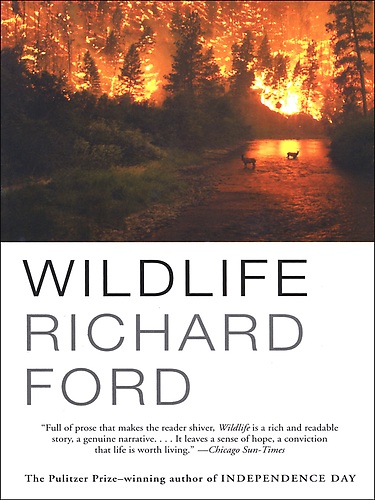
Wildlife (Richard Ford)

Every now and then I come across a book or a film that makes me feel I’m not old enough for this. Richard Ford’s Wildlife definitely had that effect – which is strange, as the novel’s narrator is a 16-year old. There is something about the novel’s pace and demeanour, though, that makes it feel old – past middle age and past its mid-life crisis. (Okay, it is likely that the narrator is actually considerably older and looking back at his 16-year old self, but it’s not just the telling of the story, it’s also the young man’s words and actions that feel like the young version of the narrator wasn’t all that different from his older, narrating self.)

Which is not to put down the novel (or rather novella, at a slim 160 pages). Wildlife is one of those books where no word seems out of place. This story of an early ’60s marriage falling apart is sparse (though not to the point of Carver’s short stories), very far removed from Sinclair’s anarcho-shamanism, and methodical in a way that becomes strangely hypnotic. The theme is as shopworn as they come, but in Ford’s style it takes an uncanny, destabilising quality that makes the story work as something very different from your usual domestic drama.

I’m not sure the narrator (or his younger self) works for me, though – he is either the oldest 16-year old there has ever been or he’s on some of that groovy, early-’60s Valium. There’s internalised and there’s somnambulant, and the character crosses that line… very slowly.

Childhood’s end

I was seven… and five minutes into the film I was already bawling, as those nasty men with big cars and jangling keys were running after the space gnome with the glowing chest. Just leave the guy alone! He’s already stuck on a planet that isn’t his with little chance of ever getting home.

E.T. was when I became a fan of the cinema. Before that I’d seen movies – it was a tradition of our family to go and see a film, usually Disney, on the second Sunday in December – but Spielberg’s classic was the first time I had an inkling that how a film is done is at least as important as what it’s about. I didn’t turn into Little Man Criterion all of a sudden, but the seed for my love for film (and my constant worry of running out of shelf space for DVDs and Blu-rays) was planted.

In the meantime I have been disappointed by Spielberg repeatedly. Obviously the guy is a consummate craftsman, but I can’t help thinking that he peaked in the late ’70s and early ’80s and never reached those heights again. Jaws, Raiders of the Lost Ark and Close Encounters of the Third Kind – those films do what they set out to do almost perfectly. Later Spielberg still has his moments, and many of his later films are still good, but his great skill at evoking a sense of wonder (no other film manages this as well as Close Encounters and some of E.T.) was marred by his increasing tendency towards mawkishness. Early Spielberg was already sentimental, E.T. being a perfect example of this, but he also knew when to be ruthless with his characters. In Jaws pretty much anyone could die – in Jurassic Park it’s bad guys and side characters that get munched on while especially the kids get a free pass, surviving even high-voltage fences that would probably have turned a velociraptor into fried dino.

After the 20th anniversary edition of E.T., with its walkie-talkies and check-out-my-CGI moments, I felt a bit burned on the film and on Spielberg’s older films. What next? A Jaws where Alex Kintner gets a good scare by the mean old shark but escapes unharmed otherwise? Spielberg himself admitted that he’d made a mistake Lucasing his film, promising that the 30th anniversary edition would be a return to the original, shotguns, rubber puppet and all.

So, like the good little film geek consumer that I am I toddled off to Amazon and ordered the Blu-ray – and yes, it’s the E.T. I remember bawling at when I was a kid. No walkie-talkies, no memory hole for Elliott’s immortal “Penis breath!” line (can you imagine this in a PG film nowadays?).

What seems to have changed, though, is me. This time around, the gap between my nostalgia and my actual enjoyment of the film was too big not to notice. It’s still an example of Spielberg at the top of his game, but perhaps that game is no longer for me. Spielberg’s sentimentality, John Williams’ bombast, the cuteness of the kids, it all gets a bit too much and isn’t modulated nearly is well as I’d like it to be: it’s as if Spielberg & Co. only know piano and forte fortissimo but nothing in between.

Which is sad – but I have the sneaking suspicion that I already felt like this ten years ago when I saw the re-release at the cinema. Back then I probably put it down to Spielberg’s regrettable edits, but more likely it’s that I’ve outgrown the film. The good news is, though, that I just need to give it a year or two and I’ll have forgotten how I felt about the film this time around, remembering only the nostalgia.

And if I then, in another ten years or so, re-watch the film, I’ll make sure to do so without subtitles – there’s something disconcerting about having the little brown space guy’s sounds described as E.T. moans and E.T. pants, as if he needed to phone not home so much as the Intergalactic  Party Chat Line.

P.S.: Almost equally disconcerting is this E.T.-themed ad for the 1985 Special Olympics, which make it all too likely that the wrinkly gnome from outer space uses Reese’s Pieces to lure kids into his white van when he isn’t healing plants and drinking beer.

The discreet charm of Koreeda

Yes, I like my Quentin Tarantinos and my Martin Scorseses. I enjoy TV series about New Jersey mobsters doing mobsterish things (like breaking kneecaps) or Ancient Romans doing Ancient Roman things (like slicing through kneecaps – remember the Thirteenth!). I don’t mind watching films and TV that walk the dark, cruel side.

But sometimes I think that gentleness is more difficult to pull off and pull off well, at least for an entire movie. Think about it: how many films do you know that you’d consider good and that you’d describe first and foremost as gentle? The problem is that “gentle” sounds milquetoast and boring, but it shouldn’t be mistaken for its blander distant cousins, “timid” and “nice”.

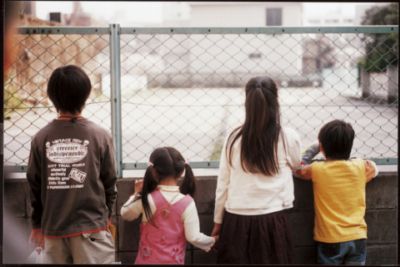
The Japanese director Hirokazu Koreeda is one of the best directors when it comes to gentle films. His work is by no means harmless in its themes, even if it’s decidedly low on kneecapping – his characters deal with painful issues, which is never more apparent than in Nobody Knows, in which a disturbed young mother leaves her four children to fend for themselves. While tragedy is increasingly likely to strike as the film proceeds, Koreeda is not interested in making a domestic disaster movie where we sit on the edge of our seats waiting for the worst to happen. His guiding feeling towards the people he depicts seems to be compassion, as he bears witness to the fact that living, let alone being good, is hard, people are often prone to weakness, fear and pettiness – but we all deserve compassion.

Still Walking, a film in which disaster has already struck, years ago, permanently damaging a family, is similarly suffused with empathy. It’s not happy-clappy, sappy “we’re all human beings so let’s group hug!” empathy – Koreeda’s film does not shy away from the characters’ selfishness and cruelty in any way, but he urges us to look closer, not to condone but to understand, which in the end may be much harder and more uncomfortable than sitting in judgment.

For all the enjoyment I get out of films and TV series that wouldn’t know ‘gentle’ if it held them and stroked their hair, there is something soothing, even healing about Koreeda’s films. While I love visiting the more brutal worlds of many of his fellow directors, it is his world that I would want to live in. (And even be dead in – his After Life, my first experience of Koreeda’s films, is a wonderful, witty and, yes, gentle take on death and memory.)

Taking the blood out of the barbershop

After last week’s instalment turned out quite a bit longer than expected (a bit like the wait for Max Payne 3, in fact), here is a shorter tidbit – which, apparently, should be spelled “titbit”, but that sounds too much like a snack or breakfast cereal for sex-obsessed psychopaths to me. I’ll be on holiday next week, so I’ve got a good excuse for the next post to be a couple of weeks away, but in the meantime…

I used to consider myself a Tim Burton fan. Around the time when the man made Edward Scissorhands and Batman Returns, his goth-romantic style clicked with me, so much so that I considered his second Batman instalment one of my favourite films. (I still have a great fondness for the movie, but I’m more aware of its flaws at this point.) Then came Mars Attacks!, a perfectly okay half-hour comedy stretched into a feature film, and Sleepy Hollow, which looked like the most gorgeous Tim Burton film ever but felt, well, hollow. Planet of the Apes didn’t have much going for it beyond the make-up and Big Fish angers me with its twee, needy sentimentalism that would give Steven Spielberg a toothache.

Fast-forward to Sweeney Todd. I am not all that much into musicals and had heard of Sondheim but didn’t know him at all. The trailer and stills for Sweeney Todd looked like Sleepy Hollow all over – more so, in fact, with the film’s production design being so Tim Burton, it felt like someone had taken his earlier films, boiled them into a thick, black ooze and used this to paint the sets. When I saw the film at the cinema, mostly for old time’s sake, I was surprised that despite the ultra-Burton look the direction felt… more adult, I’d have to call it. Less of the cartoon exaggeration that Burton had fallen to (and would return to in later films). Even Johnny Depp looked like he was acting rather than simply doing his Depp/Burton spiel.

I’ve just recently rewatched Sweeney Todd, after catching it on stage at the Edinburgh Fringe, and I still consider it to be one of the better of Burton’s recent films, perhaps even the best – yet it is held back by the director’s visual style. Sondheim’s play, for want of a better word, has a certain meatiness. There is a charnelhouse vitality to it, yet in spite of the gallons of gore Burton’s visuals are bloodless. They are designed within an inch of their life. More than that, they make Todd and his accomplice-paramour Mrs. Lovett one of a kind, a sort of Goth His’n’Hers, which hurts especially the pie maker’s characterisation. It’s a shame, really: while I think that Sweeney Todd is proof that Burton still has talent and doesn’t just imitate himself, he also keeps the film from being as good as it could be. And, frankly, while I used to love the typical Burton look, by now it feels less like a style and more like a brand. Predictable, safe, and not a little boring.

P.S.: You know who’d make a very effective Sweeney Todd? Mark Strong. Unfortunately the poor man is typecast and only plays sweet, loveable good guys.

P.P.S.: YouTube is acting up, so instead I went to Vimeo, not expecting to find anything much… except it looks like someone uploaded the entirety of Tim Burton’s film, with Spanish subtitles. Weird, huh? And probably more than just a little legally iffy… Still, while it’s up it’s up, eh?

http://vimeo.com/26811104

Payne Killer (part 2)

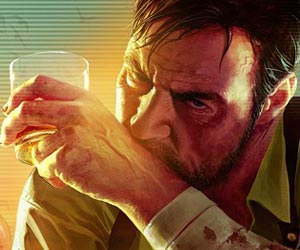
This post follows from my previous meanderings on Max Payne. For those who have not played Max Payne 3, beware: there will be spoilers.

While I am not an outright fan of explicit violence in modern media, I’m not particularly squeamish either. I have no interest whatsoever in the gore extravaganza of much modern horror, but neither am I put off by the viscera of some of Tarantino’s more recent offerings, and some of the TV series (e.g. Rome or Game of Thrones) I’ve enjoyed most over the last couple of years don’t skimp on the red gushing stuff.

And yet, Max Payne 3 almost made me switch off the game, not just once but twice, due to the brutality it depicts.

And this is in no way an indictment of the game.

Max Payne 3 is a brutal game – and more than any shooter I’ve played it does a remarkably horrid job of showing what bullets do to bodies. Does the game revel in showing exit wounds? I think I’d be lying if I said it wasn’t – MP3 does not present its violence with the frat boy, fist-pump glee of other games, but it has a fascination for showing the damage done, both to people and to interior (and exterior) decorating, in slow motion. So much so that checking out some of the videos on YouTube makes me queasy – less with the game than with the Beavis and Butthead-ish tone of the video description and comments.

But it’s not so much seeing the carnage I’m authoring that made me wince, at least not after the first ten minutes or so. (There is definitely something numbing to seeing henchman after henchman dying horribly at the business end of my gun – and it’s this repetitiveness that’s a major flaw of the game in my opinion.) It’s two key scenes: in one, I finally find the beaten, bleeding trophy wife of a São Paolo business man earlier abducted by a favela gang, only to see one of the gangbangers put a bullet through her head. In another, the business man’s brother is covered with petrol and burnt alive. The game has previously shown the man as shallow, narcissistic and rather pathetic – but the way the game depicts his death got to me, and quite possibly more so than a similar scene would have in a film.

I don’t want to get into the question here of whether games are becoming too violent or whether people are desensitised to real-life violence and cruelty due to watching brutal films or playing violent games. That question is much bigger and deserves a longer discussion in a wider forum. What I’m interested in is this: why did these two scenes get to me to the extent where I wasn’t sure I wanted to continue playing (keeping in mind, as I’ve said, that I’m not all that squeamish)?

I think it’s this: games make a big thing of player agency – as gamers it’s our finger on the trigger, we decide who lives and who dies, it’s, like, interactive! – yet in practice our agency is always limited, it’s circumscribed in a hundred ways: by a game’s design, its user interface, our character’s abilities and, often frustratingly, by the story a game tells. You’re Superman while playing the game, you’re John McClane, you’re Neo – and then comes a pre-rendered sequence, and what’s pre-rendered as well is your impotence in the face of the great god, Plot. The villain jumps from the shadows and skewers your love interest with his great big sword. (I’ve never played Final Fantasy VII, but apparently this is one of the primal scenes of so many gamers into Japanese role-playing games… and I wonder whether the cod-Freudian subtext is as heavy when you’re actually playing.)

Many games use this in a frustrating way that feels like the program is cheating, in revenge for decades of players using hidden cheats and God modes to become invulnerable. Think you’re all-powerful, gamer? Take that! Ooh, that must’ve hurt! The two scenes in Max Payne 3 that I mentioned earlier (and there are others, although none as pointed) may have an element of this, but I think the game is being cleverer than that: Max Payne, from the first game onward, told a story about revenge and redemption. I’m not sure to what extent it manages the latter all that well, although there’s a lot of quasi-Noirish verbiage in the game about it – but especially Max Payne 3 never lets you forget that the revenge you’re effecting is finally hollow. Yes, you might get to kill hundreds of bad guys in bloody, bone-crunching ways, but Max’ loss is the constant foil through which the player views this revenge. For every henchman killed, for every villain stopped, Max’ wife and child is not a single bullet closer to being alive. For a game that’s entirely about revenge and redemption, it’s bleakly ironic that revenge is shown to be pointless and redemption all but impossible. Max Payne’s extended trauerarbeit (and I don’t think this is wankerish pseudo-analysis imposed on the game – every second line of dialogue is about Max’ ongoing, futile quest to find some sort of meaning in a life that’s had all meaning shot to hell), like the hundreds of painkillers he keeps popping, only serves to dull his pain momentarily.

I’m not saying that Max Payne 3 is a deep, philosophical treatment of mourning, revenge and the futility of redemption – but it does address these issues within the rules it has set up for itself… and, like Rockstar’s earlier Red Dead Redemption (although my vote still goes to RDR for doing more interesting, complex things with the theme) it goes a long way to disabuse the player of this crazy idea that just because he’s got his finger on the trigger he can make everything all right.

Payne Killer (part 1)

It has to be said: as a gamer it’s sometimes difficult not to be embarrassed by video games. Most people with a modicum of taste would take one look at a game called Max Payne (its central character of that name the proverbial Cop With Nothing To Lose, which doesn’t exactly make it less embarrassing) and snort derisively. It sounds about as classy and grown-up as one of those superhero comics where the women have breasts the size of battleships and waists with the circumference of a ripe peach.

The surprising thing was that Max Payne, while not exactly A la recherche du temps perdu (or even Pulp Fiction), was fairly smart and knowing in its writing, at least for a video game in the early years of this millennium, and its sequel, The Fall of Max Payne even more so. Mixing neo-noir cynicism and post-Matrix bullet time with comic book aesthetics, surreal dream sequences and a parodic style that was more Scream than Scary Movie, Max Payne didn’t take itself overly serious, yet it still pulled off that neat trick where we come to care about the characters. They’re funny, but they’re not just the punchline to a joke.

Not even poor, doomed mob underboss Vinnie Gognitti in his Captain BaseballBatBoy costume. Okay, perhaps a bit.

Max Payne 2 pulled off something strangely akin to Tim Burton’s Batman Returns. It shouldn’t work. It should be an incoherent mess of incompatible parts. Dark romance, surreal comedy, cartoon noir and self-referential humour shouldn’t come together to form something that’s somehow more than the sum of its parts – yet it does. Or perhaps it’s a variation on Stockholm Syndrome, where someone who enjoys playing computer games but also enjoys good writing and interesting characters convinces himself that purple prose such as “There was a blind spot in my head, a bullet-shaped hole where the answers should be. Call it denial. I wanted to dig inside my skull and scrape out the pain.” congeals into something that by some process of video game alchemy manages to transcend the clichés it’s assembled from.

What’s the occasion of all of this reminiscing about old games? Call it exposition, call it setting the scene – it’s basically a glorified lead-in for my thoughts on Max Payne 3, the latest (and possibly last?) game in the series, coming soon to a blog near you. Did the series manage to reinvent itself, almost ten years after its last instalment, by transposing its New York neo-noir bullet ballet to the sun-drenched favelas of Sao Paolo viewed through the camera lens left behind by Tony Scott?