Six Damn Fine Degrees #119: Eleven Iconic Heist Themes

Welcome to Six Damn Fine Degrees. These instalments will be inspired by the idea of six degrees of separation in the loosest sense. The only rule: it connects – in some way – to the previous instalment. So come join us on our weekly foray into interconnectedness!

While reading Matt’s musings about the heist movie genre and Steven Soderbergh’s knack for it, my head was inevitably raided by musical themes: jazzy and cool, funky and bold, sneaky and witty they were – and all wonderfully descriptive of the act of boldly scheming, meticulously planning and sneakily (or spectacularly) executing! Is it a coincidence that a large majority of the most popular heist movies are associated with scores that often remained the most memorable aspect about the films? Maybe the indelible combination of suspense, anticipation and audacity is among the most fruitful contexts for a composer to create dynamic and energetic themes.

Continue reading →

They create worlds: Pentiment

One of the things that video games can do magnificently is create worlds. These posts are an occasional exploration of games that I love because of where they take me.

In the early years of video games, their aesthetics were limited mainly by technology: by the resolution of the graphics or the number of colours that a system could produce and display on the screen at the same time, or by CPU speed. The best programmers and artists could do wonderful things within those limitations, and you can enjoy great pixel art even today, when computers can produce real-time visuals that are vastly more complex.

These days, video game graphics are much less limited by the tech the games run on, so a lot of games – especially in the so-called AAA segment, i.e. the games with the biggest budgets and the largest teams of developers – aim for photorealism. At the same time, smaller developers who don’t necessarily have the resources to create virtual worlds that visually are getting less and less distinguishable from reality, have a vast range of possibilities to work with those very different limitations: they might create games that use different kinds of stylisation, that look like vintage animation or paper cutouts or jagged fever dreams. In modern games, we may find aesthetics that don’t harken back to the ’70s and ’80s, with their blocky pixels and four-frame animations, but to times when video games were entirely inconceivable.

Continue reading →

I’ll be in my trailer… watching trailers: Past lives indeed!

Join us every week for a trip into the weird and wonderful world of trailers. Whether it’s the first teaser for the latest instalment in your favourite franchise, an obscure preview for a strange indie darling, whether it’s good, bad, ugly or just plain weird – your favourite pop culture baristas are there to tell you what they think.

This week, Matt wrote about some of his early thoughts regarding the HBO adaptation of the bestselling game The Last of Us, and the strangeness of watching such a highly faithful prestige TV version of something he’s already experienced in an interactive format. Definitely a good opportunity to revisit one of the trailers for the game’s original release ten years ago!

Continue reading →

Six Damn Fine Degrees #118: When you’re tired of robbing casinos…

Welcome to Six Damn Fine Degrees. These instalments will be inspired by the idea of six degrees of separation in the loosest sense. The only rule: it connects – in some way – to the previous instalment. So come join us on our weekly foray into interconnectedness!

Pretty much from its infancy, cinema recognised the dramatic potential of crime. Whether we’re talking about whodunnits in the style of their literary ancestors, films in which the protagonists were sleuths and detectives, or their counterparts, the movies that told the stories of gangsters, thieves and murderers, crime pays – at the very least in ticket sales. Something else cinema exceeds at: showing us people who are very, very good at what they do. There’s a joy to watching consummate professionals at work. (There’s even a phrase for it, competence porn, and Breaking Bad‘s Mike Ehrmantraut is its laconic patron saint.) And, of course, there’s the place where the Venn diagram meets: many a highly entertaining film has been about criminals who are good at their particular genre of crime. The con men and women, the safe breakers and thieves, and yes, even the killers who are just so damn adept at killing that it’s delightful to watch them go about their gruesome business.

And at the heart of the intersection of those two sets is a particular brand of movie, about a particular brand of criminals who do a very specific kind of crime requiring the upmost professionalism: the heist movie.

Continue reading →

Been there, done that

There are some gamers who seem to seek validation from some game that they spent dozens of hours on being adapted for cinema or TV. Is it because Roger Ebert put down our hobby decades ago when he was still with us? (Okay, to be fair, a certain someone who shall remain me had some definite opinions on Ebert’s verdict at the time and wrote an article in response that got translated into Italian and published; at this point I wouldn’t understand that article if I tried to read it.) So, when HBO announced a few years ago that it’d bought the rights to adapt the bestselling game The Last of Us: hey, how much more validation can you get? The network that ushered in the Golden Age of Television with modern classics such as The Sopranos, The Wire, Deadwood – and, more than that, the series runner would be Craig Mazin, whose outstanding miniseries Chernobyl had made people forget that he’d written the third and fourth instalment in the Scary Movie series.

Continue reading →

I’ll be in my trailer… watching trailers: It’s raining bricks

Join us every week for a trip into the weird and wonderful world of trailers. Whether it’s the first teaser for the latest instalment in your favourite franchise, an obscure preview for a strange indie darling, whether it’s good, bad, ugly or just plain weird – your favourite pop culture baristas are there to tell you what they think.

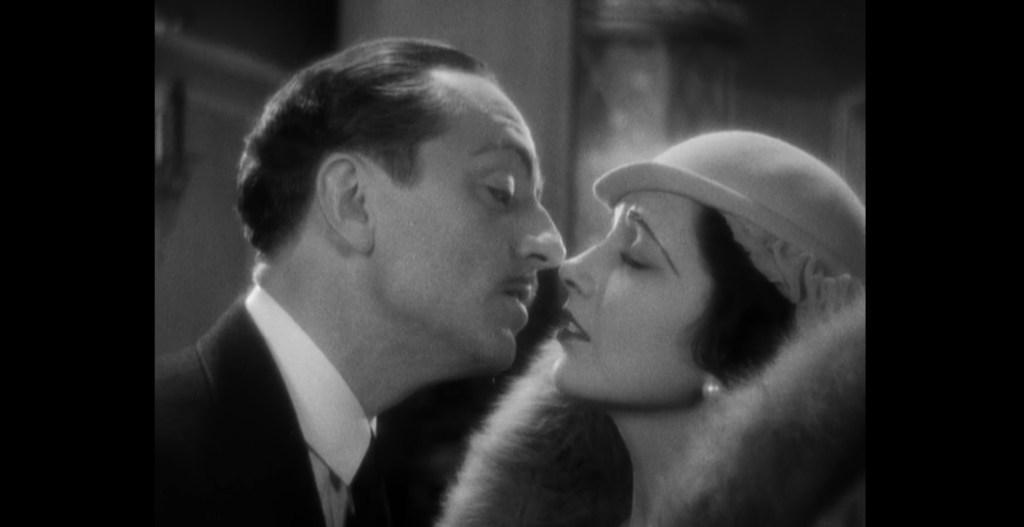
This week’s Six Damn Fine Degrees delivered more William Powell – and Julie took us back to the career of Kay Francis, taking her film Jewel Robbery as its starting point.

Continue reading →

A Damn Fine Espresso: February 2023

When we talk about cinematic serial killers, we usually think of the likes of Hannibal Lecter: charismatic sociopaths, individuals that are intellectually brilliant but utterly amoral, and whose killing usually follows some grand aesthetic design, making them queasy stand-ins for artists. Saeed Hanaei, the man who murdered sex workers in Mashhad, Iran in the years 2000 and 2001, isn’t that kind of serial killer, and Iranian director Ali Abbasi’s Holy Spider isn’t that sort of film. In this month’s espresso episode, Alan and Matt talk about Abbasi’s film, which got an ambivalent reception when it came out at the Cannes Film Festival in 2022. Choosing to put more of a focus on the killer than on his victims, and staging the murders starkly, Holy Spider was accused of some of being exploitative – but how does a film go about depicting a series of killings in which an entire society is implicated responsibly and tactfully? Tune in to hear our duo’s take on Holy Spider, its depiction of violence against women and how Abbasi’s film uses a fictionalised journalist protagonist (played by Zar Amir Ebrahimi) to tell a story about, as the director puts it, “a serial killer society”.

Continue reading →

Six Damn Fine Degrees #117: Jewel Robbery

Welcome to Six Damn Fine Degrees. These instalments will be inspired by the idea of six degrees of separation in the loosest sense. The only rule: it connects – in some way – to the previous instalment. So come join us on our weekly foray into interconnectedness!

To Kay Francis, 1932 was just another long year. She had made The False Madonna, Strangers in Love, Man Wanted, Street of Women, Jewel Robbery, One way Passage, Trouble in Paradise and Cynara (yes, all of those in ’32).

Of these, One Way Passage was Kay’s favorite and Trouble in Paradise was her best. But before these two, one of her most charming pictures released that year was Jewel Robbery. In what can be considered almost a preface to Trouble in Paradise, she plays a cheefully jaded Baroness who becomes the enthralled victim of a very unorthodox and very polite robbery, subsequently falls hopelessly in lust with the suave gentleman robber, and vice versa.

Continue reading →

I’ll be in my trailer… watching trailers: Thin Men, Robot Men, Car Men, Boogeymen

Join us every week for a trip into the weird and wonderful world of trailers. Whether it’s the first teaser for the latest instalment in your favourite franchise, an obscure preview for a strange indie darling, whether it’s good, bad, ugly or just plain weird – your favourite pop culture baristas are there to tell you what they think.

From Bruce Willis and Madeleine Stowe to William Powell and Myrna Loy: in this week’s Six Damn Fine Degrees, Alan takes us back to the diminishing returns of Thin Man sequels – while providing us with two potential Thin Man drinking games, only one of which should lead straight to alcohol poisoning.

Continue reading →

Criterion Corner: WALL-E (#1161)

For a while, I’d catch all new Pixar releases at the cinema. I missed out on Toy Story, their first feature film, when it originally came out, but I remember enjoying A Bug’s Life and Toy Story 2, and I loved The Incredibles when it came out (though I have to confess that I never enjoyed Finding Nemo as much as most people did). At the time these were something we’d not seen before, not in this quality. Obviously Pixar’s artistry was amazing, in a genre that, when the first few Pixar films were released, was still fairly new – and with each film, the company would introduce new innovations. The fur in Monsters, Inc. (apparently there were over two million hairs on Sulley that needed to be animated), water and the way it was lit in Finding Nemo, the way musculature behaved on human beings in The Incredibles: Pixar were technological innovators as much as they were artists, but above all, they were storytellers. Their movies were technological marvels from the first, but most people aren’t wowed by textures or shaders alone: if these aren’t used to tell interesting, engaging stories, the films that use them won’t be remembered. I mean, how many people still talk about Final Fantasy: The Spirits Within?

Continue reading →