Welcome to Six Damn Fine Degrees. These instalments will be inspired by the idea of six degrees of separation in the loosest sense. The only rule: it connects – in some way – to the previous instalment. So come join us on our weekly foray into interconnectedness!
There’s a host of great directors that made their names in the 1970s, producing a body of work that revitalised moviegoing at the time and which still stands up to this day. But there is one genre that seemed to be beyond them – where their adoration of the past seemed to prevent them from producing something new and, crucially, very good.
Join us every week for a trip into the weird and wonderful world of trailers. Whether it’s the first teaser for the latest instalment in your favourite franchise, an obscure preview for a strange indie darling, whether it’s good, bad, ugly or just plain weird – your favourite pop culture baristas are there to tell you what they think.
Our summer of collaborations is coming to a close with one of the most iconic creative partnerships of Hollywood, going back almost 50 years: the collaboration between director Steven Spielberg and composer John Williams, which began in 1974 with Sugarland Express. Sam, Matt and Julie discuss this fruitful friendship, starting with Jaws (1975) and its iconic music that lives rent-free in the heads of millions of beachgoers before they enter the water, Close Encounters of the Third Kind (1977) and its mysterious five-note attempt at interstellar communication, and E.T. (1982), arguably the most sublime expression of that particular brand of sentimentality that Spielberg and Williams perfected early in their careers; they move on to the Indiana Jones series and the way Williams found the perfect score to accompany Indy’s nostalgic adventures (1981 – 2008 for the Spielberg-directed films); and finally ending with the last of the soundtracks heavy on iconic themes, Jurassic Park (1993), the changes in Spielberg’s filmmaking in the following years, and the ways Williams’ scores changed with them, focusing on the jazzy Catch Me If You Can (2002) and the historical drama of Munich (2005). Arguably, Spielberg and Williams quickly peaked, with some of their best work coming early in their collaboration, but did they maintain the quality of those early days? Williams created some of the most iconic soundtracks without Spielberg, but can we imagine Spielberg without Williams?
P.S.: For last year’s summer series of podcasts, check this link:
What is it about films featuring androids called David that makes them, let’s say, not entirely successful with audiences and critics? Following their recent trip to the Stanley Kubrick Archive in London, Alan and Matt dedicate this this year’s Second Chances episode to two sci-fi films by iconic directors that are unlikely to feature on those directors’ best-of lists: Ridley Scott’s Alien prequel Prometheus (2012) and Steven Spielberg’s A.I. (2001). Both films have recently been revisited by critics who found more to like in them than they originally recognised. Will our baristas also enjoy these films better this time around? Or will the films fare worse the second (or third) time around? And just what is it about androids called David?
Join us every week for a trip into the weird and wonderful world of trailers. Whether it’s the first teaser for the latest instalment in your favourite franchise, an obscure preview for a strange indie darling, whether it’s good, bad, ugly or just plain weird – your favourite pop culture baristas are there to tell you what they think.
Join us every week for a trip into the weird and wonderful world of trailers. Whether it’s the first teaser for the latest instalment in your favourite franchise, an obscure preview for a strange indie darling, whether it’s good, bad, ugly or just plain weird – your favourite pop culture baristas are there to tell you what they think.
On Friday, Alan did a fascinating post on the Shirelles song “Boys” that was later covered by this small indie band, The Beatles – and how having Ringo Starr sing a song about “boys, now (yeah, yeah, boys)” made the lyrics take on a very different meaning. Unfortunately, it’s difficult to find trailers that directly relate to songs… but since another hit by The Shirelles was “Will You Still Love Me Tomorrow”, YouTube revealed that there’s a 2013 Taiwanese rom-com of the same title, so that will serve as the first trailer for this week’s post.
Join us every week for a trip into the weird and wonderful world of trailers. Whether it’s the first teaser for the latest instalment in your favourite franchise, an obscure preview for a strange indie darling, whether it’s good, bad, ugly or just plain weird – your favourite pop culture baristas are there to tell you what they think.
It’s amazing how time flies during a pandemic, sometimes leaving little time for blog posts other than the bare minimum… On Friday, Matt wrote a blog post about his discomfort with camp (the style, that is, not the thing where as a kid or teenager you go away for a week in the woods, only to get killed by a hockey mask-wearing maniac). Though these days Matt is much more comfortable with camp of any sort – and you can’t start a post with a picture of Dorothy’s ruby slippers and not follow up!
Each Friday we travel back in time, one year at a time, for a look at some of the cultural goodies that may appear closer than they really are in The Rear-View Mirror. Join us on our weekly journey into the past!
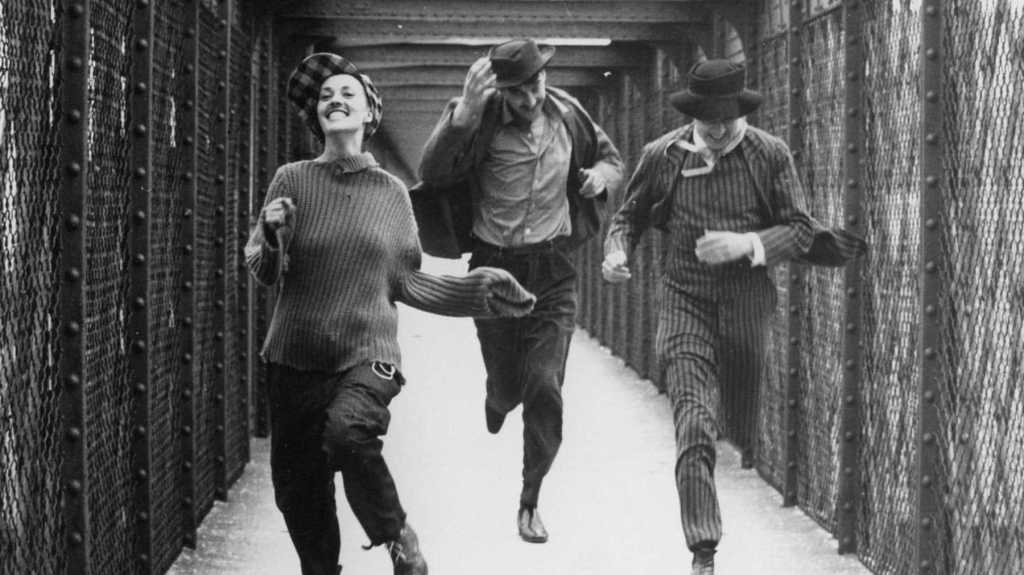
Jules et Jim (1962) wasn’t my first film by François Truffaut, but it might as well have been: while I saw The Last Metro (1980) earlier, it didn’t fully register that this was a film directed by Truffaut, one of the founders of the French nouvelle vague, and I only remembered The Wild Child (1970) very, well, vaguely. In fact, I was more aware of Truffaut in Spielberg’s Close Encounters of the Third Kind (1977).
Each Friday we travel back in time, one year at a time, for a look at some of the cultural goodies that may appear closer than they really are in The Rear-View Mirror. Join us on our weekly journey into the past!
I have a confession to make: I don’t particularly like Jurassic Park. Sure, Spielberg gets the sense of wonder just right, the visual effects still hold up well, Bob Peck’s death scene is fantastic and it’s got Samuel L. “BAMF” Jackson – but I will take that big, rubbery shark over T. Rex and Friends any day of the week.
Yes, I’m a pretentious film geek who salivates at the sound of “Criterion Collection”. I like Bergman’s The Seventh Seal (a little known Swedish children’s movie about a boy and a seal at the local circus – it’s basically Free Ølåf) and Fellini’s La Strada – but I love the great popcorn movies. For me, there are two almost perfect representatives of that hallowed group of films: Raiders of the Lost Ark and Jaws.
What happened to the man who made those films, though? Spielberg is still one of the best craftsmen in Hollywood, but the thing that was exhilarating about his early films was their sheer energy. There was a joy to the filmmaking, a childlike sense of fun, that made Spielberg unique. It’s there in the two films mentioned, and it’s also there in E.T. (mixed with a generous dollop of sentimentality) and Close Encounters of the Third Kind – but the biggest failure of Indiana Jones and the Kingdom of the Crystal Skull was that it was tired and felt forced. There was little of the exhilaration of the earlier films in the series, especially of the first. Obviously this could be attributed to Indy having aged himself, but that’s a disappointingly humdrum explanation that pretty much begs the question: why have a fourth Indy movie in the first place?
More than that though, rewatching Jaws over the weekend I was made aware of how Spielberg in his early days was much more ruthless. He didn’t have qualms about having a young boy be chomped by a shark, he didn’t think twice about having a number of pretty gruesome deaths in Raiders of the Lost Ark. It wasn’t the childish sadism of Temple of Doom, but it basically meant, “Yes, horrible things can happen. Anyone can get it in the teeth.” And as a result the films were more exciting. If even a kid can be eaten by a shark, well, then nobody’s safe. (Compare Jurassic Park, where the kids and the heroes are never really in jeopardy – it’s pretty much nobodies and evil lawyers that get eaten. It’s amazing that a cheesy, bad film such as Deep Blue Sea gets this better by making it clear from the first that anyone can die – even Samuel L. “Badass” Jackson.)
The much-ridiculed CGI retouching of E.T., replacing guns with walkie-talkies is symptomatic of this fretful, overly squeamish Spielberg. The BMX chase in the original version of E.T. is exciting, and the moment when they get out the guns, we know: Uh oh. Something bad could happen. Compare the same moment in the ‘remastered’ version, where the impression we get is that the worst that could happen is, they might be caught by the grown-ups and given a severe talking-to. Where’s the danger? Where’s the sense of actual risk? If you take that away, characters that we care about become invincible video game characters with the god mode turned on.
I’m in a minority in that I quite liked much of War of the Worlds, but it’s a prime example of a film that suffers from Spielberg’s “playing it safe” doctrine. It’s pretty clear, in every single scene, that he wouldn’t kill off Dakota Fanning – and while her brother puts himself in a situation where he’s almost sure to die, we get an unbelievable, corny deus ex ending that many filmmakers who are much less skilled than Spielberg would have scoffed at.
Obviously Spielberg isn’t the young man he was when he made Jaws or Raiders. He’s older now, so it’s only to be expected… but did he have to become so damn po-faced? Where’s the glee? Reduce Spielberg to his (considerable) skill while taking away his sense of joy and adventure, and you get Zombie Spielberg.
And everyone knows that only Godzilla Lucas can fight Zombie Spielberg.

 A Damn Fine Cup of Culture