Each Friday we travel back in time, one year at a time, for a look at some of the cultural goodies that may appear closer than they really are in The Rear-View Mirror. Join us on our weekly journey into the past!

Alien turns 40 this year, and due to (or despite of) its low-tech special effects, it has aged well. In 1979 the film was meant to benefit from Star Wars‘ success, and became a classic in its own right. Sticking with a female lead for a franchise is not unprecedented, but it was (and is!) rare enough for Alien to be studied for its feminist message. This is by no means the only subject which has been studied through (or sometimes projected onto) Alien. From post-humanism to themes of giving birth and even rape, the amount of scholarly and academic articles which have been written about this sparse sci-fi thriller is improbably large. For all the scholarly probing, though, Alien is an accessible film, and still an easy film to love. Scott says it was meant to be an “unpretentious, riveting thriller, like Psycho or Rosemary’s Baby”.
Continue reading
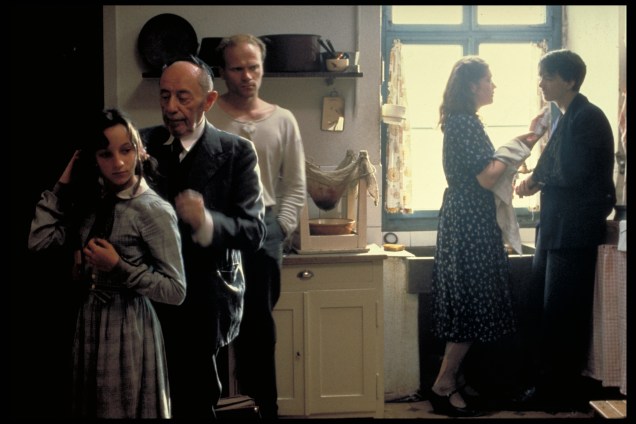 Markus Imhoof’s early feature film Das Boot ist voll (The Boat is Full) from 1981 was an immediate success. It won prizes at the Berlinale in 1981 and got nominated for an Oscar for Best Foreign Language Film a year later, but didn’t win. It made waves at the box office, and it still turns up on many top ten lists of best Swiss movies, and rightly so. The title is a cowardly statement by a leading Swiss politician about the refugee situation in Switzerland during the Second World War. The movie is about six refugees who jump off a train going to Nazi Germany, trying to find shelter and safety on the other side of the border in Switzerland. Three of them are children, but there is also a spirited woman named Judith Krüger who is looking for her husband who is in a detention facility somewhere in this country. There is an old man named Lazar Ostrowskij who has lost his wife during the escape attempt from the train, and since he can no longer be a husband, he is a grand-dad to the three children, although it’s hard to remember who is related to who. The sixth refugee is a deserting German soldier, and the other five are reluctant to be in the same room with him. Judith Krüger soon realises that they have to reshuffle their relationships in order to pass for a real family so they can either stay in Switzerland or get transit visas.
  Join us for an early spring podcast where we go and look at the pretty horses with Michael Clayton, a 21st century take on ’70s thrillers, and talk about George Clooney without ever mentioning Return of the Killer Tomatoes! even once. Julie also takes us to Santa Barbara County for Finding Neverland, and we look in on Phoebe Waller-Bridge’s recent activities, as Mege talks about the second season of comedy-drama Fleabag and Matt hints at a bit of a fanboy crush on Sandra Oh in Killing Eve.



 A Damn Fine Cup of Culture