Join us every week for a trip into the weird and wonderful world of trailers. Whether it’s the first teaser for the latest instalment in your favourite franchise, an obscure preview for a strange indie darling, whether it’s good, bad, ugly or just plain weird – your favourite pop culture baristas are there to tell you what they think.
Is Roma a sort of stealth sequel to Fellini’s previous film, Satyricon? It can certainly be seen as such: like the film Fellini made three years earlier, it is a sprawling tapestry that is focused less on telling a coherent plot than on moving from episode to episode and from setpiece to setpiece. Where Satyricon depicted, and satirised, ancient Rome, the city’s story is taken into the more recent past and even the present in Roma, making the two films a sort of History of Rome, Parts I & II. But where the earlier film was based on the writings of Petronius, Roma‘s angle is decidedly subjective.
Join us every week for a trip into the weird and wonderful world of trailers. Whether it’s the first teaser for the latest instalment in your favourite franchise, an obscure preview for a strange indie darling, whether it’s good, bad, ugly or just plain weird – your favourite pop culture baristas are there to tell you what they think.
Join us every week for a trip into the weird and wonderful world of trailers. Whether it’s the first teaser for the latest instalment in your favourite franchise, an obscure preview for a strange indie darling, whether it’s good, bad, ugly or just plain weird – your favourite pop culture baristas are there to tell you what they think.
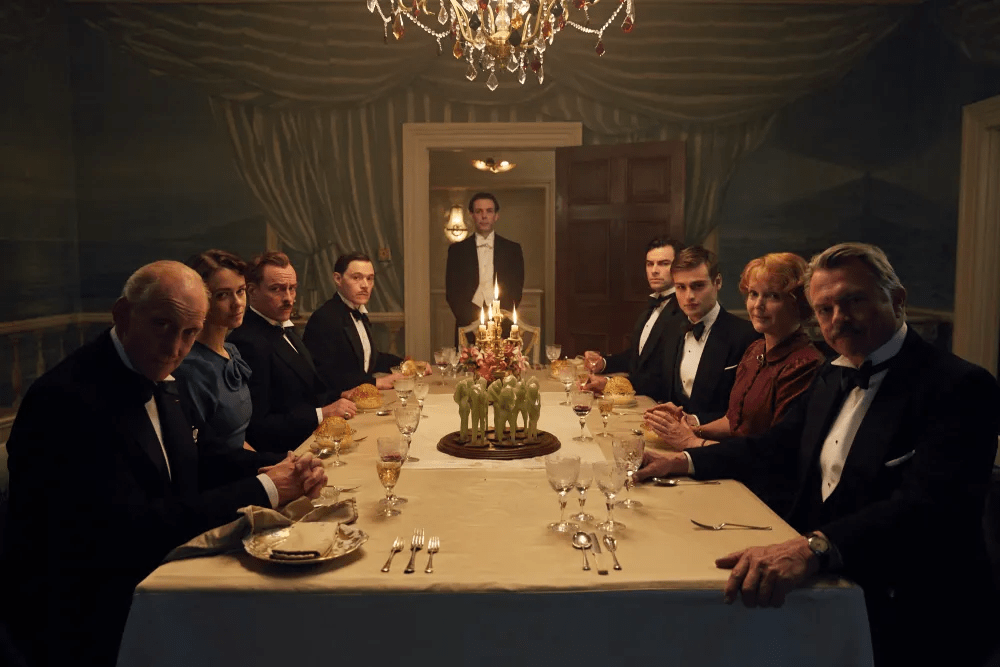
We all love a good Agatha Christie yarn here at A Damn Fine Cup – but they’re not all cosy and twee. There’s plenty of Christie beyond Death on the Nile and Murder, She Said, and in this week’s Six Damn Fine Degrees, Matt writes about the darker sides of cosy crime.
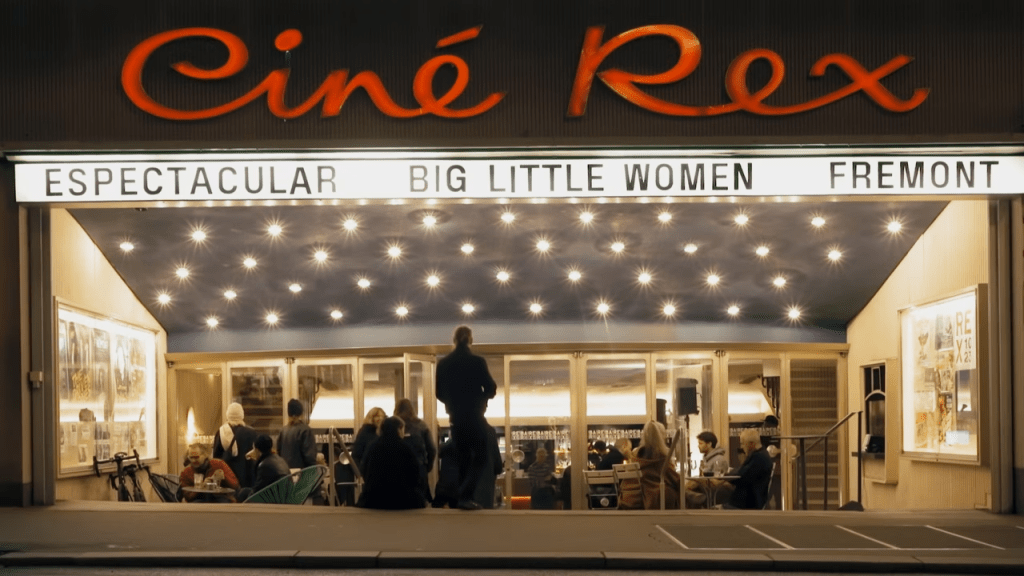
The Cinema REX in Bern, my favourite cinema, and indeed the best cinema in Bern/Switzerland/Europe/the world, shows new releases, mostly independent films or world cinema – but that’s not why they’re my favourite: it’s their curated programme. More or less every month, they’ve got a programme focusing on a theme, genre, country or filmmaker – in parallel to which they will also be running other, longer-term series, e.g. on film history or LGBTQI+ cinema or kids’ movies. Thanks to the REX I’ve seen classics on the big screen that otherwise I might not have had the chance to see at an actual cinema, from Apocalypse Now to Close Encounters of the Third Kind, from North by Northwest to Fanny and Alexander. The other movie theatres in the city that have survived the Great Cinema Purges of recent years also offer curated programmes, such as a series on Cult Movies and Worst Movies, but none are focused as much on providing a curated programme.
Welcome to Six Damn Fine Degrees. These instalments will be inspired by the idea of six degrees of separation in the loosest sense. The only rule: it connects – in some way – to the previous instalment. So come join us on our weekly foray into interconnectedness!
I don’t remember a time when I didn’t know about Agatha Christie, her stories and her characters. Somehow, Miss Marple and Hercule Poirot have always been around, much like modern mythology. Settings such as the manor house, scenes where a sleuth has assembled all the suspects and lays out all the clues, feckless local law enforcement: I knew all of these – without ever having read a single one of Christie’s novels or short stories or having seen any of the numerous adaptations. Again, I was aware of Margaret Rutherford in black-and-white movies and of Peter Ustinov in glamorous locales, sporting a silly moustache and a sillier accent. But the actual thing passed me by for the longest time.
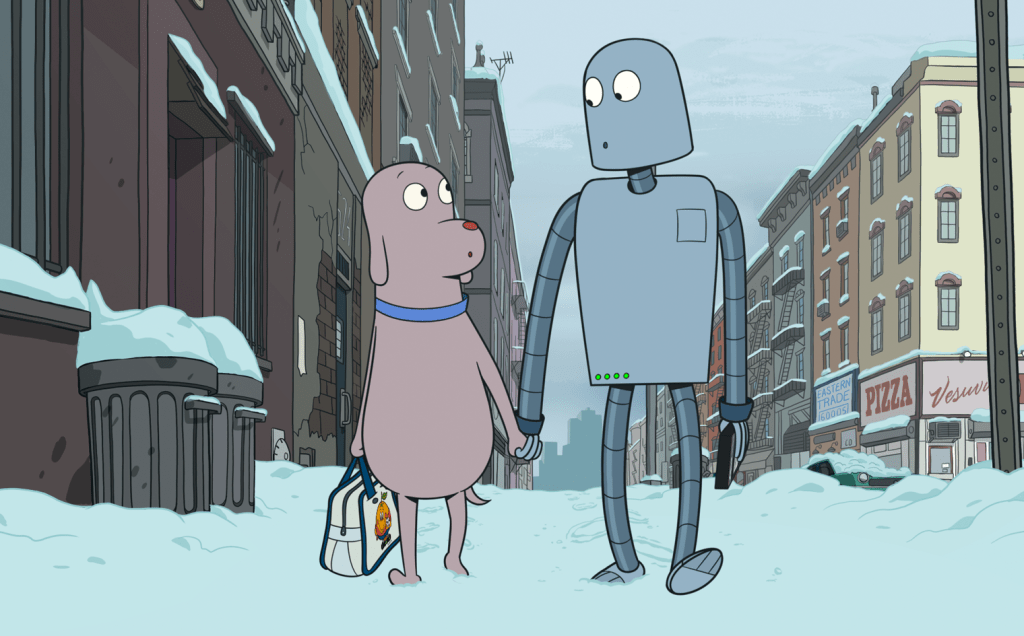
It’s Manhattan in the 1980s, and Dog is lonely. He, differently from everyone around him, has no one to share his life with – so when he sees an ad on TV for robot friends, he doesn’t hesitate. Soon a large, heavy box appears and Dog sets about assembling his new friend. He and Robot immediately hit it off, and Dog’s life changes.
Until the day he takes Robot to the beach, and everything is turned upside down.
Join us every week for a trip into the weird and wonderful world of trailers. Whether it’s the first teaser for the latest instalment in your favourite franchise, an obscure preview for a strange indie darling, whether it’s good, bad, ugly or just plain weird – your favourite pop culture baristas are there to tell you what they think.
Sometimes our Six Damn Fine Degrees posts get caught on a certain topic: a few months ago, we had several posts in a row focusing on the films of Werner Herzog, and recently they’ve entered an Agatha Christie phase. This week, Sam remembered the great Maggie Smith, writing about two of her appearances in adaptations of Agatha Christie’s Hercule Poirot stories: Death on the Nile and Evil under the Sun, both of which Smith featured in, albeit in different parts.
Two adolescents jump off a moving train. Shouts come from the train, and shots, but who would stop at the behest of people who are already shooting at you? The young men continue running, shedding the long coats marked “KL” (for Konzentrationslager, concentration camp – an abbreviation that was later changed by the SS to “KZ”, allegedly for its harsher sound) as they move further and further into the forest, cold, hungry, ill-prepared for their journey.
But, before long, we get the sense that, run as they might, the two men are doomed. And perhaps more than that: perhaps they are dead already.
Welcome to Six Damn Fine Degrees. These instalments will be inspired by the idea of six degrees of separation in the loosest sense. The only rule: it connects – in some way – to the previous instalment. So come join us on our weekly foray into interconnectedness!
A ’70s-inflected theme starts up: raspy, excitable horns, tense vibrato strings. On a burgundy background, a slim image appears across the width of the screen, a pair of eyes opening and looking at the audience, looking with intent. The eyes disappear and the background changes to a dark blue; the eyes pop up again, this time at the bottom of the screen, looking to the left. Again they disappear, the blue becomes darker, and the pair of eyes, familiar by now, comes up centre-screen, peeking right at first but then again focusing on us, the audience. White lines appear from the sides of the screen, one horizontal, one vertical, crossing over the eye on the right, then five concentric circles, going from large to small, all centred on where the lines cross – forming crosshairs, taking aim. The innermost circle turns into an O – and the title is revealed: TATORT.
The title sequence continues at this point, the theme becoming even more ’70s, if that is even possible, with a slapping bassline that’s probably more familiar to TV audiences across Germany (and Austria and Switzerland) than the German national anthem. It’s Sunday evening, 8.15pm. It’s Tatort time.


 A Damn Fine Cup of Culture