Criterion Corner: Rushmore (#65)

It took a while for me to warm to Wes Anderson and his films. It’s not that I didn’t see his talent for mise-en-scène; that has always been obvious. It’s that I found his characters and their quirks grating rather than charming. I did not enjoy spending time with the Tenenbaum family, I didn’t want to hang out with Steve Zissou and his crew. And when the films veered towards tragedy, I found them too affected to care, too smugly self-conscious and twee.

It was only with The Fantastic Mr Fox that I learnt to enjoy a Wes Anderson film, not for individual parts but as a work in its entirety – and oddly, it took the more sustained artifice of latter Anderson for me to connect to the underlying emotion as something real. It was therefore with some trepidation that I approached Rushmore, Anderson’s second feature film, which I expected to be closer to the films that would follow it, The Royal Tenenbaums and The Life Aquatic, in style and tone. And it is – though it has some interesting quirks of its own, among them an awareness of the limitations and annoyances of The Life Andersonian.

Continue reading →

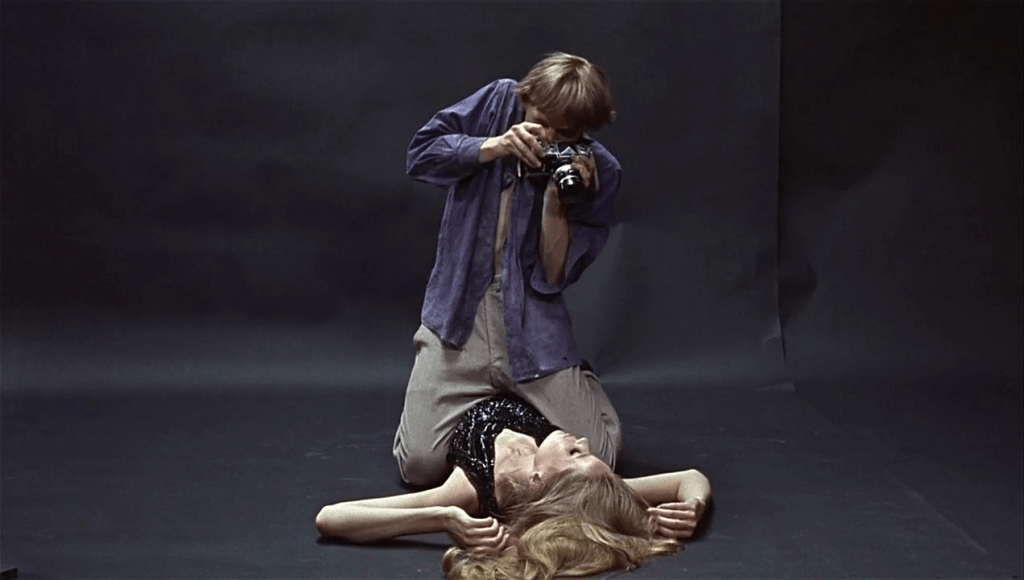
Criterion Corner: Blow-Up (#865)

I admit: sometimes I find them intimidating. The classics, the cinema icons, the films that everyone says you should watch because they are just that good and the directors who made those films. What if I watch one of those films and I don’t like them – or, worse, they don’t do anything for me and barely evince any reaction whatsoever? (Somehow it’s easier to dislike an iconic film than to be indifferent to a supposed masterpiece of the art form.) Which may go some way towards explaining the big pile of Criterion films I’ve bought but haven’t watched yet. Of course I want to watch them, I will watch them – but not just yet. I’ll get around to them. Eventually. Perhaps there’s a part of me that doesn’t want to watch them so much as it wants to have watched them.

Michelangelo Antonioni’s Blow-Up was one of those films for a long time – but then my kindly co-baristas here at A Damn Fine Cup of Culture went and did a podcast episode about seeing our cities, the places we live (or have lived) in, on film, and Alan chose to talk about the London of Blow-Up. And at that point I couldn’t really not watch it, could I? (Mind you, it still took me more than seven months, but I think that this year has given me enough of an excuse for that sort of delay.)

Continue reading →

Criterion Corner: In a Lonely Place (#810)

Humphrey Bogart is a strange leading man: while charismatic, he is not exactly handsome, and as he got older, the contrast between his charisma and his lack of conventionally good looks got bigger. He wasn’t afraid to play characters that were unpleasant, though interestingly so, and he didn’t shy away from his characters’ dark sides, their cowardice, neediness, pettiness and egotism. Look at Fred C. Dobbs, his character in The Treasure of the Sierra Madre: he’s not a Disney villain, he is not an evil mastermind, he is a small, pitiful man, really, who meets a pitiful end. How many Hollywood leading men at the time were happy to play such roles?

Continue reading →

Criterion Corner: The Samurai Trilogy (#14-16)

I’ve said it before: there’s an effect not unlike Stockholm Syndrome that can come with long-form storytelling. If you follow the fates of a set of characters over a longer time, if you watch or read about a community over many chapters, seasons or volumes, it’s very well possible that you begin by bouncing off of, or even disliking, the story and its characters – but we are likely to hold on to the things we enjoy, minimise those we dislike, and over time we justify the time we’ve put into a story by investing in it emotionally. A film is usually over after two hours, and unless we revisit it at a later stage, it never really has this opportunity to win us around – but a series? A game lasting 50+ hours? A graphic novel that tells its story over ten volumes? At least for me it’s like this: either I stop early, or I keep going, because there are some interesting elements or characters I like, or perhaps I’ve heard from so many people that the story becomes really engrossing – and after I’ve put a certain amount of time into this story, I’ll find that I’m invested, because otherwise I’d have to tell myself that this time was pretty much wasted. Is it something of a psychological self-protection mechanism? Or do some stories simply need more time to have the intended effect? I suspect it’s a combination of the two – but, honestly, how am I to tell?

Continue reading →

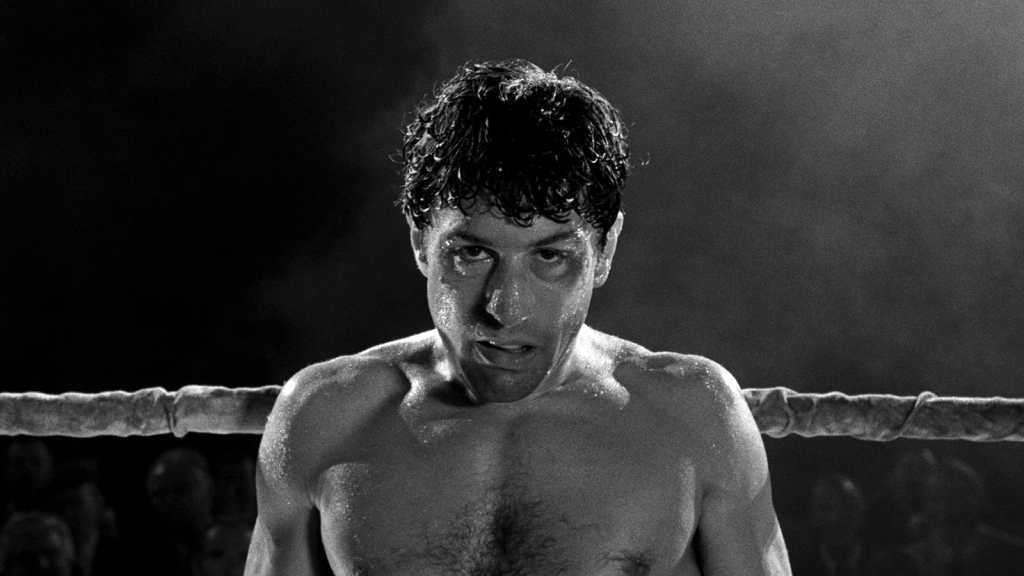
Criterion Corner: Raging Bull (#1134)

There are films that are a joy to watch because they’re so well crafted. The director knows what they’re doing, the cinematography is stunning, the editing is masterful, the acting and writing, the score – everything is spot on.

Then there are films that are deeply unpleasant because of the world and characters they depict. You don’t want to spend time in this place, with these people, and once you’ve been there for two hours, you just want to go and have a shower and clear your brain from the memory of them.

And sometimes, there’s a film that fits both of these descriptions. For me, Martin Scorsese’s Raging Bull is one of those films.

Continue reading →

Criterion Corner: They Live by Night (#880)

Being a self-confessed Criterion junkie, I have once or twice bought a Criterion release by mistake. I managed to order Persona twice (which, to be fair, makes perfect sense, considering the film). I once bought a DVD version of Le Samouraï from some Amazon reseller that turned out to be a Korean bootleg – and it didn’t even work. And I ordered They Live By Night (1948) after attending a lecture on Ida Lupino, where the lecturer showed a scene of the film that made it look intriguing and thrilling.

Turns out that film with Ida Lupino was They Drive by Night, of which there isn’t a Criterion release. As that great American philosopher said so memorably: D’oh. On the plus side, the Ida Lupino lecture was by Johannes Binotto, who joined us for our recent podcast on Lupino.

And while we’re talking about the pluses of me ordering the wrong film: They Live by Night is very good.

Continue reading →

Criterion Corner: For All Mankind (#54)

Earlier this year, we saw Summer of Soul, Questlove’s documentary/concert film hybrid about the 1969 Harlem Cultural Festival. In its last third, the film juxtaposes the festival, an event by and for the African America community that at the time (and not just then) was sorely disadvantaged and underserved, and the first moon landing, where NASA put Whitey on the Moon. Why are millions spent on space exploration when the planet we live on is severely lacking in so many respects?

Continue reading →

Criterion Corner: Irma Vep (#1074)

In 2021, we did a podcast episode titled “Second Chances” (which we’re hoping to turn into something of an annual thing). In it, we discussed films that, for one reason or another, didn’t work for us but that we’d been wanting to revisit because we thought it might’ve been a case of “It’s not you, it’s me”: that we watched these films with the wrong kind of expectation, or that we lacked the right lens through which to watch it.

Sometimes, though, there can be films (or books, plays, poems, TV series, albums, games etc. etc.) that simply work on a wavelength that we’re not receptive to. This doesn’t mean that they’re bad or that we’re wrong or stupid for not liking them. I’ve long believed that most art that is interesting won’t be for everyone. Ideally I can still get something out of culture that isn’t for me, but generally this is a matter more of appreciation than of enjoyment. Often these are works that I prefer to discuss or read or watch a good video essay about rather than to watch.

But these works still tend to leave me with lingering doubts, especially the ones that have elements or aspects that I genuinely do enjoy: a scene, a performance, or perhaps a shot that sticks in my mind. And the same can be true for certain directors: I don’t generally like their work, but there’s something about it that makes it difficult for me to just conclude that they’re not for me.

Continue reading →

Criterion Corner: The Piano (#1110)

I first saw The Piano at the cinema in 1993, when it originally came out. The film felt intense and erotic and physical. It felt adult – though, looking back, I’m surprised by how many films I’d seen as a child and teenager that I’d consider adult. Not because of nudity or sex, although they definitely featured those – I’m thinking of the likes of Milos Forman’s Amadeus or Bernardo Bertolucci’s The Last Emperor -, but because of the characters and themes, and because they were more than happy to leave things unsaid. They were ambiguous. Certainly, I also spent the ’90s watching things like Aliens and Die Hard and Jurassic Park, and I enjoyed those (though I never loved Jurassic Park, which always felt like a more family-friendly Jaws to me, and Jaws should never be family-friendly) – but where these now feel familiar, like cinematic comfort food, The Piano still has that strange intimacy that is both thrilling and discomforting.

Continue reading →

Criterion Corner: Valerie and Her Week of Wonders (#761)

Surrealism is tricky. Some dislike it altogether, finding it too random. Myself, I respond to some of it (as the name of this blog may suggest, I’m not altogether averse to a nice slice of Lynch), but there must be an underlying form, a sense that there is some form or logic at play, even if it is the dream logic of, say, Eraserhead or Mulholland Drive. As soon as it veers into the formlessness of Dada, I tend to disengage.

Valerie and Her Week of Wonders, by the Czechoslovak director Jaromil Jireš, leans more towards the former; its surrealism is definitely more dreamlike and Freudian than it is arbitrary, and most of its images aren’t all too difficult to interpret: blood falling on daisies signifies the onset of the protagonist’s first period, vampires hungering for Valerie’s blood and its power to keep them youthful represent sexual desire and the lust of the old for the young. Valerie and Her Week of Wonders isn’t hard to read – yet its tone, somewhere between uncanny and camp, is quite effective at times. It is the kind of film that works better the less it is interpreted, perhaps, because interpretation reduces it into shopworn tropes of Freudian analysis.

Also, sadly, it is very easily reduced to a sexual fantasy whose object of desire is a thirteen-year-old girl.

Continue reading →