Stop me if you’ve heard this one. Two contract killers, their mark, a seductive woman. A philosophical road trip towards death, though it’s not entirely clear who will die and who will live. Psychological games, tense stand-offs, sudden violence. You may not be able to name any specific title, but it still sounds familiar, doesn’t it? Tarantino, McDonagh, or indeed Hemingway. Cheap suits, hidden guns, strong language: hitmen make for very effective cinema.
Uncategorized

Is he having a laugh?
I’m in a playful mood, so let’s have a little game, shall we? Ok, here is movie number one – see if you can guess the title. It’s about a filmmaker who lives in a country where a serial killer goes around and kills famous filmmakers. Our protagonist is upset because the killer hasn’t sought him out and tried to kill him because isn’t he an excellent filmmaker, too? He doesn’t have a death wish, but being almost killed would be a badge of honor. Continue reading
Getting into the swing of things
I have walked 500 miles and much, much more, through virtual New Yorks, irradiated zones, Wehrmacht fortresses and zombie-infested streets. I’ve parkoured and teleported, I’ve driven, hovered and flown. Traversing spaces that only exist as zeroes and ones on digital media is one of the things that I love about video games, and it’s one of the things that modern gaming does so much better than the 8-bit pixelscapes I grew up with. It’s not even graphical fidelity, although that’s part of it; more than that, it’s that modern hardware allows for vastly more ambitious, three-dimensional environments, whether that’s the Hollywood realism of GTA V‘s parody of Los Angeles or the stylised aesthetics of Journey‘s deserts and snowy wastes.

Your mission: to file out
 Gosh, there is no really bad Mission: Impossible movie, and no really good one, is there? Let me count the ways: the first one, Mission: Impossible (1996), has the courage to kill most of its illustrous cast quite early on, and it has that famous scene wherein a helicopter is chasing a high speed train through a tunnel. That sequence is so preposterously over the top that the rest of the movie sort feels muted in comparison. And if you can make sense of the plot, then you are a better person than me. Continue reading
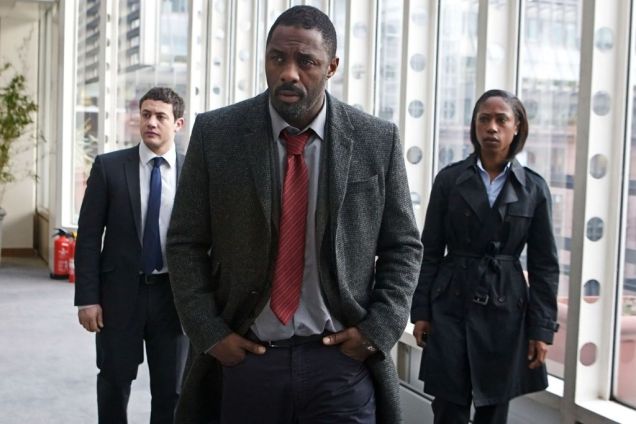
The Rear-View Mirror: Luther (2010)
Each Friday we travel back in time, one year at a time, for a look at some of the cultural goodies that may appear closer than they really are in The Rear-View Mirror. Join us on our weekly journey into the past!
Look, I get it. Luther is no longer the same now, compare to its first season in 2010. We still get to see Idris Elba playing the lead, his loyal sidekick DS Justin Ripley, gruff DSU Martin Schenk, Benny Silver and many other cool names that turn up for a few episodes or a whole season, like Saskia Reeves, Rose Leslie, Nikki Amuka-Bird, Indira Varma or Sienna Guillory. But since Alice Morgan dropped out of DCI John Luther’s life (and Ruth Wilson out of the series), something is missing.
Fringe Benefits 2018
Every few years I head to the Edinburgh Fringe for a week of theatre, comedy and impromptu games of Avoid The Leafleteers. This year we were once again ready to brave the professional performances, the amateur dramatics and the wind, drizzle and fog. As always, the range of shows to see was immense: from queasy comedy (or is it?) about toxic masculinity via Korean mashups of Shakespeare, folklore and calligraphy to immersive flights on Schroedinger Airlines, but also from accomplished acting and acrobatics to the decidedly more homespun and rough around the edges – but often no less engaging for that.

Some unhappy families are unluckier than others
 Looks like A24, founded in 2012 and quickly becoming a major player in movie distribution, is pulling quality horror flicks out of a hat with disquieting regularity: they brought us The VVitch in 2015, It Comes At Night and The Killing of a Sacred Deer last year. Ok, for some, Sacred Deer is not exactly a horror movie, but like the others, it features a family in distress. And so does Hereditary. And if you find an unhappier, unluckier family than the Grahams anywhere in film or literature, you were looking maybe too hard. Continue reading
Soldiering on
 Sicario: Day of the Soldado is a textbook example of diminishing returns. What is missing most of all is Kate Macer, the Emily Blunt character from Denis Villeneuve’s original Sicario (2015), who provided us with an entry into the seriously skewed ethics of clandestine missions across the US-Mexican border in the unwinnable war on drugs. Also missing is Roger Deakins’ excellent camera work. Soldado, again written by Taylor Sheridan, and directed by Stefano Sollima, an Italian director with experience in crime stories (the Gomorra series), focuses instead on the two characters we already know: Matt Graver (Josh Brolin), the US government’s go-to guy for unsavoury operations and unusual footwear, and Alejandro (Benicio del Toro), the vengeful hired gun. This time round, the US government finds that terrorists disguised as Mexicans have crossed the border. That makes the crossing a terrorist act in their eyes, and so they are allowed to retaliate. See what I mean by skewed ethics? Continue reading
The Rear-View Mirror: Halt and Catch Fire (2014)
Each Friday we travel back in time, one year at a time, for a look at some of the cultural goodies that may appear closer than they really are in The Rear-View Mirror. Join us on our weekly journey into the past!
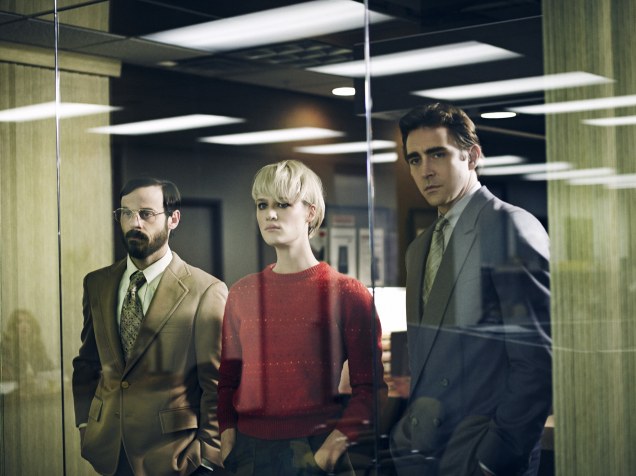
Whenever there is something technical to be done about this site, it’s not me. I don’t have it in me, and I need constant technical advice and supervision. So the joke is probably on me when I tell you that I really like the first season of Halt and Catch Fire, an AMC series that started in 2014 and ended last year with its 4th season. HaCF is about a small Texas computer hardware company called Cardiff Electronics in the 1980s, where three employees go rogue and secretly want to beat giant blue chip IBM in building a better, affordable computer.
Continue readingIt’s not just all in your head if it’s contagious
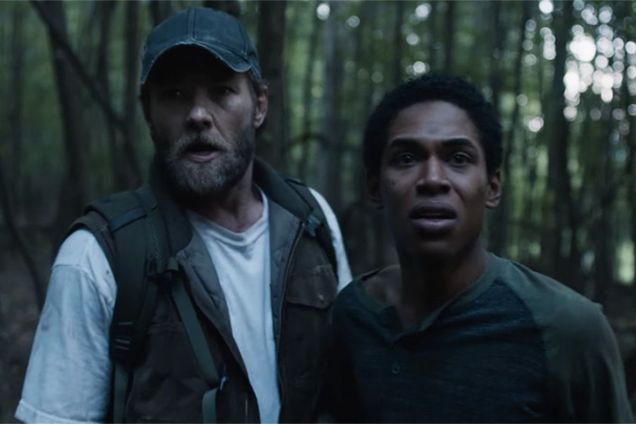 It Comes At Night made me realize that some horror movies have too many ingredients. This one here contains: a family of three in a boarded-up, but otherwise intact, creaky house in the woods, banks of fog, sleeplessness and nightmares. That’s it. There are no aliens, knife-wielding loonies, supernatural catastrophes, magical-realist occurrences, ominous messages from beyond, or ghosts of any kind. There is no longer any electricity, and there is also no nonsense about someone sabotaging the generator in the middle of the night because there isn’t one. Paul and Sarah and their teenage son Travis have to make do with camping lanterns. That sounds slightly arthouse-y and intellectual for a horror flick, but it’s way better than any other genre exercise I’ve come across lately, with the exception of A Quiet Place.
 A Damn Fine Cup of Culture