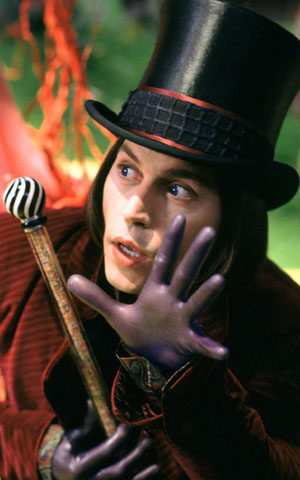
Superheroes the world didn’t need

Elephant man! Elephant man! Does whatever an elephant can! Look out – here comes the elephant man!

Okay, I admit it… that was rather bad. Personally, I blame it on the effect of post-New Year’s Eve lack of sleep and a general tendency towards silliness when I’ve just got up. (Those who know me might say that this tendency generally lasts until I go back to bed…)

Elephant Man, together with The Straight Story, is one of the films by David Lynch that even people who don’t know Lynch and wouldn’t sit through five minutes of Lost Highway or Blue Velvet will have heard about. Regardless of this, though, the film is very much a product of Lynch’s aesthetic sensitivities. The many long takes of smoke and textured surfaces that aren’t immediately recognisable, the underlying mechanical sound effects (as if a large engine was powering the film and its world), especially the beginning and the ending. There are moments that recall his earlier works but also his later films. In this respect, Elephant Man feels more obviously like Lynch (if you know his films a bit) than The Straight Story, in which the Lynchian element is a lot more covert.

On a different note: why is it that half the hits to this website come about because people are looking for Miami Vice? Yes, I’ve posted two entries on the movie remake, but I’m surprised that a) people would find Eagles on Pogo Sticks and b)
Miami Vice would be such a popular search term. (Well, I definitely prefer folks getting here googling “miami vice” to those who find the blog googling “panty sniffing”. The latter are also more likely to be disappointed by the actual content of the blog, I think/hope…)

Marie Antoinette… She’s just zis girl, you know?

Apparently, Sophia Coppola’s Marie Antoinette was booed in Cannes. Now that I’ve seen it, I am tempted to say that French film critics are pretentious shrinking violets with an utterly neurotic attitude to their own past. It’s not a great film, and I would rank it lower than both The Virgin Suicides and Lost in Translation (both of which I liked a lot), but it’s a well made film with some good performances, and it’s definitely beautifully shot and edited. Frankly, I don’t know what les critiques Françaises are on about.

However, Marie Antoinette has one big problem: the beginning is by far the strongest, most subtle illustration of the film’s main motif – a young woman taken into a world that is foreign to her and that regards her as an alien intrusion into their rules and conventions – and almost everything that comes after is much more obvious, much less elegant. Coppola’s use of anachronisms, especially in her choice of music (but also in one semi-witty image of a Converse sneaker among the hundreds of Baroque shoes the young queen tries on), works well enough, but once you’ve seen one scene indicating that “she’s really just a lost, rich, poor teenager… and in the end, aren’t we all?”, you’ve seen them all.

In addition, the film does suffer from being under-plotted. This may be strange coming from someone who loves Lost in Translation, hardly the most plotty of movies, but because Marie Antoinette sticks pretty much to history, there’s little of the smooth flow that a well-told story has. There’s a sense that you could walk out for five minutes, to get yourself a drink or have a bathroom break, and come back without having missed much. I don’t think that films have to be plotted tightly, and in fact many of my favourite movies aren’t, but if you know from the beginning where the story will end – off with her head, and all that jazz – then the film can’t really afford to meander.

On related news, I’m going to keep myself short on Deadwood and Six Feet Under. Just know that there are things more frightening in Deadwood than Al Swearengen on a good or bad day, Francis Wolcott, or even E.B. Farnum talking dirty to a leather bag…

This man couldn’t be scary… could he? Could he?

P.S.: Brian Cox should be a fun addition to the citizenry of Deadwood… I wonder whether he’ll ever get that theatre built – I’d love to see auditions for amateur night!

Confessions of a sneaksy, thiefsy crash test dummy

Well, for once I won’t write about last night’s episode of Lost (titled “Catch-22”). Why? Because it wasn’t very interesting – but neither was it so horrible that I have to share my eye-gouging terror with the world (and the Keira Knightley fans who may want to eviscerate me after yesterday’s entry… Just kidding!).

So, instead let me regale you with my current PC gaming choices: Colin McRae DIRT (which I’ve mentioned here before) and Thief: Deadly Shadows. The latter is a game that I originally played when it came out, but now, two computers and three videocards later, it runs much, much smoother than it ever did. However, the game bears sad witness to who I really am: someone who gets a kick out of skulking in the shadows, waiting for people to pass, and then hit them over the head with a blackjack and rob them blind.

Yup, that’s me. I prefer crouching in the darkness and waiting, and then knocking out my enemies. With almost any shooter game, if I have the option to put my opponents to sleep, that’s what I’ll do. There are few things as satisfying in a game as a totally non-lethal headshot with a tranquiliser dart and then dragging the motionless body behind a wall or some rocks… and then waiting for the guy’s buddy to turn up, looking for his mate – and do it all over again.

Now, as far as DIRT is concerned… I’m not bad at it. Not totally bad, at least. But sometimes… well, sometimes my driving looks pretty much like this – and (moving) pictures say a lot more than words in this case:

Stick insect: overrated after all?

Well, at least when it comes to her latest hit… We went to see Atonement yesterday. I think the book’s one of the best novels to come out of England in the last few years; it’s intellectually stimulating as well as moving, with some grandiose setpieces and a lot of subtlety in its characterisation. (The only Ian McEwan novel I didn’t like so far was Amsterdam, the one he won his Booker Prize for.)

It’s a hell of a book to adapt to the screen, though. So much of it – its narration, its style, its themes and motifs – is, at its heart, literary. It’s a novel about writing and about fiction, and some of this is likely to be spelled out or left out in an adaptation. Nevertheless, it’s disappointing to see how often the movie chooses to be bluntly explicit when a more implicit approach would have made things more interesting. Like the trailer embedded below, the film version at times seems to be written in large capitals telling its audience what is going on: Imagination! Accusation! Betrayal! And a hard-boiled egg! (Okay, I made that last bit up.)

Distressing how aesthetic war tends to be in the movies…

 Also, I honestly don’t see why people keep praising Keira Knightley’s performance in this film so much. I liked her Lizzie in Pride and Prejudice, but there’s nothing much in her Cecelia Tallis that we haven’t seen before. There’s stuck-up Keira, passionate Keira, angry Keira and languishing Keira, and that’s about it. Frankly, I thought her performance was fairly similar to Elizabeth Swann in the Pirates of the Caribbean films – not one of the Top 10 performances in movie history, in my opinion.

All in all, much of the first third of the film didn’t work that well for me. It takes a special skill in an actor to pull off “upper class” without falling into a caricature of the “upper class twit” worthy of school theatre and Monty Python. Many of those ageing RSC actors can do it, but in Atonement my main thought was, “If that’s what the British upper class is like, then the masses would have chopped off their heads hundreds of years ago… or otherwise they deserve them!” Every actor seems intent on showing the audience, “Class snobbery is wrong! These people are hateful, hateful idiots!” Which, frankly, I don’t need spelled out in ten-foot letters underlined three times.

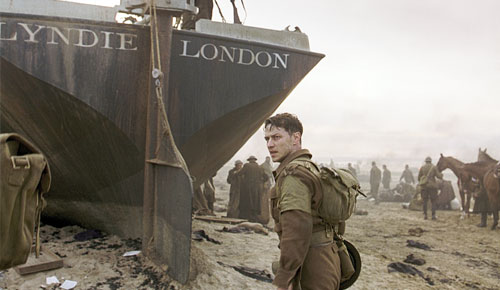
However, the film gets a number of things very right. Many of the wartime scenes, especially the already famous long tracking shot along the beach, are quite stunning. There’s a dreamlike quality to some of these scenes that is miles removed from the literal-mindedness of the beginning and ending. The same goes for the scenes in hospital which do not flinch away from the horrible wounds of the soldiers coming home from France. While the cinematography is beautiful, it still gets across the ugliness of war in a few very effective shots.

Still, while there were things to admire, I have to wonder in the end: is such an Easy Reader version of Ian McEwan’s intricate, beautiful novel really necessary? And is it enough to be able to say, “Well, they didn’t screw it up too badly… They did quite okay”? And why, oh why, are so many reviewers infatuated with Keira Knightley?

P.S.: If my suspicion is correct, merely mentioning Keira Knightley in this blog entry should get me lots of hits.

P.P.S.: Sad, innit?

Have yourselves a merry little Christmas

Well… the blog is almost three months old now. And Christmas, the most unrelenting of holidays is upon us. Run! Or, alternatively, grab some eggnog, lean back, and enjoy some festive YouTube clips, courtesy of… well, YouTube.

And have a merry Christmas!

One of us… one of us…

Lost has this habit of introducing characters that I care little about (in some cases, I actively dislike them). Then, within one or two episodes, the series builds them up… and suddenly they’re fascinating!

That’s when I know they’re doomed, and in the next episode they’ll be blown up or eviscerated or shot.

If there is something to my theory, chances are that Juliet is for the chop. We recently watched “One of Us”, the episode where Jack introduces her to the rest of the beach bunnies and says, “Play nicely, kids!” Never mind that the Others abducted Claire, tried to shoot Sawyer, almost killed Charlie. (Okay, that last one may be understandable enough. Ahem.) Is it just me, or is Jack one of the most consistently naive people on that, or indeed any, island? Or is it just when it comes to women smiling at him?

“Either you’ll treat her nicely… or I’ll pout. I do a good pout, me.”

Especially in this episode, Juliet’s really grown on me. She’s almost as fascinating as Benjamin “Henry Gale (hope you haven’t read Wizard of Oz!)” Linus was in season 2. Her backstory’s intriguing, and her motivations murky in a good, wanna-know-more way. Elizabeth Mitchell’s acting, especially in the scenes with Ben (see the YouTube video below, if you’re interested), has also become considerably more complex and interesting.

However, I think what I enjoyed most about this episode was how it started to tie up plot strands from the previous two seasons. While there are still dozens of big, red, blinking question marks when it comes to what watchers of Lost laughingly refer to as “the plot”, there are hints now that the writers do know what they’re doing. If the rest of season 3 can manage to do that while keeping things interesting for the last two seasons, then bring it on, I say. (Just don’t kill Juliet next episode, please!)

Going… going… gone!

First of all, my apologies for not updating my blog for the last two days. Things at the office and at home have been very busy, but from now on I should be able to update (practically) every day for the next two weeks. Promise!

And there’s enough to blog about, mainly the last film I watched at the cinema. Who’d have thought that Ben Affleck is so good at dealing with actors, especially after he didn’t exactly prove himself to be his generation’s De Niro? (Shades of Sophia Coppola, mayhaps…?) Gone Baby Gone is an accomplished first movie, with a brilliant cast and a wonderful set of moral grey areas to ponder for days after leaving the cinema.

Nah… still gone

For the record, I disliked Mystic River (which is also an adaptation of a novel by Dennis Lehane, just like Gone Baby Gone) intensely. I felt that Eastwood’s film at best paid lip service to the fact that many of its protagonist did pretty horrible things, but secretly it felt like the movie was condoning especially Sean Penn’s actions: after all, Tim Robbins’ character has been permanently broken by what happened to him when he was a kid, so a bullet to the head is in effect a mercy killing, even if done for the wrong reasons, right? Several people disagree with me on that reading, but I can’t shake it.

Gone Baby Gone is clearly by the same writer, and it shares many of the same concerns, but it’s more honest in addressing the moral dilemmas its characters are in. Many of the people involved try to do the right thing – but there is no right thing, so they try as hard as they can to go for the lesser of several evils. And the film doesn’t judge, which is quite amazing considering the story that it tells and the environment it’s set in. The Bostonian “white trash” isn’t looked down at or pitied as much as it is simply observed, just like the main character Patrick Kenzie (Casey Affleck) doesn’t judge but simply tries to do what is right himself.

Casey Affleck is almost as brilliant as he was in The Assassination of Jesse James by the Coward Robert Ford. I was a bit irritated at the voiceover he had at the beginning of the film, because his voice is very characteristic and very specific. Its scratchy, somewhat adolescent quality (“You want fries with that?” – yup, that sort of voice) fit Robert Ford brilliantly, but I associated it with the character, not the actor. As soon as we actually saw Affleck, I was okay with it, though. It’s fascinating to watch his fundamentally decent character trying to figure out what the right thing is. When late in the film he kills a reprehensible character who has done an utterly evil thing, he doesn’t feel good or righteous, as would usually be the case in Hollywood films.

The rest of the cast is as fascinating. Much of the time you forget that you’re watching actors, as there’s something almost documentary about the presentation of the characters. Michelle Monaghan, whom I’d never noticed as much of an actress, makes her character into more of a Girl Friday/girlfriend type; Amy Madigan is as real as always; Morgan Freeman is remarkably short on Morgan Freeman-ness (Freemanity?), his usual, very pleasant style of (non-)acting; and Ed Harris seems to have swallowed Dennis Hopper whole, which is very disconcerting.

However, Gone Baby Gone may be a riveting film, but it’s not the most enjoyable film you could imagine. It’s less ponderous and heavy than Mystic River, but it leaves you with a very ambivalent ending, where those guilty before the law may be punished – but what is legal and what is right in this film diverges quite frighteningly. And chances are that the film will gnaw at your mind for a long time.

Mother****ing House on the mother****ing plane!

Just in case you didn’t get the reference…

“Airborne”, yesterday’s episode of House, M.D., was fun. I like it when they shake up the format, even though the episode was a tad high-concept (“House on a Plane!” Well, you get it…) Seeing the doc try to deal with the situation without his lackeys was enjoyably snarky:

House: Can you say “Crikey Mate”?
12 year-old Boy: Crikey Mate.
House: Perfect. Now no matter what I say, you’ll agree with me, okay.
12 year-old Boy: Okay.
House: Nicely done. You, disagree with everything I say.
Foreign Man: Sorry, not understand.
House: Close enough. (to random woman) You get morally outraged by everything I say.
Sour Faced Girl: (about House writing on the movie screen) That’s permanent marker, you know.
House: Wow, you guys are good.

The editing between the two storylines kept the episode dynamic throughout – and I’ve started to feel sympathy for Chase since last episode (especially the glow on his face when he looked at Cameron’s photo). So far he’d been the blandest of the supporting characters, but there’s something genuinely sweet – if still not terribly deep – to his growing feelings for Cameron. She, on the other hand, is becoming somewhat grating: the combination of self-righteous and self-indulging may be credible, but I find myself thinking, “How about you keep your mouth shut and your pants zipped for ten minutes, girl…” (Yes, every now and then I guess I am a bit of a sexist. Sorry. Feel free to throw things at me.)

In other not-so-news: we started watching season 3 of Deadwood, and boy, is the air thick with ominousness… ominosity- ominiminy? Well, you know what I mean. Quite obviously, Hearst is not a good egg, nor is he the kind of moustachioed bad egg who keeps heads in boxes and whom we secretly like. I can’t really put my finger on it, but there’s something in the balmy frontier air, and it’s not Calamity Jane’s heady aroma. We’ll see where this’ll take us, but somehow I doubt it will be anywhere nice. Or perhaps the episode’s title was ironic: “Tell your God to Ready for Blood” might really be the prelude to a season of goodwill, cheer and fluffy bunnies in Deadwood (no state yet).

Chocolate-covered hobbits do Bollywood

I used to be a big Tim Burton fan. I greatly enjoyed his dark romanticism of the late ’80s and early ’90s. Batman Returns is probably my favourite Batman film. (Batman Begins does better action, but it lacks the inventiveness and the compelling relationships between characters such as Bruce Wayne/Batman and Selina Kyle/Catwoman. Michael Caine’s Alfred rules, though.) And even if Nightmare Before Christmas was directed by Henry Selick, it still oozed Burtonesque style from every semi-putrescent orifice. It had the Tim Burton soul.

Then came Mars Attacks!, a nice half-hour comedy stuck in a two-hour movie, and The Legend of Sleepy Hollow – a film that looked gorgeous (I never knew there were so many colours in grey before that movie) but had a meanness that hadn’t been in the previous films. The less said about Burton’s Planet of the Apes, the better. And Big Fish, even though lots of people liked it, always struck me as a smug, self-satisfied piece of schmaltz. It sides unequivocally with a self-infatuated, selfish boor who needs to stand at the centre of attention. (I very much saw where Billy Crudup’s character was coming from… Personally I would have strangled Daddy Storyteller in his sleep halfway through my childhood if I was him.) When I first saw the trailers for Charlie and the Chocolate Factory, I was suspicious. Actually, no. I was turned off. I thought they looked loud, crude, tacky and tasteless. None of that weirdo “I’m a goth, please give me a hug” sweetness of the early films. In spite of liking Roald Dahl, I gave Charlie a wide berth.

Wonka by name, Wonka by nature

Until they showed it on television last week. We watched it, expecting very little… but roughly five minutes into the film we both had silly grins on our faces. From the first scene, the snow swirling around the Warner Brothers logo and the strains of Danny Elfman’s orchestral score, it felt like the Tim Burton I’d come to love. Charlie and the Chocolate Factory is by no means perfect, and there are moments that are too shrill for their own good. It’s also somewhat let down by an overly sentimental, almost Disney-ish streak of “Family matters”. But on the whole it gets the balance between quirkiness, whimsy and sentiment just right, helped along by the touching earnestness of the title character and an almost surreal, dark streak that comes from Willy Wonka, arguably one of Burton’s most troubled characters yet, and the Oompa Loompas.

Based on this movie, I can say that I’m again looking forward to the next film by Tim Burton for the first time in years.