Welcome to Six Damn Fine Degrees. These instalments will be inspired by the idea of six degrees of separation in the loosest sense. The only rule: it connects – in some way – to the previous instalment. So come join us on our weekly foray into interconnectedness!
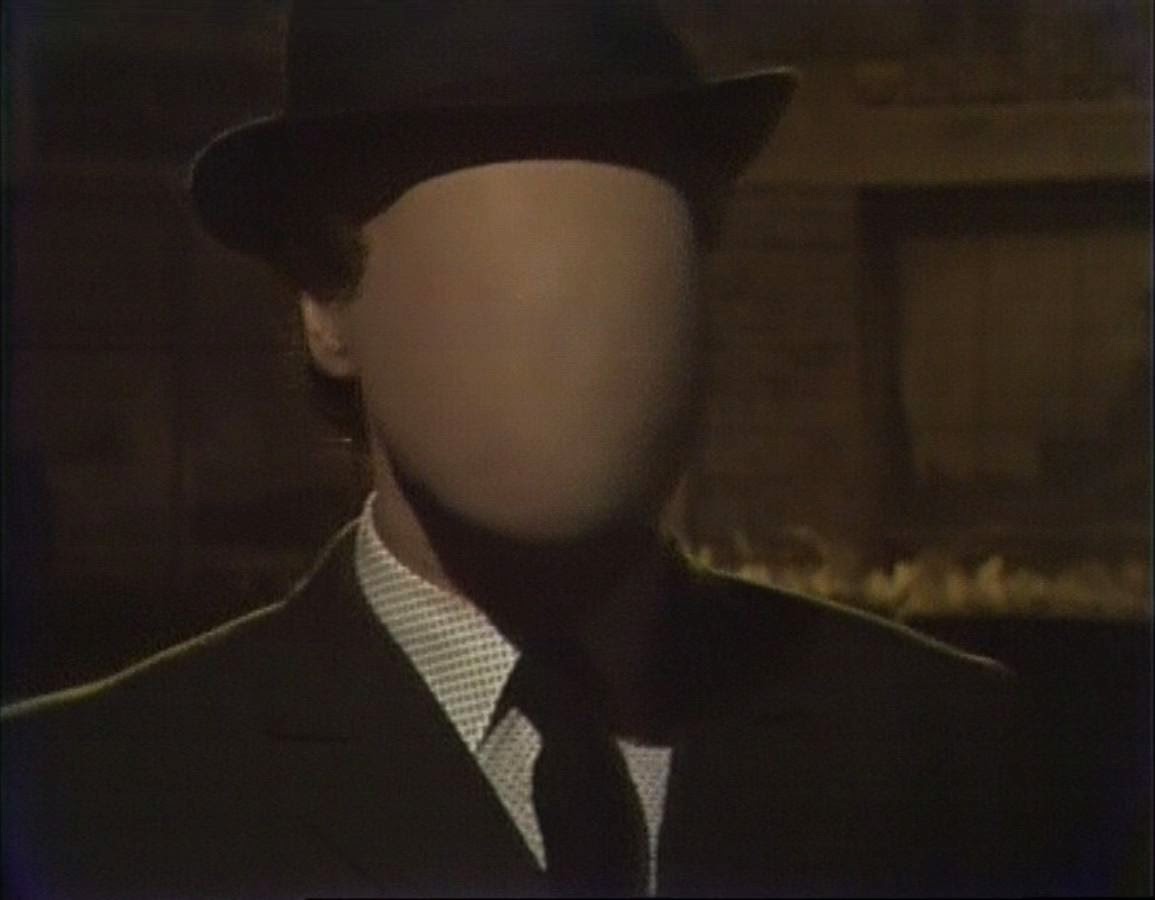
I can vividly recall a number of recurring dreams I had as a child that terrified me. One involved a burning photo, with the person in the image seemingly aware they were on fire. Another involved discovering that people, when hugged, would crumble into nothing. But worst of all would be to be unsettled by a man with his back to me. Only for him to turn around and reveal that he did not have a face.
Variations of these ideas cropped up repeatedly in my dreams as a child, often in very different contexts. But they consistently meant I woke up, at best, unsettled. They seemed an unconnected set of nightmares, origin unknown for all my early years.
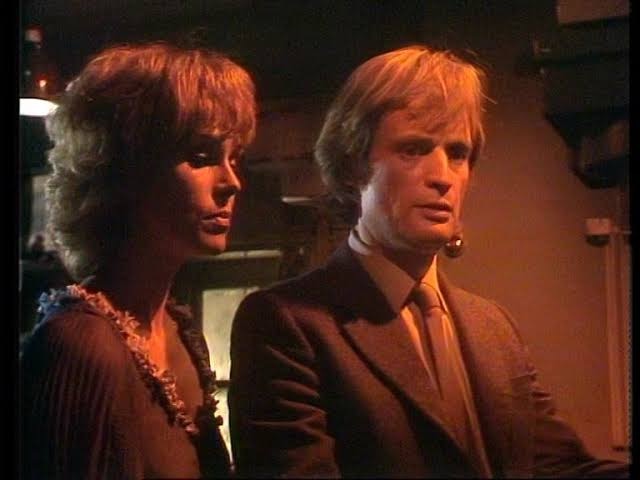
Many years later, as an adult and a fan of telefantasy I started watching ITV’s Sapphire And Steel: a show about two supernatural beings – also origins unknown – who get sent to investigate mysteries. Joanna Lumley and David McCallum star as this duo, seemingly much bigger names than you’d expect to find in such low budget British fare from the very end of the ‘70s. Maybe they were intrigued enough by the prospect of playing inhuman adventurers in an atmospheric TV show. Or maybe they just had urgent debts that needed paying.
Whatever the reason, they’re great in the show, investing their roles with real small screen authority. It’s useful that they play it so straight and so credible, as the scripts in their supernatural tales of Time going wrong run the risk of silliness. Lesser actors might have leant into the oddity of the events, to play it as kooky theatrical fantasy – or assume it was children’s TV and ham it up for the kiddies. But Lumley and McCallum treat it as very real, they are determined, and detached, The darkness, in whatever form it takes on the low budget, is a very serious threat.
TV dramas back then were often shot on videotape rather than film. A considerably cheaper (and reusable) format, it was of a lower resolution to film, often struggling with the extremes of dark and light, sometimes smearing if the camera moved too fast. And yet, somehow, that haziness and theatrical look work for this show. Profoundly claustrophobic in much of its storytelling, it’s a limitation that somehow adds to that effect. Whatever is lurking out there is not quite real. Episodes feel like you’re being told a ghost story – the mystery unravelling as Sapphire and Steel investigate. Nothing is going to lean on impressive visuals to scare you, just the haunting quality of the ideas on display.
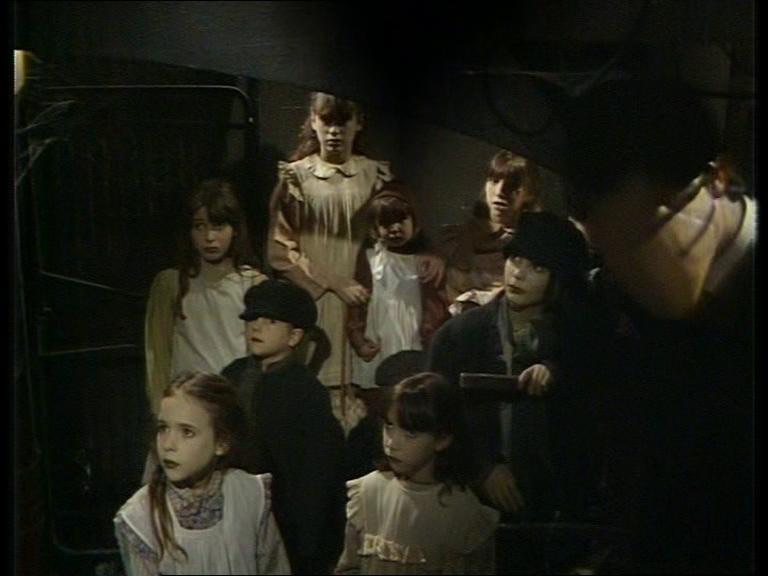
And so, on my first adult watch, I got to the fourth Sapphire And Steel story. And all my childhood nightmares came at me in a wave of nostalgia and fear. Over the course of four 25-minute episodes, this tale has folk trapped in photos, two-dimensional photo people that crumble when hugged, and – most terrifying of all – an evil faceless man. A dark, supernatural entity that must be stopped.
I checked the dates when this was all broadcast – and I would have been five years old. I couldn’t find any evidence of any repeats in later years that might have made my first viewing a bit later, but even then this would have been chilling stuff for a child at double that age. My parents clearly let me sit and watch all the episodes of this, and I just absorbed all these terrifying images and ideas. Concepts designed to chill that would replay in various forms over the years in my nightmares. I had no recollection that they had all come from this one single story, and seeing it all in such a concentrated form was incredible.
ITV made six stories overall, spread over 34 episodes. As I watched all of them, fragments in pretty much all the stories flickered moments of recognition. Clearly I had watched all of these as a kid – the Faceless Photo Demon had not put me off! – but no other story had seeded my night terrors so successfully.
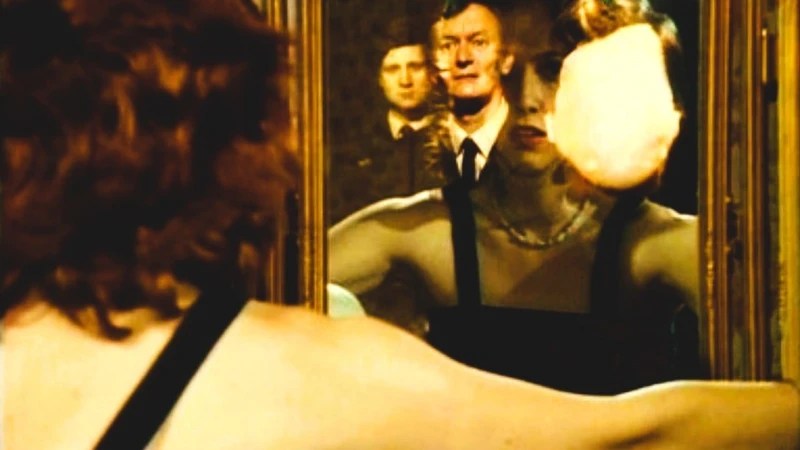
And truth be told, one thing that comes out from the rewatch is this is a show that seems designed purely to create and execute spooky concepts and ideas, far more than it is interested in watertight plotting or establishing a fantasy lore. The Faceless entity of the story is insanely powerful, given what it can do lurking within and without all photos ever taken, but the show isn’t interested in creating an exact lore about the supernatural terrors the two leads are facing. It just wants them to spook. This is storytelling that wants to linger more than it wants to be fully coherent.
Similarly the nature of the leads – Joanna Lumley’s “Sapphire” and David McCallum’s “Steel” – is deliberately vague. We know they represent “elements” that are assigned to deal with spooky situations caused by problems with Time – all of this is in the mind-boggling opening credits -, but given that neither Sapphire nor Steel is an actual element on the periodic table, it’s hard to know for sure what that means. They possess an array of mildly inconsistent super powers, and definitely do not identify as human. Other allies such as Lead and Gold drop in on their adventures, and its clear that the supernatural issues somehow relate to fractures in time. Fractures that need fixing before Things get through. But that’s your lot when it comes to lore and explanation.
None of this lore or world building really matters though – its just a highly imaginative frame on which to hang stories that are creepy and mysterious and packed full of spooky ideas and images. And for one five-year-old in particular to seed a whole set of nightmares to last the length of childhood. And in all honesty, this is a massive recommendation. Scariness is good – and with hindsight maybe, it’s good to get unsettled. Maybe if you asked anyone in my family who had to deal with five-year-old me and that first wave of nightmares, it might be a different story, but I don’t remember those. I do remember the chill on the back of the neck, and still go back to Sapphire And Steel to enjoy it over and over again. Sometimes there’s nothing wrong with a good, full tank of nightmare fuel.

