Six Damn Fine Degrees #247: Gandhi (1982)

Welcome to Six Damn Fine Degrees. These instalments will be inspired by the idea of six degrees of separation in the loosest sense. The only rule: it connects – in some way – to the previous instalment. So come join us on our weekly foray into interconnectedness!
In July 1981, my school went a bit mad. The heir to the British throne Prince Charles was getting married to Diana Spencer, someone the media genuinely referred to “a commoner”. Parts of the UK were getting insanely excited by the prospect, and this included my classroom. The Wedding, we were told, was a Big Event. For kids, this was an event that had everything. After all, there were Princes and Princesses, images of fancy soldiers and decorated palaces, alongside lots of maps smothered with pink. Union flags appeared in the school, and no trip to the shops was complete without seeing aisles of colourful tat with crowns on it.

Continue reading

Six Damn Fine Degrees #244: The Jack Lemmon-shaped hole in Billy Wilder’s “Kiss Me, Stupid”

Welcome to Six Damn Fine Degrees. These instalments will be inspired by the idea of six degrees of separation in the loosest sense. The only rule: it connects – in some way – to the previous instalment. So come join us on our weekly foray into interconnectedness!

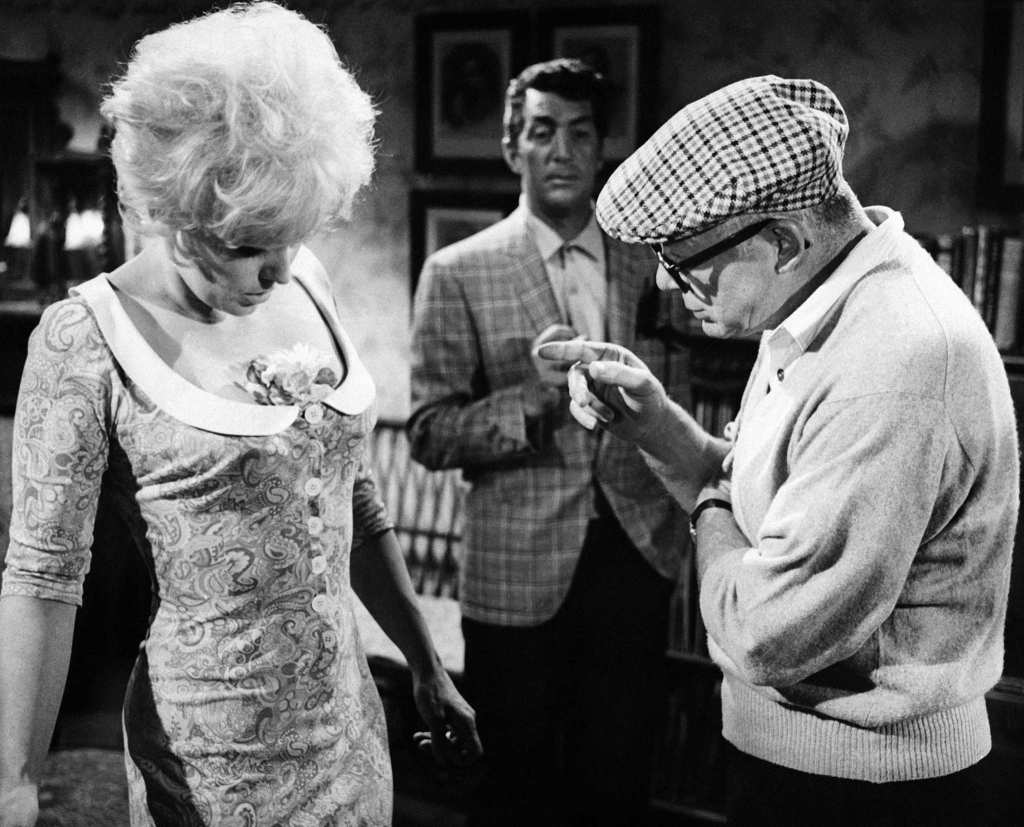
One of Jack Lemmon’s most impressive skills as an actor is his ability to take the role of a slightly schlubby loser, a character prone to selfish and petty acts, and still make him likeable. You can really see this in his films with Billy Wilder, roles such as Jerry in Some Like It Hot, C.C. Baxter in The Apartment, Nestor Patou in Irma La Douce and Wendell Armbruster Jr in Avanti! But I think its perhaps best highlighted in his absence from another Wilder film – Kiss Me, Stupid.

Continue reading

Six Damn Fine Degrees #238: I have heard the Blood Music and I’ll never be the same

Welcome to Six Damn Fine Degrees. These instalments will be inspired by the idea of six degrees of separation in the loosest sense. The only rule: it connects – in some way – to the previous instalment. So come join us on our weekly foray into interconnectedness!

Last week, Sam talked about the classic novels that were an essential part of an English curriculum, and I can well remember something similar from my school days. Those books that were seen as being the official, proper and right things for developing minds to read. However, they were not the only books out there. Alongside the worthy classics, there were popular reads that nonetheless bore the taint of scholarly respect. No teacher would be too angry with you if you were reading an Agatha Christie.

Continue reading

Six Damn Fine Degrees #234: The Pet Shop Boys’ It Couldn’t Happen Here

Welcome to Six Damn Fine Degrees. These instalments will be inspired by the idea of six degrees of separation in the loosest sense. The only rule: it connects – in some way – to the previous instalment. So come join us on our weekly foray into interconnectedness!

At the height of their international success, the Pet Shop Boys made a movie. But following the collapse of their record label EMI, the production entered into a Rights Limbo. In other words, nobody quite knew who owned what when it came to the production, meaning no one could screen the film or release it on DVD or Blu-ray. It wasn’t clear whose permission they would need to seek and who they would need to pay to do it.

Continue reading

Six Damn Fine Degrees #230: Modern Folk Horror

Welcome to Six Damn Fine Degrees. These instalments will be inspired by the idea of six degrees of separation in the loosest sense. The only rule: it connects – in some way – to the previous instalment. So come join us on our weekly foray into interconnectedness!

A world away from the urban landscape and its City Lights lies the genre of Folk Horror. But what is “folk horror”? One of the trickiest aspects of a discussion about any film genre is to pin down a good definition. I do rather like what Wikipedia succinctly offers on this score at the start of their entry on the subject:

Folk horror is a subgenre of horror film and horror fiction that uses elements of folklore to invoke fear and foreboding.”

Continue reading

Six Damn Fine Degrees #226: The BBC Radio Lord Of The Rings Part One: The Fellowship Of The Cast

Welcome to Six Damn Fine Degrees. These instalments will be inspired by the idea of six degrees of separation in the loosest sense. The only rule: it connects – in some way – to the previous instalment. So come join us on our weekly foray into interconnectedness!

I have nothing against the Peter Jackson The Lord Of The Rings films. They’re fine. Not damning with faint praise fine. Actually fine. Brilliantly constructed blockbusters that deliver on pretty much every front. But one thing they are not is a dramatised realisation of my Middle Earth. Because another adaptation got there first, and filled up my headspace with performances and music that will forever be entwined with my love for this story.

Continue reading

Six Damn Fine Degrees #223: A Pride of Pink Panthers

Welcome to Six Damn Fine Degrees. These instalments will be inspired by the idea of six degrees of separation in the loosest sense. The only rule: it connects – in some way – to the previous instalment. So come join us on our weekly foray into interconnectedness!

When I was a kid, the Pink Panther films seemed to be regulars on the television. Not quite as ubiquitous as Bond or the Carry Ons, but probably not far behind. As a result I can’t remember a time when I didn’t know of Inspector Clouseau of the Sûreté, a clumsy comedy incompetent with an amusing French parody of an accent. I even have a distinct memory of one of the films being on when I was very young, and Sellars getting attacked by his assistant Cato (Burt Kwok playing a lazy Orientalist stereotype of a martial artist a world away from the characters in Julie’s post last week). Seeing the obvious shock and distress in my face, it was patiently explained to me that Clouseau paid his assistant to attack him at random times, to make sure he was always ready. I seemed to find this incredibly reassuring.

Continue reading

Six Damn Fine Degrees #218: Maurizio Nichetti’s Volere Volare

Welcome to Six Damn Fine Degrees. These instalments will be inspired by the idea of six degrees of separation in the loosest sense. The only rule: it connects – in some way – to the previous instalment. So come join us on our weekly foray into interconnectedness!

When I was young, in distant, far-off days when television in the UK was limited to just four channels, you could sometimes find yourself idly watching the box when a genuine oddity would come up. Nothing you would actually have ever thought about watching, but it was on and, before you knew it, BANG, you were hooked.

Continue reading

Six Damn Fine Degrees #214: ’70s Movie Brat Musicals

Welcome to Six Damn Fine Degrees. These instalments will be inspired by the idea of six degrees of separation in the loosest sense. The only rule: it connects – in some way – to the previous instalment. So come join us on our weekly foray into interconnectedness!

There’s a host of great directors that made their names in the 1970s, producing a body of work that revitalised moviegoing at the time and which still stands up to this day. But there is one genre that seemed to be beyond them – where their adoration of the past seemed to prevent them from producing something new and, crucially, very good.

Continue reading

Six Damn Fine Degrees #207: Howard Hawks’ Ball Of Fire Reignited

Welcome to Six Damn Fine Degrees. These instalments will be inspired by the idea of six degrees of separation in the loosest sense. The only rule: it connects – in some way – to the previous instalment. So come join us on our weekly foray into interconnectedness!

1941’s Ball Of Fire is an absolute gem of a film. Powered by a whip-smart script from Billy Wilder, it tells the story of fusty linguistics Professor Potts (Gary Cooper) falling for the quick-talking Sugarpuss O’Shea (Barbara Stanwyck at her very. very best) as he conducts his own research into slang. It’s a romance that encompasses all the essentials for a great screwball comedy – sassy innuendo, comic misunderstandings, a brilliant ensemble cast, the thrill of crime and, of course, the slow, academic research required in the compilation of Encyclopaedias.

Continue reading