Mad about the boy

Most of what I’ve read about Richard Linklater’s Boyhood has been complimentary to the point of gushing. Recently, though, I read a forum post that compared the film to a dancing bear – it’s not such much what it does than the sheer fact that it does what it does that makes it remarkable. The post concluded that people should go and see Boyhood, but it still came across as somewhere between condescending and dismissive. Go and see the dancing bear, because you won’t see another one any time soon!

Growing up in front of our eyes

Yet, while I don’t want to be dismissive of a film that obviously resonates with many people, part of me sees what the poster was saying. Boyhood is a good film by a talented filmmaker – though one that is rather hit-and-miss for me – but take away its most defining feature, and what remains? The movie’s biggest asset is that it was filmed over more than ten years using the same actors, so we literally see the people on screen growing up before our eyes. Gone is that often distracting effect of a shift in time being indicated by a change in actors who, at best, look kinda similar to their younger or older selves. Gone is that even more embarrassing effect of changing age being indicated by uneven makeup, clothes and wigs or bald caps, which is convincing one out of 99 times and laughable and sad the rest of the time.

It’s not altogether fair to ask what is left of a film if you take away its defining feature – but few films have one single defining feature. Boyhood is well crafted and serviceable throughout, with some elements standing out (for a film that’s as long as this one, it flows remarkably well) and others falling short (some actors who may or may not be related to the director may not always be altogether convincing in their parts). It’s enjoyable, engaging and altogether likeable, and it is too smart and self-aware to fall for the faux-depth that coming-of-age films focused on thoughtful, artistic young people can have.

Still, none of these are altogether exceptional – the one exceptional thing that Boyhood undoubtedly has is its sheer verisimilitude. The actors become the characters, not so much by dint of their acting but because they do one of the things that is always, and usually not particularly well, faked in films. The effect is engaging and intriguing – yet is verisimilitude what I look for in films? It works for Boyhood, but it does most of the heavy lifting. The ghost of Goddard’s “The cinema is truth 24 frames per second” (though I doubt he meant it all that literally) haunts the film, but if truth and reality become the same the medium leaves me behind. The logical development of the film would seem to be documentaries along the lines of the Up series, yet cinema can never be a complete, unadorned reproduction of reality – if indeed it should aim for this to begin with. Does verisimilitude come closer to truth, or even to a more partial, incomplete though still relevant truth? Other than the stylistic effect of one element of reality, what do we get out of watching Ellar Coltrane – rather than Ellar Coltrane as well as two or three actors looking somewhat like him – grow up?

It looks like I’ve ended up being similarly condescending towards Linklater’s latest. Ironically, I would still say I very much enjoyed Boyhood; I just don’t think I am particularly interested in what it does. Like Mason, Boyhood is likeable and engaging – but in the end I don’t think its standout feature is all that far from being a gimmick. If it is used again, I hope it’s put to the service of a more ambitious film.
Comic book = tragedy + time?

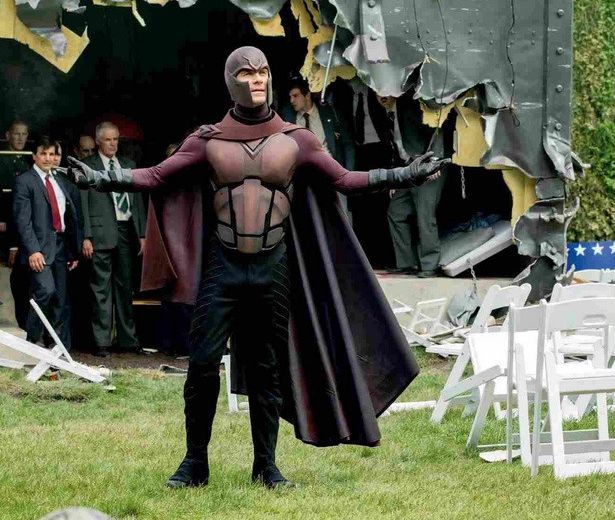
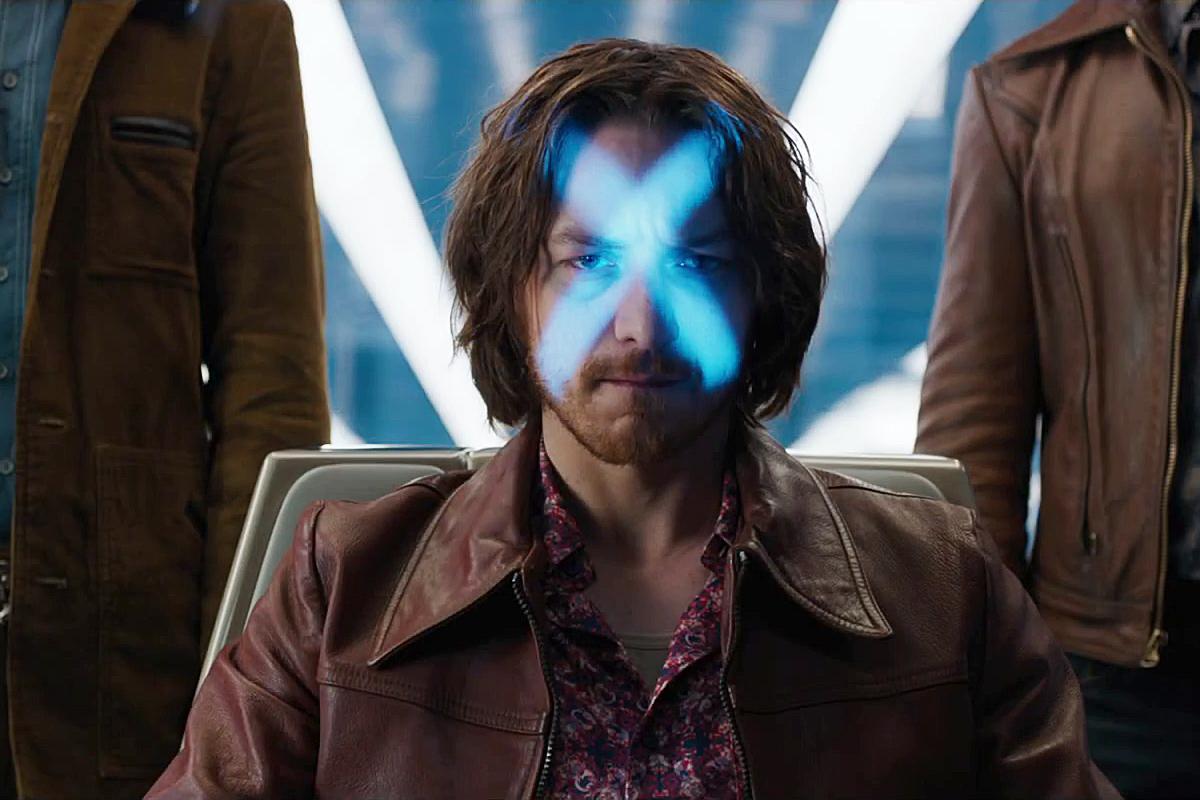
There’s a scene roughly halfway into X-Men: Days of Future Past that is a great example of CGI used to do a setpiece scene that is witty, exhilarating and tells us something about the character involved. It is definitely one of the best standout scenes in all the X-Men films and a contender for the top spot. It also sadly highlights how perfunctory the rest of the film is – it’d stand out even in a good X-Men movie, but in a humdrum one it’s almost sad to see.

I was prepared to like Days of Future Past. I’d had a tiring day and was looking forward to some action and excitement with charm and likeable characters. While Marvel’s mutant chronicles aren’t at the top of my list of favourite superhero movies, it’s usually been fun visiting with Professor X, Magneto, Wolverine and the gang, not least because of the cast these films have. When has it ever not been enjoyable watching Patrick Stewart and Ian McKellen playing off of each other? I was also a surprise fan of First Class, which, while still a disposable popcorn movie, upped the charm and personality with the likes of James McAvoy and Michael Fassbender. McAvoy can be too smug by half, but in the right role he is charming – and Fassbender is one of the most interesting actors of his generation, capable of immense charm too but always with an intensity coiled just underneath the surface, ready to explode. In First Class, he took a character we’d seen many times before and made him scary, something that McKellen’s Magneto, for all of McKellen’s acting chops, had never been.

"Charles, you've got something... on your face..."

You’d think that Days of Future Past would have it made: not just those crazy kids Stewart and McKellen, but also McAvoy, Fassbender – and, as a trump up their sleeve, Peter Dinklage. Has there ever been more personality, charm and charisma in a superhero movie that didn’t star Robert Downey Jr.? However, charm is worth little with a script as leaden as that of Days of Future Past. The plot would be fine – it’s overblown and complicated-yet-simple in the way that superhero stories often are, but that can work well enough – but the dialogues are dull, clunky and preachy. There’s always been the latter element to X-Men, but usually they made it work (as in X-Men 2‘s “Have you ever tried not being a mutant?” scene), but in the latest film in the series it never feels like there’s much of an underlying reality to be preachy about. The result of anti-mutant bigotry in Days of Future Past is one of those generic, bland yet tacky post-apocalyptic scenarios that feels like bargain-store Terminator. The executors of this future, the Sentinels that apparently are a mainstay of the comic books, are ominous enough in their design and animation, but watching them kill their way through a bunch of C-list mutants that we haven’t established any relationship with feels utterly empty.

As the film’s subtitle suggests, Days of Future Past uses that most overused of sci-fi tropes, time travel, and soon we’ve got Wolverine in the funky ’70s. That should make for a sense of personality, no? Sadly, that’s exactly the answer: no. The film does pick up somewhat, but a number of decisions by the writers that could be interesting work against the film: young Professor Xavier, played by McAvoy, is deep in a depression, Fassbender’s Magneto has lost the intensity that was constantly lurking under the surface in First Class – and Wolverine has become the most balanced, mature character on the screen. Yes, he still has a number of fights and quips, but they’re subdued. All of these could work as character development, but they don’t: Wolverine comes across more as apathetic than as reasonable, Professor X is dreary much of the time, and Fassbender tries to imitate McKellen, which may work in a talkshow but doesn’t work for the character – Fassbender and McKellen both have very different energies and performing styles, and neither the script, the director nor the performer manage to make Days of Future Past‘s Magneto into a very interesting missing link between the young Erik Lehnsherr and the old one. And Peter Dinklage, that master of smart snark? It’s nice that his role is not just a different take on, say, Tyrion Lannister, only in a suit and with a moustache, nor is he cast in any way for his stature, which is commendable. However, his part is underwritten and lacking in personality, making one of the main antagonists of the film pretty much a non-entity. There’s also the usually reliable Jennifer Lawrence, and her performance is fine, making her the one character who’s visibly got a stake in the events of the film, but there’s little here that we haven’t seen in First Class, making her scenes suffer due to diminishing returns.

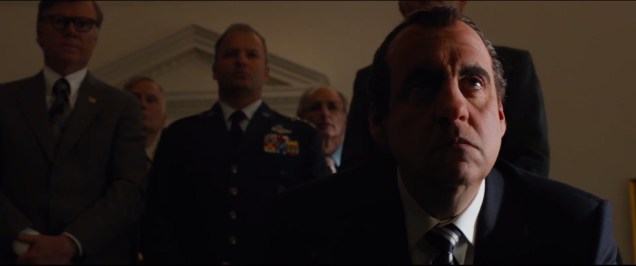
"Mutants in the White House! Aroo! Get me the headless body of Agnew!"

I won’t fault any of the actors: to my mind, it’s clearly the script that is lacking. The characters are written so flatly that they practically rely on audiences bringing their feelings based on the earlier films and the comics to the table – which means that Days of Future Past may work for the fans who care deeply about Wolverine & Co, but other than that there’s little here that is engaging. It’s not the inherent silliness of the proceedings, nor is it the seriousness that the real-world context and doom’n’gloom of the scenes set in the post-apocalypse try to invest the film with: both of these can work, as they did in, say, Iron Man (which embraces the silly, adolescent energy that superhero comics can have) or The Dark Knight (which makes the grimdark grittiness work). What this film needs is someone with the skills of a Joss Whedon at writing the self-awarely operatic dialogues that the most enjoyable superhero comics have, at balancing the grandiose and the intimate, at injecting much-needed personality and wit. There’s little of that to be found in Days of Future Past, and the wittiest scene is the aforementioned CGI setpiece that works entirely without dialogue.

As it is, I’ve never been enthusiastic about the X-Men films. I’ve liked a number of them well enough. However, in principle I could be a fan; I very much love Whedon’s Astonishing X-Men arc, and while his own contribution to the X-Men movies hasn’t exactly been great, someone with his sensitivities could make a huge difference to the films. I hear that Brian K. Vaughan is done working on the Under the Dome TV series – perhaps he could take the potential in this big, crazy, dysfunctional family of mutants and misfits and make their dialogue crackle with wit and energy? In any case, I hope that the makers of X-Men: Apocalypse watch the “Time in a Bottle” scene and understand why it sparkles, while too much of the rest of the film is dull.

"I am the very model of a/Modern mutant general..."

From Brighton to Croydon

Here’s a question for you: Do you think that movies can thrive on their limitations? I think they can. The series 24 takes place in real time – Jack Bauer is very aware of the tick-tock of the clock. The movie Buried is set entirely in a coffin. The movie Russian Ark consists of one single 99-minute shot. These limitations are technical, wilfully compressing their stories in temporal or spatial ways and also in the way they get made. It’s a risk: if you don’t like watching a man lying in a coffin for feature lenght, then you won’t like the whole movie. There is no B-story here.

locke1

Of course, there can also be dramatic limitations. The movie Compliance is about the staff of a fast-food restaurant where the shift manager gets a phone call from a cop who tells her to detain one of her employees because she might have stolen the purse of one of their patrons. The cop asks more and more of the manager, the employee keeps insisting that she is innocent. It’s basically two women in a backroom, one of them receiving orders over the phone. The movie loses all tension when the cop is made a visible character in the film.

Movies with such huis clos situations need perfect casting. Robert Redford is great in All is Lost. Jack Bauer is saving London, and it’s his ninth day. Buried is a good enough movie, but I don’t think Ryan Reynolds is the right choice for the role. Ann Dowd and Dreama Walker are fantastic in Compliance as long as the cop is only a voice over a phone.

Locke-Movie

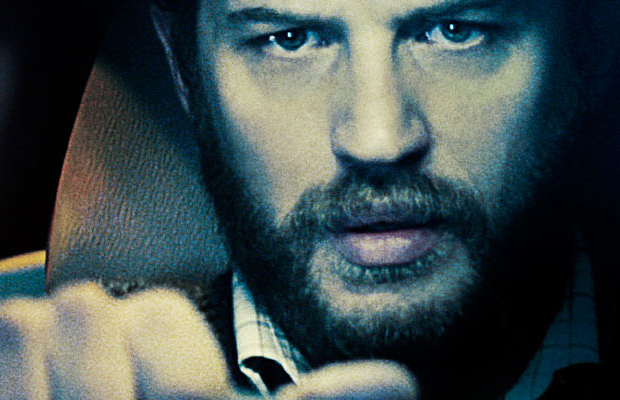
If you like Tom Hardy, then Locke might be a movie for you. It shows you a character by the name of Ivan Locke, probably named after the syndrome, because he is the only visible character you are going to see in the next 85 minutes. He is a construction manager, driving in his car from Brighton to Croydon. The only communication he has is over his carphone. On a very basic level, that is all that happens: a bloke driving and talking over the phone. It’s Tom Hardy’s acting that turns Locke into a really good movie.

Locke seems very detached at first, almost distant. He backs out of his job, takes care of the woman he got pregnant and then tells his wife about his affair. All in his car, all over the phone. It sounds pretentious, and in about 38 ways, it could all be handled the wrong way. Tom Hardy finds the right mood; I never got tired of looking at him or listening to the conversations he has. I wanted to know what he did next. Some people think that the plot is too thin and everyday. I disagree. The movie does not push your credibility, but it leaves you to think about what you would do were you behind the wheel.

locke-poster

There’s another thing Locke made me aware of. Going in, I knew that Olivia Colman would be one of the voices I was going to hear. I thought she would play Locke’s wife. I was wrong. I was also surprised by who played Katrina, Donal, and Gareth, and Eddie, and Cassidy. I only realized whose voice I had been listening to when I read their names in the end credits. Which just goes to show that we mostly rely on someone’s looks first, and their voice second.

If Locke has a flaw, it’s that it shows us slightly too many blurred traffic lights and half-lit cityscapes, but that’s a minor thing for a movie that decides to use very few resources and does a lot with it.

Arthouse oinks

I was expecting to like Upstream Color. I like cerebral sci-fi with an emotional core, I like elliptic storytelling and filmmaking, I love the film’s look and atmosphere.

Yet I came away from the film, Shane Carruth’s follow-up to his headscratcher Primer, feeling sort of aggravated. I didn’t hate Upstream Color, but seeing how critics loved it I couldn’t help feeling underwhelmed. Carruth is a skilled craftsman, he appears to have his very own vision of what he wants to do with the medium, and that’s something I respect. However, I don’t think that Upstream Color is as smart – or as affecting – as it sets out to be, and that’s because to my mind the pieces don’t really fit together very well.

uc_2

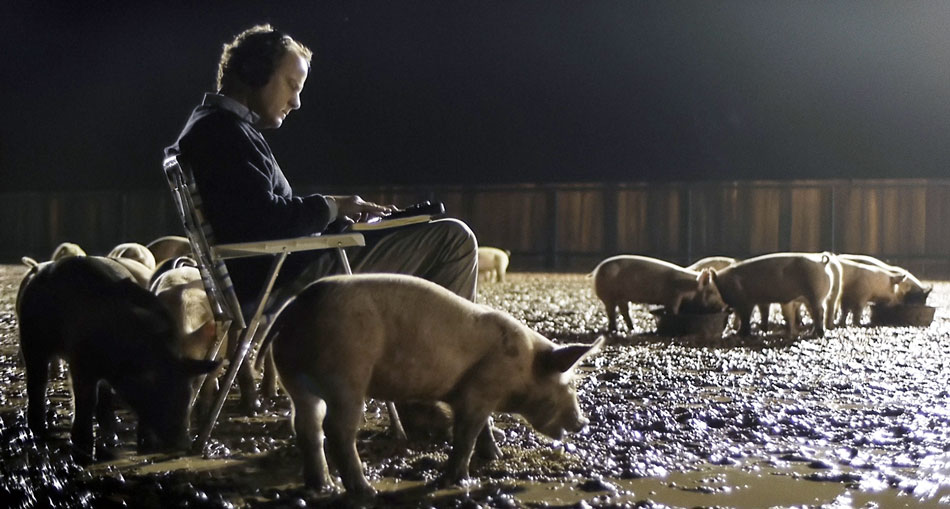
The story is weird and complicated to follow but not as complex as it might appear at first: there are these grubs that seem to allow for some sort of mental synchronisation between people. An identity thief uses these grubs to steal people’s identities and brainwash them into transferring their entire wealth to him, after which he leaves them unaware of what exactly has happened. Meanwhile, another man (called the Sampler in the film’s credits) finds the people who have been grubbed thus, extracts the parasites from the Thief’s victims and puts them in pigs, which allows them to mentally tune into the people the grubs originally came from, seeing, hearing and feeling what they are experiencing. So far, so huh. One of the Thief’s victims, a woman called Kris, loses her job and emotional stability after having been abducted and ruined by his machinations. A man named Jeff (played by Carruth himself) finds himself attracted to Kris and starts pursuing her romantically; it turns out that he’s also been grubbed and that the two of them are somehow in sync, to the extent that they cannot keep their thoughts and memories separate.

There is more that happens, involving porcine pregnancies, blue flowers and Inception-style murder, but the bulk of the film is about Kris and Jeff’s relationship. The sci-fi angle could skew this in intriguing ways, but my main problem with Upstream Color is this: the two stories (grubs, identity theft and telepathy vs. relationships, blurring boundaries and questions of identity) don’t end up working well with each other. Some ideas are either underdeveloped or appear arbitrary: why can the Thief use the grubs to program his victims, in effect hypnotising them like a cheesy silent movie villain? Yes, we see identities blur and thoughts and feelings wander from one being to the next, but that’s because the grub link has been established. The Thief’s powers seem something entirely different. Similarly, the film pulls a plot element out of thin air: Kris is suddenly revealed to be unable to have children, which her doctors attribute to cancer, though which may be due to the worms – whichever it is, the film doesn’t care to make this particularly coherent.

Upstream Color

As viewers, we’re asked to fill in many blanks. That’s fine, but filling in the blanks should add to a better understanding or stronger engagement in the film. Instead, here it feels like busywork: plugging the gaps in a story that, at least in the form it takes on screen, is underdeveloped. Individual elements are interesting, but they pull the film into different directions, and other parts of Upstream Color seem too designed to come across as meaningful – when, to my mind, meaning isn’t something that should be signalled and symbols rarely work best when they’re overtly insisted on.

The script has potential, and Carruth is a highly skilled filmmaker. In this case, though, it feels like he was too much in love with his ideas. The Sampler and his farm of telepathic pigs could be intriguing, but it distracts from the rest of the story. When Kris ends up enacting revenge against him, although the person who ruined her life was the Thief, it doesn’t resonate, it doesn’t read as dramatic irony: instead, it comes across as, again, arbitrary. Given a rewrite, Upstream Color could have been a film I like or even love – instead, I can’t help but see it as too much of a disappointing mess.

And, for a film that makes it harder for the viewer to follow than is justified by what it seems to be aiming at, it’s probably par for the course that there are no subtitle options whatsoever. I guess that deep meaning is most effectively conveyed by unsubtitled actors mumbling and muttering their dialogues.

Mother knows best, but not everything

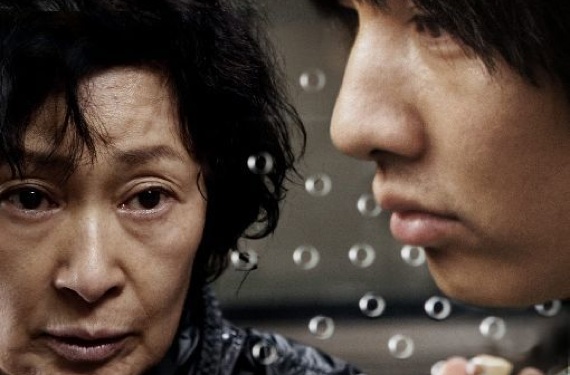
Joon-ho Bong’s Mother is a twofer. It’s inconsistent in tone and theme and wants to rush through a lot of plot in a short time. It contains scenes that are unclear and lead nowhere even on a second viewing. It seems to tell two stories at once, but never really manages to convince its audience that they should be in the same film.mother

The crucial story driving the plot is a murder whodunit. There is a teenage son who drinks half the night and then staggers back home at night. Suddenly there’s a young girl walking in front of him. He calls out to her, but she disappears into a dark, empty house. The son can’t figure out if she was really there and has all but forgotten about her in the morning. Then she turns up dead on the flat roof of the house she disappeared in. He is a suspect because, well, he’s been seen with the victim near the house.

The other story is his mother who is determined to do everything in her power to prove that her son is innocent. It doesn’t help that the boy is naïve, bordering on mental deficiency. Why else would he grin like a fool while he demonstrates to the police how he carried the girl up onto the roof? But I digress – it’s the mother who plays the biggest part in the film. She raises money for a lawyer who turns out to be useless. On a hunch, she goes to get evidence at the house of her son’s best friend, whom she considers bad company, and to her own surprise really finds a golf club with a blood smear on it. It’s bad luck that the friend comes home with his girlfriend, and so the mother hides behind the curtains, golf club in hand, while the couple is budy shagging. That scene is close to comedy, while the girl’s murder (which happens off-screen) is a scary bit of atmospheric horror.

best00madeo

There is a beautiful scene where the mother walks through a field of tall pale grass and then does a little dance. It’s a throwaway scene, and I am not sure what it means, but it pays homage to the actress, to Hie-ya Kim, who is said to be one of the most famous stage actresses in South Korea.

I think the scenes with the zealous mother work well, but are uneven – they venture from pathos to horror to farce and back. She is not an avenging angel, but cares for her only child because she is convinced that he is innocent. As a character study, the movie is admirable. The whodunit is less successful because there seem to be two or even three ways the crime could have been committed. I am not at all against open endings, but three possibilities seem a bit much for a movie that is plot-heavy and contains a fair number of red herrings.

All the world’s a sound stage

Holy Motors is not a film for those looking for a strong storyline or for conventional entertainment. It’s not a film for the artistically squeamish or for those with no time to give to experimental cinema that is unconcerned with pleasing its audience and often downright absurd. It is one of the more exhilarating cinematic experiences I’ve seen in the last year or so – although it is definitely not for everyone.

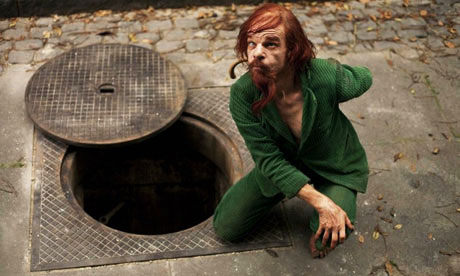
A plot summary is relatively easy to give yet beside the point to some extent, because the film’s effect mostly lies in how it does what it does. A man named Monsieur Oscar is driven from one mysterious engagement to another – nine, all in all – by his elderly female chauffeur. In the spacious back of the stretch limousine he puts on make-up and one costume after another, slipping into wildly different roles: an old, possibly Romanian beggar woman, a motion-capture actor in an altogether too fetishistic rubber suit, an anarchic sewer-dwelling troll-like creature, a scarred killer – as well as his lowlife mobster victim – but also a middle-aged father driving his daughter home and an old man dying in his bed. Even when he goes home at night, his home is another fiction entirely different from the home he left in the morning, his family (in a disconcertingly funny revelation) made up of chimpanzees. Everything is a part, it’s fictions all the way down. Is there a real Monsieur Oscar beneath the masks, the make-up and the (for the most part ostensively stylised) scenes he plays? Does he even know himself? (The ambiguity of that question was unintended, but it is quite fitting.)

Holy Motors

It’s not only the protagonist’s ontological state that is questioned; only one scene makes explicit that the person Monsieur Oscar interacts with is also an actor (possibly with her own stretch limo and chauffeur, unless these are reserved for the more seasoned actors), but the strangeness of the different scenes and the reactions of the people whose lives cross with his at least make us wonder whether most if not all the people in the universe of Holy Motors are simply moving from one acting engagement to the next. Now you’re a photo model. Now you’re a receptionist. Now you’re a lover. Now you’re a mourner. Now you’re dead (your gravestone linking to your personal website in one of the film’s offbeat jokes).

The film has been interpreted as being about cinema, although its director Leos Carax has denied this interpretation. More likely, at least to my mind, it is about how our lives are made up of roles and how in many of them we have precious little agency of our own. We put on our costumes, our masks, and we act what we think is required of the part. Not particularly new or original, I grant – but then, as I mentioned earlier, Holy Motors works largely because of its verve and energy, the conviction with which it and its main star Denis Lavant throw themselves into the different episodes. An art house film this is, obviously, but not the po-faced or even the self-consciously, needily quirky kind of film that sometimes feels as generic and by-the-numbers as the latest Bayfest or Snyderama. Holy Motors‘ energy is more anarchic, at times downright punk, though it is not in your face in every single scene.

In one sequence, the film indeed aims for something more poignant. Its themes of alienation and loss of identity (if indeed there ever was an identity to lose) may already hint as such poignancy, but it comes to the fore when Monsieur Oscar comes upon another stretch limo, finding in its back a former lover called Eva, played by Kylie Minogue. The two, having half an hour between engagements, talk about the twenty years they have to catch up on, and Eva sings a sad song about the people they once were before she sends Monsieur Oscar away. As he exits the building where they talked, he sees that Eva apparently has committed suicide by throwing herself off the roof. The sequence and especially Minogue’s song is superficially affecting, but it suffers from the films ontological twists and turns: we’ve seen the protagonist get stabbed and (apparently) bleed out, yet character death only meant that it was time for the next role. Why shouldn’t Eva get up, brush off the dust and hop into her limo the moment we’re not watching any more? What makes one death more real than another – and if death isn’t real for these actors, what is the point of the sequence and its underlying sadness? Holy Motors seems to come down heavily on the side of nothing being real, everything being an act, but then it can’t really have its cake and eat it.

Except it could. On stage more often than on the screen, I’ve seen performances that held the brittle balance between emotional authenticity and obvious artifice, where a character’s death mattered even while you are fully aware of the actor living and breathing. We are capable of buying into a fiction with our hearts and minds while knowing it’s a fiction. Holy Motors could have done this, and as a result the Kylie Minogue sequence would have gained a resonance that is hinted at but finally remains out of the film’s reach. However, as a result the film might have lost some of its anarchic energy: part of what makes it work is that it doesn’t take itself all that seriously, that it revels in its own ridiculousness. As it is, Monsieur Oscar’s meeting with Eva is something of an irritating foreign body in the film: it is streaked with sadness, yet Holy Motors would seem to render this sadness a non sequitur. (In fact, other than the actors’ words, we have little evidence that this is not another one of Monsieur Oscar’s engagements, although one that adds an even more pronounced metafictional turn of the screw.)

Regardless of this, which others seeing the film might respond to altogether differently , Holy Motors is well worth checking out. It is inventive, evocative, often funny (if you like your humour absurd), and it may just have the most rousing entr’acte in all of cinema. And that’s not even mentioning the gratuitously grotesque prosthetic hard-on, which is a more believable special effect than anything encountered in Sharknado.

Love, loss and Lauren Bacall

The beginning of Jonathan Glazer’s Birth is odd. There is a voice-over from a man, probably a scientific lecturer, who says he doesn’t believe in reincarnation. Then he goes for a run through Central Park during dusk. It’s winter. He stops, falls down, and dies. Then there’s a baby being born.

kidmanBirth

Ten years later, his widow Anna (Nicole Kidman) has an engagement party, because she finally said yes to Joseph (Danny Houston). They live next to Central Park, in a very expensive apartment. There is Anna’s mother, played by Lauren Bacall, and Anna’s pregnant sister Laura and her husband Bob (Alison Elliot and Arliss Howard). There are family friends, among them Clara and Clifford (Anne Heche and Peter Stormare).

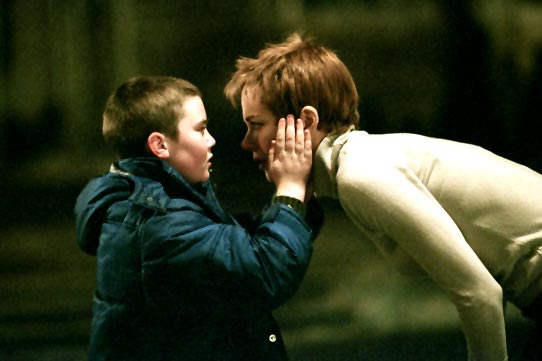
And then there is that boy, played by Cameron Bright. He’s not cute, but there is an earnestness about him. He first follows Clara into the park and then turns up at the party, claiming that he is Anna’s dead husband Sean, and that he doesn’t want her to marry Joseph.

The party treats him as a joke, and Anna wants to send him away, but finds that she cannot bring herself to do that. The boy is adamant, unflinching, and although Anna tells him not to lie, she cannot forget his words, and the way he looks at her. Then he faints, and she sees it. There is a scene at the opera where the camera looks at Kidman’s face for several minutes, without interruption. I’m not sure about what happens to Anna, but some kind of realization seems to take place.

2004_birth_013

It doesn’t matter that part of Anna is convinced that Sean’s story is bogus. It only matters that what that boy tells her fills her longing to see Sean again. That the person making that impossible dream come true is a ten-year old is a small obstacle towards happiness that seemed out of reach for good.

The thing is that the boy is really called Sean. His parents tell him to stop hassling that nice lady. He tells his mother that he is no longer her stupid son. There is no telling what the heck is going on here. The movie treats the boy as a boy, and takes him seriously. The adults don’t panic, but try to cope with an impossible situation as best they can. Anna’s brother-in-law Bob questions the boy. Sean gives surprisingly intimate answers, and he knows stuff only Anna’s husband would know. He isn’t scary or spooky or a threat – he just insists that Anna is his wife. There are no guns, no blood, and no madness tucked away in a corner of someone’s mind.

cameron-bright

The movie consists of muted colors, lots of black and brown and grey. It tries very hard to feel black and white. The apartment and Nicole Kidman’s hairstyle bring to mind Rosemary’s Baby. Birth is a horror film, too, but it is scary because it treats its theme seriously. In movies, when we ask ourselves what the hell is going on, the explanation at the end is almost always a disappointment. The better the build-up, the bigger the jerk we get when the third act plants us firmly back on the solid ground of reality. The explanation is either too much, or not enough. Not here. There is a reason for all this, and it contains some sort of emotional logic.

Apparently, Jonathan Glazer is unable to make a boring film. He did Sexy Beast in 2000, then this one in 2004, and Under the Skin last year. He is the director of many TV ads and music videos. Everything he does is different from anything else. Watch his Levi’s ad featuring Nicholas Duvauchelle, using that famous Sarabande by Händel.

Anna desperately looks for ways to convince herself that this is not her dead husband. People tell her so, but to no avail. She is afraid that she might fall in love again. She cannot win: if the boy is her dead husband, she is still attached to him. If he isn’t, then how crushing can it be to lose your husband twice?

The road to hell is a circular track

Joon-ho Bong’s Snowpiercer is about a very long and seemingly unstoppable train running all over a post-apocalyptic snowscape. The movie based on the comic Transperceneige by Jacques Lob, Benjamin Legrand and Jean-Marc Rochette. Its passengers are the last survivers on Earth, and they must live in their own microcosmic class system inside that rattling ark. The wealthy ones live comfortably near the front, the lower classes live in squalor and poverty in the tail end. They only meet when the wealthy ones come and take another kid with them. Nobody knows where those kids end up.

Image

There are schools, prisons, food processors and water purifying systems on board. The best scenes of the movie contain Mason, played by Tilda Swinton, who speaks in the name of the creator of the train, a man called Wilford, who may or may not be along for the ride. Snowpiercer races on a gigantic circular track, so is a driver really necessary?

Mason declares the train’s engine to be sacred, and is absolutely clear about who belongs where. Her twisted explanations are the highlight of the movie. Her appearance reminded me of Maggie Thatcher, which cannot be a coincidence. There is a malignant glee in Swinton’s whole performance that saves a lot of scenes.

Image

There is unrest, led by Curtis (Chris Evans) and organized by an old man called Gilliam (John Hurt) who seems to know a lot about the front end. With them are a security expert (Kang-ho Song), who helped design the doors of the train, and his daughter (Ah-sung Ko). There are also a mother and a father of two of the missing kids (Octavia Spencer and Ewen Bremner), and a hothead named Edgar (Jamie Bell). They all fight for a just distribution of food, water and space and want to make their way to the front of the train so that all passengers can be made equal.

Fights ensue, as I guess they must, only they go on for too long and are too violent. The lower classes get decimated more and more, and it is only for a few chosen ones to reach the sacred engine. What happens there is not for me to reveal, but although the dialogue about the necessity of the class system is cruelly logical, that scene could have been handled a lot better.

Snowpiercer never quite finds its own rhythm. There should have been a breathtaking establishing shot of the train in its entirety, since that is what the movie is all about. Instead, there is a first shot of the tail end, then we are inside again. That’s a missed chance to wow us with the enormity of the vehicle, all the more because the few glimpses of the train we get throughout the movie are really convincing CGI. I have a suspicion that the movie got cut and re-cut until the pacing got screwed up.

Image

There are glimpses of greatness, though. I liked the scene where they find the showers and are able to wash properly after months, if not years. The first time they eat real food again. The moment they realize they are touched by the rays of the sun through a window, and they don’t know if the window or the natural light is the bigger miracle for them.

I especially liked that the apocalypse wasn’t anything to do with nuclear war, but was brought about by people who thought that they had the solution to global warming. They turned the environment in such a hostile place that those who tried to escape the train stand frozen in place as statues to their own stupidity and can be seen from the train as a reminder. And there is a morbidly cheerful performance by Alison Pill as the schoolteacher.

The ending is crap. It does not make much sense, and the movie cowardly abandons its characters. Instead of having a wide open ending, it ends with the beginning of another movie.

Vows and confessions

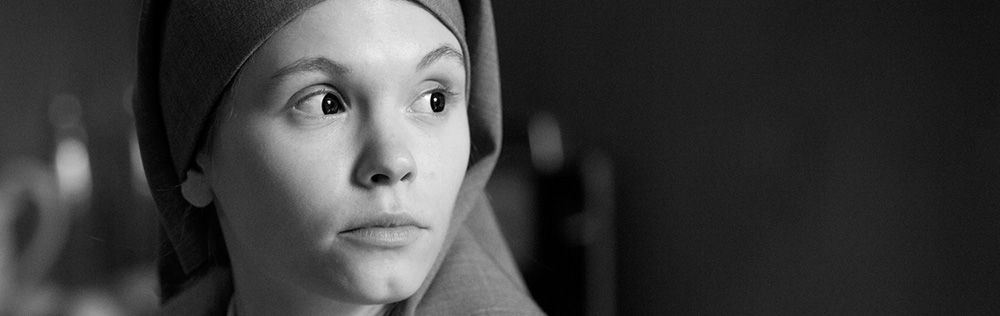
Pawel Pawlikowski’s Ida is one of the quietest, subtlest movies around. Anna, its heroine, looks out of a pair of the deepest, darkest eyes I have seen on screen lately. She is about to take her vows as a nun when the Mother Superior tells her that she should say goodbye to her relatives. Anna replies that she is an orphan, brought up in the convent. She learns that there is an aunt who knows of her existence. Anna goes and visits her.

Image

The movie takes most of its strength from the relationship between those two women. Anna wears her grey habit like armor. Aunt Wanda is a hard-drinking, chain-smoking Communist judge who doesn’t hide her one-night stands from Anna. It’s hard to imagine anyone more different from her niece. Wanda tells Anna that her real name is Ida and that she is Jewish. Anna/Ida just looks at her aunt with those eyes of hers. There is no telling what she is thinking. Agata Trzebuchowska, who plays Ida, is a newcomer, while Agata Kulesza must be one of Poland’s busiest actresses. Here, they are a match.

They go on a road trip to find the place where Ida’s parents and Wanda’s sister lived before the war. The scenes that follow are intriguing. They find the place, a farm. Other people live there now. This movie tells us in simple black and white pictures what has happened, to whom, and why. The movie doesn’t gasp, but it doesn’t flinch either. There are no flashbacks, but it’s clear all the same. There is unexpected humor and unexpected sadness in those scenes, both of which are somehow what is called for.

Image

There is a lot of tension in the fact that a Jewish female judge dished out death sentences in the name of a Communist government, so much so that she got the nickname Red Wanda. She has lived with her secret all her life, whereas for Ida, it’s a revelation. She must deal with the fact that she has a very different religious background. The question is what she will do with that information. I wish the movie would have told me more about Ida: How does she feel about it? Is becoming a bride of God still her lot? Is it a choice she makes, and is it an easy one at that? Is she able to forgive her aunt for what she has done? In a way, Ida should be forgiving because of her vocation.

Story-wise, these are two interesting characters in that they both lead impossible lives. I wanted some more answers, but instead, Ida embarks on a short affair with a saxophone player that is clearly not as interesting as her relationship with Wanda. This part of the movie feels like a cop-out.

At the same time, the movie is beautifully shot. It features the rare 1.37:1 format, turning a rectangular screen into more of a square one. It is shot entirely in black and white, and strictly chronological. Things happen at the edge of the frame, or in a corner. Some shots depend on mood, not plot. The lack of color could have turned it into a leaden exercise in sadness, but it’s Ida’s face and Wanda’s stubbornness that make it all worthwhile. I would have liked to know more of both of them.

She, Herself and Spike

Spike Jonze is that rare creature, a filmmaker who is not only interested in but can actually combine the emotional and the intellectual. He did fantastic work with Charlie Kaufman (and indeed his elusive twin brother, Donald), and I greatly liked his adaptation of Maurice Sendak’s Where the Wild Things Are, though I have to confess that I never read the book as a kid and have no loyalties to the original work. His most recent film, Her (described by Wikipedia as a “science fiction romantic comedy-drama”, that most perennial of genres), was successful with audiences and critics alike, and there is a lot to like about the film. It is smart, sweet and heartfelt.

It should have been the perfect film for me – yet it wasn’t. In part, that’s due to my inflated expectations; largely, though, it’s Charlie Brooker’s fault. Obviously. More precisely, I think I had his “Be Right Back” from the second series of Black Mirror in mind, where a dead spouse is imitated by an artificial intelligence. The comparison is not an entirely fair one: Jonze is telling a different story from Brooker, and his story about a man falling in love with his AI operating system wants to be romantic to begin with, something “Be Right Back” isn’t interested in being.

http://vimeo.com/61215171

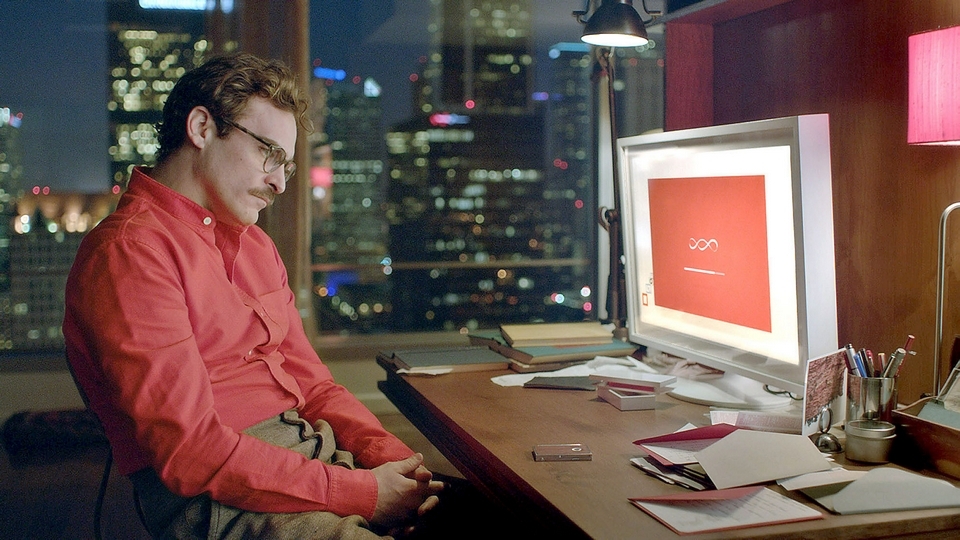
The thing is this: I can accept the premise of a sentient, sapient AI with emergent feelings. I can buy a man, especially a lonely, depressed one, falling for his very personable operating system, especially if it’s voiced by Scarlett Johannson. However, in wanting to deal with this scenario in terms of romance, the film seems to ignore one thing: an operating system is a tool. It does what you tell it to do. This is not a relationship of equals, at least not to begin with – it’s a relationship where he can tell her what to do and she does it, and most likely he can switch her off or deinstall her if he wishes. She exists solely for him. I absolutely understand that Theo Twombly, more than ably played by Joaquin Phoenix, falls in love with his OS, Sam, and he’s nice and sweet in his interactions with her – but I have a problem with the film ignoring, or not recognising, the fundamental inequality of the relationship and the hints of Pygmalion, because to my mind these are inherent in the premise.

Through a mirror brightly

The film could easily work with this and still tell the same story. As Her develops, so does she – Sam, being a virtual being not only capable of evolving but predicated on it, outgrows Theo and moves on. I wouldn’t even need the gender dimension to be brought into it (although there are definitely gender-related questions to ask about the film, such as: why do all its nebbish male characters tend to be with more beautiful women? To what extent is Her an unacknowledged male geek fantasy?), but the way that Jonze ignores the digital elephant in the room, that to begin with Sam is entirely in Theo’s power, regardless of how much she’s supposed to be her own person, is an issue that kept me from fully engaging with the film. It’s almost as if Jonze was too much in love with his premise and ironically ended up idealising it too much – unless there’s a more self-aware subtext here that was intended all along, which might mean that my own private OS is in dire need of an upgrade, let alone of evolving.