That’s entertainment!

Fists of guilt?

Let me be clear. Taxi Driver and Raging Bull are great cinema, and they deserve all the accolades they get. But they’re the kind of movies I appreciate rather than enjoy. Watching Raging Bull yesterday, for the second or third time, I was struck less by the virtuoso cinematography and editing, by Martin Scorsese’s effective use of music (yet again), or by the performances, than by the sheer masochism in the movie. LaMotta’s masochism, where especially the later fights are extended bouts of self-punishment for his dimly understood sins. De Niro’s masochism, putting on 60 pounds for the role. But there’s also an element of masochism in sitting through this masterpiece. Paul Schrader (probably more so than Scorsese) writes the most effective guilt trips, but it’s difficult not to flinch and despair a little more at mankind (it’s really the men who come off looking worst in the guilt stakes) when LaMotta punches the walls of his prison cell or when he does his “I coulda been a contender” speech, or when Travis Bickle puts a finger dripping with blood to his temple and mimes blowing his head off.

 On a less masochist note: last night’s episode of House, M.D. (“Que Sera, Sera”) featured a remarkably controlled performance by both Pruitt Taylor Vince and his fat suit, transforming him into a 600-lb patient. While the episode was far from perfect, kudos ought to go to the House team for an astute handling of what could have been eminently tasteless TV.

Demurely Wilde

There used to be a time, in the late ’80s and early ’90s when I thought that Hugh Laurie and Stephen Fry could only be booked as an ensemble. These days, both of them seem to have done well enough on their own. Laurie appears to have become more of a star, mainly thanks to his wonderful Gregory House, M.D. (Admittedly, the series wouldn’t work without him.) Fry, on the other hand, is less visible but does more different things, a small part in a movie here, writing novels there, and voicing interplanetary repositories of knowledge in between, all of which seem to fit him quite neatly.

We watched Wilde yesterday, a film for which I had fairly high expectations. Unfortunately, for me the high point of the film was seeing a teensy, pixie-ish Orlando “Not an elf yet” Bloom playing a rent boy, wearing a bowler hat twice his size. No, that’s not quite true. (Well, the bit about the bowler hat is.) Wilde isn’t a bad film: the acting’s quite good, as is to be expected with such a distinguished cast, and it’s handsomely made. But it’s basically a run-of-the-mill, all too earnest (the pun is accidental) period drama, the only difference being that the tasteful sex scenes are between men. There’s a German word that can’t really be translated – betulich – that fits the film, in my opinion. It roughly means “staid”, “respectable”, “well-meaning”. Is this what a Wilde biopic, or indeed any film, should be?

The problem mainly lies with the script. The characters are clear-cut from the beginning and remain static throughout. Oscar is sweet, witty, but too much of a doe-eyed romantic when it comes to beautiful young men. Bosie is a shallow, callous narcissist. Oscar’s wife Constance is hard done by, but loyal. The closest the film comes to character development is when one of the protagonists grows a moustache.

And while I didn’t watch the film for hot, sweaty man-on-man action, is it too much to ask that the homoerotic scenes are actually erotic? The sex scenes are entirely too coy. (There is one ironic camera pan from a Wilde coupling to the window drapes swaying in the wind, although that was perhaps the only glint of visual wit in the film.) As a result of the movie’s consistent respectability, there’s no sense of outrage at the late Victorian homophobia and hypocrisy, just a passive acceptance of Oscar’s inevitable fate, reinforced by the film’s score working hard to make it clear that we’re watching something tragic.

Oscar Wilde, looking stylishly bored

Finally, the film succeeded most in making me think that Oscar Wilde, for all his sparkling wit, may have been a sad bore. A nice guy, surely, and very sweet, but in the end faintly pathetic and faintly boring. Like one of his aphorisms on yet another souvenir mug sold cheaply.

Surreal Snakes and heroic metafiction

– What’s going to happen to us?
– There, there. We always end up in a universe where we exist. Remember Copenhagen?

Remember the self-aware, postmodern hospital soap opera that Nate watches in the first episode of season 3 of Six Feet Under? Well, if that network – COMA TV? – had a 24-type series, chances are it’d be pretty much like Metal Gear Solid 2: Sons of Liberty, the PS2 game I’m currently playing.

 Quite honestly, I’m not certain whether MGS2 is a badly scripted, badly acted mess of a soap opera as done by Tony Scott, or whether it’s a clever parody of existentialist hi-tech conspiracy thrillers (ah, that old chestnut!). Whichever it is, the game is a weirdly compelling guilty pleasure. But yes, the writing makes Final Fantasy X seem a masterpiece of subtlety.

In part, the game is obviously tongue-in-cheek; the absurd conversations with Otacon when you save the game, or scenes like the one where you have to sneak across a walkway underneath a guard answering the call of nature make that clear. But what about the bathos of Otacon’s relevations concerning his quasi-incestuous relationship with his stepmother? And what about Peter Stillman (Paul Auster fans note the name!), the anti-demolitions expert who faked having a fake leg for years in order to gain sympathy? While the latter reads like bizarre black comedy, the game plays it absolutely straight-faced.

I can’t say I ‘get’ MGS2, nor can I gauge its tone most of the time, but I definitely want to know how it ends – even if people have it that it’s the sort of ending that makes you want to throw your Playstation out the window. But, dagnabit, did they have to make the cutscenes that long? I feel like I should take a day or two off in anticipation of an ending cinematic that’s bound to be (or at least feel) as long as Peter Jackson’s King Kong.

But is it what you would call ‘series acting’?

I like good acting. Not Oscar-winning acting, which I often think is mainly a case of “who’s best at manipulating the audience?”. That sort of acting tends to feel acutely self-aware, to the extent that I sit there, watching it, being painfully aware of the acting. (And I usually groan when someone says that this or that actor isn’t actually very good because he’s only got two facial expressions. Being able to produce a number of different grimaces doesn’t make for good acting. Watch Ulrich Mühe in The Lives of Others for a beautiful example of acting, based pretty much on the most subtle variations of one facial expression.) 

Ulrich Mühe

Strangely enough, TV series don’t necessarily need good acting to work. Of course, atrocious acting is as painful to watch in series as it is in movies, but limited actors can still work extremely well on television. The good thing about series in this respect is that after a season or so, deeply mediocre actors become the characters. Look at Jonathan Frakes who played Will Riker in Star Trek: The Next Generation. Definitely not a good actor by any standards, and most people would hesitate even to call him mediocre; but by season 3, he was Will Riker. Any wobbles in the performance could be attributed to the character – “Ah, it’s Riker being full of himself! It’s Riker being nervous at meeting the Axitraxian ambassador! It’s Riker having had too much cheese before going to bed!” And somehow, by season 5 or 6 good old Jonathan felt comfortable enough in the part to stretch himself and surprise me with an actual good performance (!) in an episode called “Frames of Mind”.

Watching those HBO series I keep harping on about – The Sopranos, Deadwood, Six Feet Under – I am constantly amazed at the high quality of acting. Thinking back to the series I watched, and loved, as a kid and as an adolescent, though… Most of them had fairly mediocre actors, for instance David Duchovny (although he does make for a great transvestite!). Yet somehow I never felt I was watching Duchovny being mediocre. I very quickly forgot about Duchovny and was simply watching Fox Mulder.

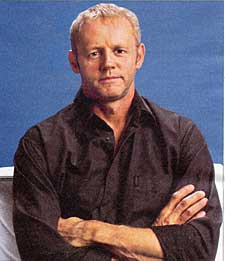
David “Nobody’s perfect” Duchovny

For me, Lost has that very same quality. Some of the acting in Lost is good – Terry O’Quinn comes to mind, for instance. But if you look at it critically, most of it is hackneyed character work. If the series is still remembered in ten, twenty years, it won’t be for the acting. And yet… Half an hour into the pilot, and I bought the characters. I don’t know whether that is a quality of the writing, or the directing, or simply a case of the actors being close enough to the characters not to have to act too much. Perhaps it’s also just chemistry between the cast members. I don’t know. But I know that it’s the characters I keep coming back for – even if Jack is a whiny bitch, Charlie is even more annoying than he was as a hobbit (Pippin at least had the benefit of a Scottish accent – here we’ve got Desmond for that), and Nikki and Paolo deserve a horrible death (preferably something out of E.A. Poe). (Note: We haven’t seen any episodes past “Every Man For Himself” in season 3.)

Two final comments for today: 1) Why is it that the Deadwood women keep ending up on the island? I’m waiting for Alma and Jewel to turn up… 2) Was it very noticeable this was a bit of a filler blog entry? If so, I apologise – and promise that tomorrow’s episode will be better. (In that respect, perhaps my blog is a bit like Lost: a long mid-season slump, but the “huh?!”-inducing revelations at the end of the season will keep all of you coming back. Mwhaha.)

By my troth, thou art a hooplehead

If anyone bemoans the state of TV in my presence, I tend to point them in the direction of HBO. At least if they’re not against watching series that may be very sexual or violent, or that may “contain language” (as opposed to all the Marcel Marceau-inspired television programming, of course). I’ll tell them to check out Six Feet Under, naturally, and The Sopranos. I myself haven’t checked out The Wire yet, but it’s definitely at the top of my list. From what I’ve seen so far, HBO series have a fairly consistently high level of quality, in terms of acting, writing, directing, cinematography.

I was rather surprised to find just how much I liked Deadwood. As a genre, the western doesn’t interest me that much. It took me two or three episodes to acclimatise to the language – not just to the incessant swearing, but to the elaborate quality of the dialogues. But then I was hooked.

One of the reasons is definitely the language. I know that the word “Shakespearean” is overused in criticism especially of TV and cinema, usually to give the younger, technological media a veneer of respectability that isn’t really needed anymore. But series creator David Milch’s writing does strike me as similar in quite a few respects to Shakespeare’s plays. Milch deftly mixes ‘high’ and ‘low’ language; he uses an impressive range of registers, styles and imagery to convey the characters. The difference is simply that with Shakespeare most people need to read the footnotes to see how filthy the language is at times. (I could imagine that it’s either frustrating as hell for the actors to speak the dialogues or greatly enjoyable. Or both.) The characters. Now, in a list of the best fictional characters on television, you couldn’t leave out an Al Swearengen. As a matter of fact, I’d say that you couldn’t leave him out of a list of the best fictional characters, period. (I imagine he might be joined there by Tony Soprano and his mother Livia. Now, I’d love to eavesdrop on a barroom conversation between Tony and Al.) I wouldn’t even consider it hyperbole to compare Al Swearengen to one of Shakespeare’s greatest creations, Falstaff. He’s just as rich, complex and ambivalent – and arguably as attractive – as the fat, vainglorious, cowardly and ultimately tragic knight of Shakespeare’s Henry IV. (Having said that, I would love to see Ian McShane in a Shakespearean role. Richard of Gloucester, for instance.) 

Ellsworth

While everyone loves Al, I must say that some of the more minor characters are my favourites. The first of these is Ellsworth. It’s difficult to write a fundamentally decent character and not make him boring, but they more than succeeded. And how can you not love a character who says the following, keeping a completely straight face?

Joanie Stubbs:   Will you keep a girl company?
Ellsworth:   I will, but I’m expensive.

Or indeed this?


Ellsworth:   Well, Ma’am, I’ve got myself a working gold claim.

Joanie Stubbs:   Well, sir, is that a damn fact?

Ellsworth:   A hell of a working gold claim, and if we knew each other better I’d throw “fucking” in there somewhere.

Joanie Stubbs:   If you did I’d try to catch it.

Ellsworth:   A working fucking gold claim, Joanie, and thank you for allowing me my full range of expression.

My second favourite character must be Dan Dority. He’s not the brightest, and he doesn’t exactly have great impulse control. But there’s something funny and sweet to his devotion to Al. His genuine distress when he thinks that Al prefers pretty boy Silas Adams to him, or when Al almost dies of a gleet. Again, like Shakespeare at his best, Milch mixes pathos and comedy perfectly in his best characters.
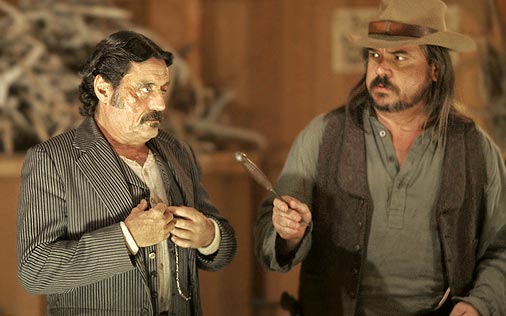
Dan Dority and Al Swearengen


It is to Dan and to Ellsworth, to Al, Sol, Seth, Trixie, Joanie, Charlie, Alma, Jane – and yes, even to E.B. – that I raise my glass of bourbon and say: “To your health, cocksuckers and hoopleheads! See you soon!”


P.S.: If you’re looking for a (Swiss-)German blog to read, especially if you’ve got a thing for outlandish international cuisine (and flame-baked Smurfs), check out Magenta’s Lucky Page. Highly recommended!

Morse code

Ah, to live in the early 21st century… To be able to sit in a little café, drinking fresh, good coffee, listening to Bach’s Goldberg Variations while reading China Miéville’s Perdido Street Station. And then to come to the office, start up the computer, and blog about it, to validate the experience.

(NB: If this was an e-mail or a message board post, I would have put a winking emoticon at the end of the paragraph, to indicate the subtle postmodern irony – there I go again, being less than perfectly serious! – but I try to do entirely without smileys in this blog. After all, Jane Austen, Randy Newman and Alanis Morissette managed entirely without…)

However, this blog entry is not about irony, or cafe latte or the Goldberg Variations (which I am proud to say I can listen to almost without thinking of Hannibal Lecter). It’s more of a dire warning.

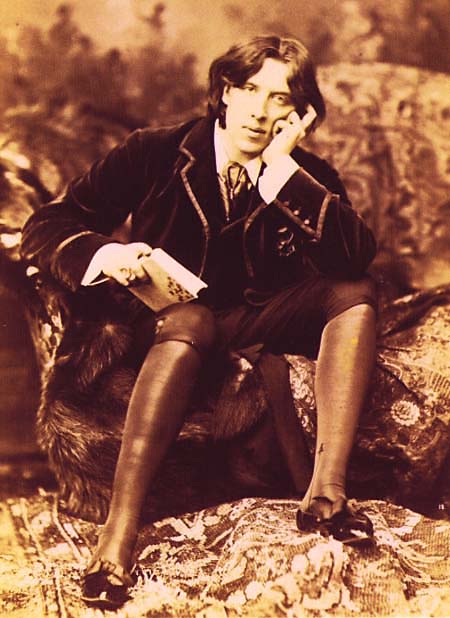
For I have seen the face of evil. And it looks like this.

Looks innocuous enough, you think? Look again.

You may be wondering what it is that makes me think David Morse is evil. The reason is quite simple: he’s the one responsible for dooming the human race. He’s the one who released the virus that killed most of humanity, forcing us to live underground. He is evil.

And this may be where you go, “Huh?” And, if you know where I am currently located, you may even be calling the doctors to come and take me away. If you know Terry Gilliam’s 12 Monkeys, you might understand what I’m going on about, but it might still not make that much more sense to you.

Yes, I can distinguish between fiction and reality. Yes, I know that David Morse is an actor, hired to play characters, such as the apocalypse nut in 12 Monkeys. And yet. Every time he pops up on screen, I tense up. I take an immediate and intense dislike to him. Sometimes I’m proven right (Dancer in the Dark). Sometimes I’m proven wrong (The Green Mile). Sometimes the film and the scenes he’s in are so atrocious that it’s hard not to feel sorry for Morse (Contact, anyone? Daddy issues on tacky intergalactic beaches?). But I don’t trust the guy, and therefore I cheered on the inside at the thought of Greg House, M.D. and PhD in Misanthropy deciding to thwart the Morseman’s evil plans. Who will come out on top in the upcoming fight between House and his newly found nemesis? Only time will tell. Until then, it’s drawn thermometers at dawn.

It’s the freakiest show (not)

One of the series we’re currently watching is Life on Mars season 2. I enjoyed the first season – definitely fun TV – but so far season 2 has mostly failed to grab me. It felt too much like same old, same old. After all, we get it by now that the ’70s were sexist and racist. We get that Gene Hunt is a misogynist dick, albeit with occasional flashes of wit, who allows liberal viewers to vicariously enjoy their own reactionary urges. The first four episodes of the season were competently executed but not much more, and with most of them I felt that they would have been improved by being the length of your average US series episode rather than the usual BBC hour. After all, if your intrepid, flare-trousered heroes stumble around for ten, fifteen minutes trying to solve the case after the audience has figured out who dunnit, things get a bit boring.

Episode five, though, was a distinct improvement. Not only was the format changed slightly, with Sam Tyler out of the policing loop for most of the episode, and the writing cleverer, the episode also sported a gorgeous parody of “Camberwick Green” (which I’d never seen, but the sequence works nevertheless) at the beginning. If every episode were that much fun, I wouldn’t have spent the previous paragraph kvetching about the series.

However, I am doubtful that the planned ’80s spin-off, Ashes to Ashes, will be much good. It seems that they’re pretty much going for more of the same, just in ’80s neon aesthetic and with a woman police officer (played by Keeley Hawes) stuck in the past. It’s difficult not to go for heavy teen sarcasm and say, “Like, wow, how original!” And even though I enjoyed Hawes’ character Zoe in Spooks, she wasn’t exactly the strongest actor on that show. And I definitely don’t get enough of a kick out of Gene Hunt kicking nonces to be very excited about Ashes to Ashes.

Sunday morning stiff

To say that I like Six Feet Under would be an understatement. It is perhaps the best TV series I’ve seen. Its writing, acting, filming are among the best in the medium. But beyond its obvious craftsmanship, it has touched something inside me. It has made me think more about life and death, about family and relationships, than anything else.

And yet, I would be lying if I said that it was above criticism. As is any narrative that is, at least in part, made up in installments rather than planned from the beginning, it is uneven. There are storylines and characters that work less well, that sacrifice some complexity for overly facile satire or (less often) for melodrama. They still pull it off most of the time, but those bits stand out as not quite up to the usual standard.

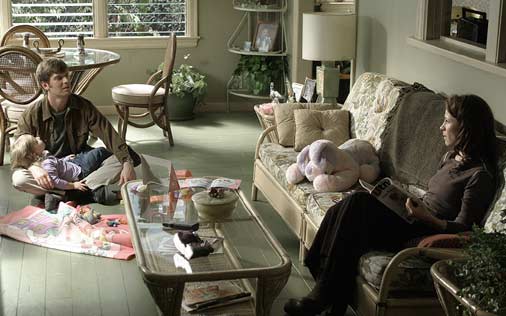
We’re currently watching season 4 – our Sunday morning ritual consists of breakfast and an episode of Six Feet Under. Today we say the episode “The Dare”, and especially since I’m seeing it all for the second time, I feel that the storyline meanders somewhat. Claire’s art school hijinks aren’t that interesting, and I could do without Keith’s bodyguard duty anecdotes. Even those plotlines could work better if there was some more stringency (seasons 2,3 and 5 have this much more) and if it felt that the season is going somewhere, which it will, even if it doesn’t feel like it now. Nevertheless, even in these doldrums there are gems: Joe’s reaction to Brenda’s delicate confession, the way Claire handles her proposal to Edie so matter-of-factly, the return of Kathy Bates’ wonderful, wonderful Bettina.

And the late Lisa Fisher (Lili Taylor) dressed up as a human-sized Petunia, throwing things at Nate: “It’s pain. Get used to it.” Hurls another onion at Nate’s noggin. Bless her.

(Unfortunately I couldn’t find a picture or video of Lisa the Amazing Petunia. Sorry.)