I know I’ve been sorely amiss with respect to new posts. This will be remedied soon – I’ve got four very special posts in the pipeline that should be of interest to anyone reading this who is into film, crackpot cults, milkshakes drunk from across the room, falling frogs and huge penises. (If that last sentence doesn’t get me tons of hits, I don’t know what will. People love falling frogs on the internet.)
However, this is more than just a “Coming soon” – it’s also me telling all of you to read the final interview with Iain Banks (published in The Guardian), the prolific and talented Scottish writer who died on 9 June (in a morbid coincidence also my birthday). Go, now, and read!
“Classic’ – a book which people praise and don’t read.” – Mark Twain
I spent most of last week examining undergrad students of English studies, together with two colleagues. For the oral exam, students had to read and discuss an article, and one of my colleagues used a New Yorker article called “Cannon Fodder: Denouncing the Classics.” Much of the discussion was about what makes a classic work of literature – which made me think about the term ‘classic’ and how it’s used with respect to film.
What sort of films come to my mind when I think of classic movies? Casablanca, definitely. The Third Man. Probably much of Hitchcock’s oeuvre, and Gone With The Wind – and let’s not forget The Wizard of Oz, It’s A Wonderful Life, Citizen Kane, Some Like It Hot. I might even add later films such as The Godfather (and I’ll gladly add The Godfather Part II).
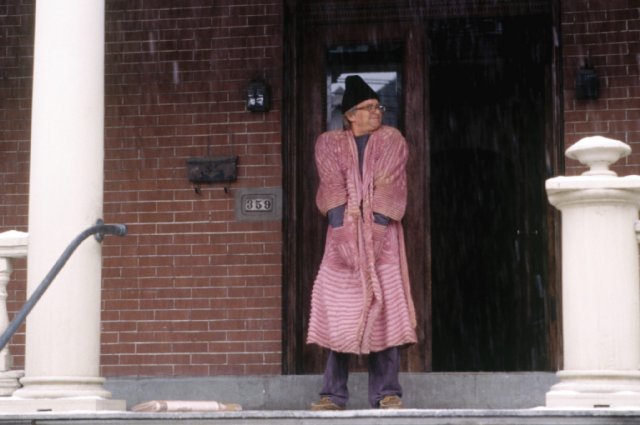
However, I don’t think I’d put films such as Taxi Driver on that list, or Apocalypse Now. I might even hesitate to add Jules et Jim (in case you were wondering whether English was the only language), although it definitely looks like what I’d imagine a classic to look. The thing is, when I think of classic movies, I think of films that are undoubtedly great examples of cinematic craft – but that are comfortable and cosy, films you can slip into as you would into a fluffy dressing gown.
Coincidentally, one of the essay topics that the students could choose for their written exam was a quote by Franz Kafka:
I think we ought to read only the kind of books that wound or stab us. If the book we’re reading doesn’t wake us up with a blow to the head, what are we reading for? … A book must be the axe for the frozen sea within us. That is my belief.
Disregarding the programmatic nature of Kafka’s statement – I think reading, or watching films, to be comforted and entertained is absolutely valid – at least when it comes to movies I don’t think of classics as films that wound or stab us. That’s simply not what the word connotes for me. Is it the same with literature? For whatever reason, I’m more comfortable to call a “deeply weird” (in the words of one of my colleagues) novel such as Ulysses, or earlier examples of weirdness such as Don Quixote and Tristram Shandy classics, but when it comes to movies the word seems more apt when describing the burnished, oak-and-leather respectability of Hollywood’s Golden Age. The Easy Riders, Raging Bulls–era works – well, the best of them – still have the power to wound and stab, to disorient and destabilise. The strongest films coming out of the French nouvelle vague are still thrillingly fresh, as is De Sica’s The Bicycle Thief in many ways. Calling these films ‘classics’ would be accurate in a literal sense, I’d say, but also strangely sad: at least in my understanding, once you call a film a ‘classic’, you deem it safe. Time has pulled its fangs.
Or perhaps we have, by regarding films as classics. Some of the ones I’ve mentioned above still have their teeth when you look at them with an open mind – even as cornball and (seemingly) cosy a classic as Frank Capra’s It’s A Wonderful Life, a film that has a surprising degree of darkness hidden just beneath the surface. The New Yorker article mentioned above ends by saying that classic literature should be argued about and fought for – and when it comes to movie classics, that may be exactly what we should keep doing. We shouldn’t be too quick to consign these films to the old people’s home of the cinematic arts and only visit them when we want a nostalgic afternoon with Gramps, because many of them aren’t nearly as comfortable as we make them out to be in remembering them.
It’s been a while since I’ve done one of these, but it’s a good time for them, since I’ve seen a couple of movies, none of which necessarily warrant a longer write-up. Of course, having said that, I’ll probably write more about each than was originally planned… Anyway, without much further ado, here goes.
Iron Man 3
I’m not really familiar with the Iron Man comics. I’ve read the occasional Marvel comic, but my interest was usually piqued by a writer doing a limited run, say, Joss Whedon or Brian K. Vaughan. I very much enjoyed the first Iron Man film for its sense of fun, something that Christopher Nolan’s po-faced Batman movies very much lacked. Iron Man 2, though… The less said, the better. Even Robert Downey Jr couldn’t salvage that one, nor could Don Cheadle joining the cast to replace Terrence Howard, an actor I have an irrational dislike of.
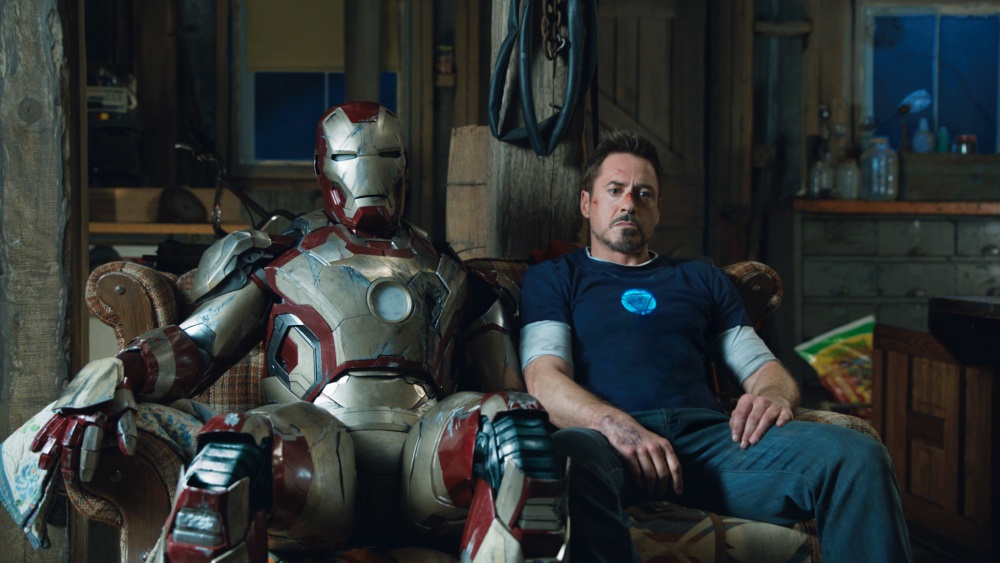
I went into the third Iron Man film expecting RDJ being RDJ, plus some cool, exciting action set pieces. What I wasn’t expecting, though, was a super hero movie almost as good as The Avengers. The latter does that thing Whedon does so well, bringing together an ensemble and playing them off each other in great ways, but it’s flabby in its structure and pacing. Iron Man 3 is also too long, but damn it, if it doesn’t entertain almost during its entire run! Shane Black’s script is great fun and a surprising amount of wit, the action is exciting, and (comic readers, you may want to skip to the next paragraph) the Mandarin’s re-invention is clever and effective, with Ben Kingsley having more fun than he’s had since his guest appearance on The Sopranos. I’d say that this film is the second-best of the Marvel films to date (admittedly, I haven’t seen Captain America, which supposedly is great popcorn cinema too) and better than The Avengers in a couple of ways.
Hey, it’s even made me enjoy Gwyneth Paltrow, which is a rare occurrence these days.
Side Effects
There was a time when I would have been deeply sad for Steven Soderbergh to retire from movie making. These days, not so much – while I did enjoy Contagion, asdepressingly eager as that film was to kill off everyone I cared about, I came to enjoy Soderbergh most during his productive phase in the late ’90s and early ’00s, and most of his films in the last ten years haven’t done much for me. He’s always been eminently skilled, but I found his Che rather unengaging, The Informant! felt like it wanted to be a Coen Brothers movie instead, and Ocean’s Thirteen was a tired retread of Ocean’s Eleven (whereas the more flawed Ocean’s Twelve was, unexpectedly, a formally daring slice of Nouvelle Nouvelle Vague). Little of Soderbergh’s filmography in the last decade has held my interest other than in a rather abstract, “Let’s see what he’s doing this time” way.
Apparently Side Effects is his last movie, although it’s likely he’ll still be making films for TV – at which point the distinction becomes somewhat moot, especially for someone who watches most things on DVD and Blu-ray. Is it a worthwhile sort-of-swan song? Well, let’s put it like this: I won’t remember much about the film in a month or so. It’s an effective genre piece, the sort of thriller that’s constructed like clockwork, and it did manage to surprise me once or twice, but as so many thrillers that put the emphasis on structure rather than characters it comes off as a rather empty experience in the end. There’s a mean streak in the script, which is undercut by Soderbergh using a rather clinical style; shot differently, say by a Brian De Palma, the film would feel sleazy, whereas now it feels like a stylish but very slight genre piece, with a number of interesting tangents simply not developed further. In the end, I came away reasonably entertained, but I don’t think the film will leave much of a trace in my mind a month from now. Except the glib ending that pushed the reset button on one character and the effects the story has on him: that one I’m likely to remember for a while, but not in any good way.
We’ve been watching The Politician’s Husband, a BBC three-parter about the machinations of two married Westminster politicians starring David Tennant and Emily Watson – and, truth to tell, it’s not a particularly good series. It’s got good actors (although – forgive me, Whovians – I’m not seeing what’s so great about David Tennant, although that may be due to the writing), but even they can’t do much with the generic, clichéd writing. Guess what: politicians are either corrupted by their position or they’ve been corrupt all along! They’re more busy playing power games than they are working on improving things for their electorate! They’re manipulative, shallow and don’t deserve your votes! Yeah, I know… That’s some amazingly new insight into politics, or at least TV politics, and it’s in no way cheap cynicism, eh? Anyway, even that sort of thing can work as a TV series, but The Politician’s Husband is written in a way that can only be called lazy, hamfisted and self-congratulatory.
To be fair, though, I don’t know that many series that manage to turn politics into good television, let alone films. It is possible, though, to come at this complex and often-maligned issue in more interesting ways, so let me mention my three favourite politics-themed programmes, in no particular order:
1) The West Wing
The daddy of them all. Yes, it’s a liberal, centre-left fantasy, but it’s got wit, heart, a willingness to face up to the ambiguities of politics and a fantastic ensemble cast. Does it get weaker after Sorkin leaves? Definitely, but it remains a good show, and it becomes genuinely great again in its final years as Jimmy Smits and Alan Alda (as a Republican!) cross blades in the race to the White House.
2) The Thick Of It
I’ve only seen season 1 (and a lone episode from season 3, watched on a long flight), but if The West Wing is too idealistic, this is the perfect antidote, and Peter Capaldi’s Malcolm Tucker is one of the most memorable characters in all of TV. The thing is, while The Thick Of It is viciously satirical about politics, I don’t think it’s glibly cynical – its criticism is more of the systems that grind even hopeful into political duds, rather than LOLpoliticians! And have I mentioned Malcolm Tucker?
3) House of Cards
The BBC original, that is, not the Netflix reimagining. Ian Richardson is the perfect political descendant of Shakespeare’s Tricky Dick the Third, making the audience his confidant. The two following series get progressively weaker, and especially The Final Cut is a pale shadow of the original, but has Richardson has ever done anything sharper, more droll or more chilling? I couldn’t possibly comment.
Not a real update so much as a “Me too!” post – Google’s celebration of graphic designer and titles creator Saul Bass. Gotta love the Google doodles, and this one is absolutely lovely. (Found on The Guardian – I missed the original doodle.)
And yes, a proper post is to follow before long. Until then!
In the conversation about the artistic legitimacy of video games, it’s sometimes instructive to take a step back and consider what any given game looks like to a non-gamer. Take the current big-budget game with artistic aspirations du jour, Bioshock Infinite: this is a game that addresses big issues such as racism, revolution, free will and redemption. It throws around allusions to quantum physics, US history and philosophy. Its art design and music are beautiful and filled with a wide range of allusions.
Yet it is also a game where you run around shooting gaudy bad guys in the face with a shotgun just before searching a trashcan to find a hotdog and some popcorn. You scarf them down, healing the damage you’ve taken from being shot at. And then you throw an exploding fireball at your opponents with a flick of your wrist, just before jumping up 20 feet to catch a ride on a metal rail.
So, to someone who isn’t into games much of the actual gameplay may look grotesque. Why is the player eating from trashcans, and why does this heal him? Why is he spending 90% of his time inflicting grievous bodily harm? And doesn’t all of this rather hobble any aspirations the game has to resonate with the player’s emotions one moment and tickle his grey matter the next? Bluntly put, how can anyone take this sort of tonal mess seriously?
I’d say that there is some justification to this line of argument. As someone who’s been playing games for, oh, 30 years, I don’t see this sort of thing as weird anymore – I’ve become largely inured to what has been called ludonarrative dissonance, unless I choose to. But yes, gameplay and plot – or gameplay and a game’s striving for meaning beyond “I have big gun. He has big gun. I shoot him. He dies.” – do often clash. Take Grand Theft Auto IV‘s guilt-riddled Nico Bellic and his quest for redemption for the horrible things he’s done in his past, which sit oddly next to the multiple killing sprees he engages in during the game’s missions.
Ideally games either explore ways to reconcile their gameplay and whatever meaning they aim at, or they use the tension between the two to interesting effect. However, I’m wondering whether to some extent the discussion ignores one important thing: each medium develops its own medium. Yes, to non-gamers a lot of the medium’s particular idiom is strange – something that is rife for parody – but then, films and TV series have their own idiom, as do books, and to some extent those idioms don’t strike us as weird and ridiculous because we’re used to them. They’ve become invisible to us. (Check out TV Tropes for a comprehensive, time-consuming list of tropes that make up the idiom of various media.)
Compare, for instance, someone who watches his first opera. Is the tragic heroine’s extended death aria, possibly while she’s clutching the dagger in her ample bosom, any less silly than the trashcan hotdog imbued with healing powers? Or Shakespeare: are end-rhymed heroic couplets or stage directions expressed via dialogue any more believable than conventions in games?
I’m not saying that we should give games a free pass because we’re so used to the medium’s tropes that they’re invisible to us. Tropes can be useful shorthand, but they can also be a crutch – and ludonarrative dissonance is something games have to contend with. After all, how would we react to a big-explosions, brutal action flick doubling as a harrowing intimate drama if the tonal inconsistencies weren’t addressed, let alone resolved? At the same time, critics have to accept that all media and all genres rely on cultural conventions and tropes to some extent, and a certain familiarity with (and, indeed acceptance of) these conventions is required when it comes to enjoying games as much as movies, TV series, stage plays, ballet, opera – and even paintings. After all, wouldn’t I be silly to dismiss most of the paintings of St. Sebastian out there because the arrow-addled martyr usually looks mildly bored rather than in agony?
So, rather than pointing at gaming tropes and saying something along the lines of “This is why we can’t have nice things”, perhaps it would make more sense to become more aware of these conventions, how they are used, and how they can be used better, more intelligently, more subversively – how they can be played with, for want of a better word.
Lars von Trier is a highly talented artist. He is also a bit of a troll – not due to this Nordic origin but his obvious enjoyment of getting a rise out of people in often obnoxious ways. I’ve found the handful of his films that I’ve watched a mixed bag: at turns intriguing, affecting and annoying, as well as manipulative in ways that are skilled but a little too obvious at times.
Melancholia lacks the impishness of some earlier works of his, except perhaps on an aesthetic level – I’d be surprised if von Trier hadn’t banked on the slo-mo beginning of the film raising a few eyebrows and tempers (and prompting some people to ask for their money back because they felt they’d ended up in Zack Snyder’s movie adaptation of Millais’ “Ophelia”). For a von Trier, Melancholia is remarkably sedate, not to say mature (a word I expect the director would not be too happy with). It lacks the borderline sadistic, “Let’s see how far we can take this” showiness of, say, Dogville, but it is no less intriguing for this.
To a fan of the director’s work, does Melancholia feel like a compromise, an appeal to more mainstream audiences? Both von Trier and his fellow European provocateur, Michael Haneke, received praise from the critics’ establishment for their most recent works, yet at least in the case of the former there was a faint note of disappointment: if we can’t trust the vicious jester of cinema to irritate us in inventive ways, who will do it instead? As a non-fan who has rarely felt the visceral annoyance that some people get from von Trier, nor the equally visceral enjoyment that others feel, I found Melancholia intriguing, beautifully acted and absolutely gorgeous to look at. Without going for a conventional aesthetic, von Trier brings an evocative, painterly eye to the film, playing especially effectively with the haunting light the eponymous planet threatening Earth throws on the film’s protagonists and scenery. In terms of cinematic apocalypses, this is one of the more subtly effective ones, evoking an intimate sadness that is miles from von Trier’s sometimes tendency to, well, troll his audience.
P.S.: As far as end-of-the-world movies are concerned, my favourite may still be Don McKellar’s Last Night, a film that couldn’t be much more Canadian if it tried and that gives the wonderful Sandra Oh a blessed chance to shed her hospital duds.
It’s time for some superlatives: to my mind, Michael Fassbender is one of the most exciting actors of his generation, and Steve “Not that one!” McQueen is one of the visually most accomplished directors making films these days. Not many people could make fecal mandalas on prison walls intriguingly beautiful, but McQueen managed this with a deceptively effortless grace in Hunger, his film about Bobby Sands’ death. Not coincidentally, the other main strength of Hunger was Michael Fassbender’s electric performance.
Fassbender and McQueen seem to bring out the best in each other, since their 2011 film Shame is yet another movie with amazing visuals and a brave central performance that serves the film’s story perfectly. On paper it sounds like festival fodder: Shame depicts a sex addict’s descent into his personal hell after his sister, with a whole set of issues of her own when it comes to relationships, comes to stay with him. Yet in the hands of its director and star, and with the more-than-capable help of Carey Mulligan, Shame doesn’t feel like it’s pandering to a particular audience, doing its own thing instead, and to great effect.
If there’s a list of films featuring depressing sex, Shame is definitely in the top 5 (other candidates would be 28 Grams and Blue Valentine – a threesome between those three movies would probably create the sad sex singularity that effectively ends the world because no one would ever procreate naturally again). Strangely, though, for all the joylessness of Brandon’s sexual misadventures, there’s a genuine joy to watching a film as confidently handled, visually entrancing and perfectly acted as this.
P.S.: Some reviewers and bloggers accused Shame of homophobia, as during his climactic (no pun intended) long night’s journey into hell he gets a temporary fix by getting a blowjob in the underworld of a dungeon-like gay club, the argument being that McQueen depicts gay sex as the absolute lowest point in Brandon’s odyssey towards some sort of happiness. To my mind, those reviewers ignore that while the encounter is demeaning and joyless, the same is true for practically each of Brandon’s sexual encounters. The scene is followed by an extended threesome with two (female) prostitutes, which is arguably more aligned with generic male fantasy, yet this menage à trois is presented as no less demeaning, nor any more enjoyable. There is nothing in the blowjob scene to suggest that it’s to be read as worse for the character than what happens before or after it. If McQueen had wanted to show gay sex as the worst option for a sex-addicted straight man, surely a director as in control of his material as him would have found a more effective way of showing this, wouldn’t he?
In case you were wondering whether I was ever going to write another blog post, fret not – I’m back with material for the next few posts. And yes, this warrants me taking issue with one of the little green jedi master’s famous pronouncements: sometimes size matters indeed.
Let’s contextualise this so your imagination doesn’t run away with you: as a film geek I like to see my movies on a big screen, so at home I’ve got a 50″ plasma HDTV that I’m fairly happy with – friends of mine buying bigger televisions notwithstanding. Most of the time I’m absolutely happy with the size of my screen… but then there are those times when a TV of that size doesn’t feel all that much bigger than the televisions of my childhood.
And one of those times is when watching Lawrence of Arabia on Blu-ray.
The cinema of David Lean is generally of the grandiose kind, calling for the big screen experience – though never more so than with Lawrence of Arabia. This isn’t just about beautiful visuals, by the way; it’s been years since I’d last watched the film, but even among visually stunning movies it stands out. Some of its brethren live almost entirely off their visual splendour, and once this aspect is removed they’re nice but by no means spectacular. Lean’s masterpiece, though, uses its cinematography to amplify the effect of its story and characters. It is undoubtedly epic, yet at the same time it is one of the most intimate epics I can think of. The size of the screen it’s viewed on doesn’t just make for pretty desert shots (and undoubtedly they are very pretty), it also pulls you that much more into the character of T.E. Lawrence (as played by a Peter O’Toole that has rarely been better), an intriguingly ambiguous character.
It is often said that “they don’t make ’em like this any more” when talking about modern Hollywood cinema, which may or may not be facile nostalgia hankering for a past that was rarely as good as (or in the ways that) people think it was. I wonder whether they ever made ’em like Lawrence of Arabia, though – this is not the big-emotions, big-visuals melodrama of Doctor Zhivago (a film that’s much better than I’d originally remembered, mind you), nor is it the action of The Bridge on the River Kwai, although both of those have some elements that recall Lean’s desert epic. No, for all the moments in other films that recall this one, Lawrence of Arabia is very much one of its kind, like its eponymous character.
And yes, it may just be the best advertising for a truly big TV screen.* Titanic? Avatar? Prometheus? Sit down and let the grown-ups show you how it’s really done.
*Okay, if it’s just visuals you’re looking for, any Terrence Malick or even Andrei Tarkovsky might do the trick – but a world where shops selling televisions showcase their wares with The Tree of Life or Stalker are likely only to exist in long-lost episodes of Fringe.
P.S.: In spite of my pinko liberal credentials, I find myself entirely unbothered by the Brits and Mexicans in brownface playing Arabs. Go figure.
Computer games are a strange medium for art, and gamers are a strange audience for it. As soon as a game comes out that aspires to art, it takes about five seconds before someone on the internet gets out the big word: “Pretentious.” Give it another ten seconds and someone will say, “Ah, but is it a game?” It’s as if too many gamers would prefer their medium to be one thing only, forever, with no potential to become something more. And that’s ignoring the other side of the debate, the old-timers shouting, “Get off my MOMA-curated front lawn, you kids!”
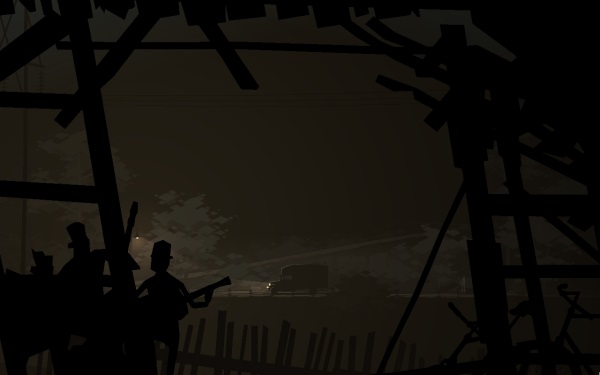
I wonder what Old Man Ebert would say about Kentucky Route Zero, an indie adventure game whose first part (or Act – the game wears its many artistic inspirations on its sleeve) came out a couple of months ago. It’s as if David Lynch, Edward Hopper and Gabriel Garcia Marquez had collaborated on an old-school point-and-click adventure – but while it’s easy to point out how Kentucky Route Zero derives from a number of artistic traditions, in its first act it already manages to become something entirely its own and entirely of the medium, doing things that wouldn’t be possible in this particular way in any other medium.
The game excels at atmosphere, evoking a mood that is homely and uncanny at the same time, nostalgic and unsettling. As much as Lynch at his best, Kentucky Route Zero is dreamlike, surreal around the edges, but without giving in to the facile randomness that surrealism is sometimes prone to. The art, the writing, the soundscapes and music – all of these come together to create one of the most unique, compelling experiences I’ve played, well, since I took hold of a joystick in the early ’80s.
It is likely that hardcore old-school gamers without an interest in unique experiences with, yes, artistic pretensions will have issues, though. Compared to the classic games of the genre, Kentucky Route Zero doesn’t offer challenging puzzles. In fact, there are hardly any puzzles in the conventional sense as well. What the game does offer, though, is exploration – in more than the expected way. The characters, the conversations, even such simple things as a ride through an old mine on a cart, all these offer glimpses into a world one step away from our own.
It’s difficult to give any criticism that seems adequate. Yes, Kentucky Route Zero Act I is a short pleasure; in the conventional terms of game longevity, it does lend itself to multiple playthroughs so the different conversation choices can be explored, but for the asking price of $7 it offers a couple of hours of gameplay only. However, for gamers in any way receptive to the moody, fascinating world the game evokes, those couple of hours will linger long after Act I closes.
P.S.: Act II is to come out within the next month or two; the entire game can currently be bought for under $20. For anyone who’s simply curious to check out the look and feel of Kentucky Route Zero, the developers have released a free tech demo called Limits & Demonstrations that provides a glimpse especially into the project’s overall artistic sensibilities and the writing. Well worth checking out, which shouldn’t take more than half an hour.