They’re ready for their close-up, Mr Hooper

What is a film director’s job? Ask a number of different directors and you’ll get very different answers. For some, working with the actors is an integral part of the job; for others (such as Ridley Scott), acting is solely the responsibility of the actors and the director’s there to focus on the look and feel of a film. (At which point the cinematographer may be going, “What about me?”) Here’s what Wikipedia has to say:

Generally, a film director controls a film’s artistic and dramatic aspects, and visualizes the script while guiding the technical crew and actors in the fulfillment of that vision.

Remember Tom Hooper? He directed The King’s Speech, the HBO miniseries John Adams – and Les Misérables, the film version of the Boubil and Schönberg musical. Based on all of these, I am confident in saying that Hooper does a magnificent job at getting great performances out of actors. I am equally confident in saying that, at least according to the Wikipedia definition as well as my own understanding of what a film director does, Tom Hooper is one of least talented successful directors of recent times.

I don’t want to get into the whole discussion of Les Misérables‘ recording the actors’ singing on set. I don’t even mind (well, not all that much) that Russell Crowe can’t really sing and that he butchers Javert’s songs in the film. When there’s a choice between flawless singing and acting at the expense of voice, I tend to favour the latter, but then musical fans may wonder what’s the point of having your actors singing if the acting gets in the way of a good tune.
The pores! The pores!

What I do want to get into is Hooper’s downright obnoxious use of the camera. Already in John Adams, a handsomely produced, beautifully acted, intelligently written series, the director kept throwing in jarring dutch angles, their main effect being that they drew attention to themselves. It didn’t feel like a conscious use of a technique in order to achieve a certain effect; instead it felt like a directorial gimmick, a distracting flourish with little to no relation to what was going on on the screen.

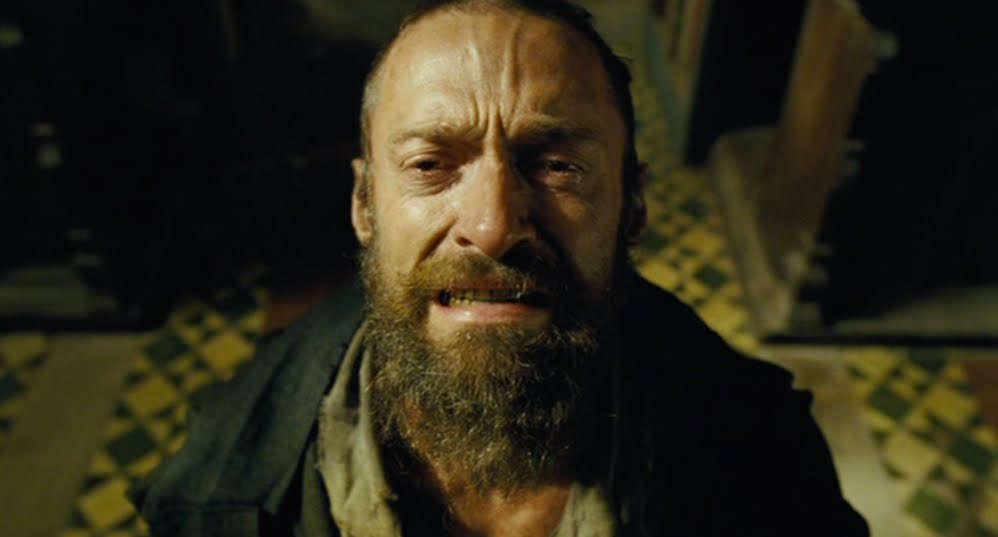
This obnoxious use of ostentatious techniques is taken to extremes in Les Misérables. Practically the whole film is shot in hand-held, dizzying close-ups – and it’s too intimate. It’s too intrusive. And where it’s effective for a few minutes, it turns into a freakshow – less a method of putting as little distance between the acting and the audience and more a “Check out the tears! The snot! The blood! It’s all real!” Apart from the technique becoming almost exhibitionist when it’s used in 90% of all the shots, there’s no modulation, no rhythm to the images. Crowd scenes, intimate moments of soul-searching, Hooper treats them all the same, to the point where you have to wonder what the hell the director’s doing.

The sad thing is, for every moment where Hooper’s technique is effective there are ten scenes where it’s irritating and distracting. We’re supposed to feel with the characters, and the poor actors are acting their hearts out, but the camera keeps putting us uncomfortably close, so that scenes tip into becoming embarrassing or involuntarily comical. When the film is at its worst, what should come across as earnest and heartfelt becomes pushy and needy. As a result, the film rarely works as the grand spectacle it was written as, and it rarely works as intimate drama. Mr Hooper, seriously – techniques should be geared towards what the film needs, they shouldn’t be an affectation or a nervous tic. You do great when it comes to getting performances from your actors… and then you shoot yourself in the foot with everything else. Do me a favour and read this before you make your next film, ‘kay?

Watch out, you're going to slip, Mr Valjean!

And serious, man… Fuck those Dutch angles!

Location, location, location!

I’ve been underwhelmed by three of the most recent films I’ve seen: Zero Dark Thirty, Django Unchained and Lincoln. Yet these are all films that have received rave reviews from the critics; for instance, Kathryn Bigelow’s latest received a Metacritic score of 95/100, Django Unchained has a Rotten Tomato score of 88 out of 100, and all three were Best Picture nominees at the recent Academy Awards.

Lincoln Obviously an argument can be had about the Oscars and whether they truly reflect what’s best about movies – an argument I’m not particularly interested in getting involved in. What I’m more interested in is this: do all these films depend on the particular culture that gave birth to them? More specifically, to what extent do they depend on an American audience?

As a non-American, it’s not that I’m disinterested in the films’ topics, but I don’t have any connection to them. Slavery, particularly as it was practised in the United States, and the hunt for Osama Bin Laden – neither of these have any particular, personal relevance to me. Going into the films, though, I felt that they required, perhaps even demanded such a personal connection to be at their most effective. For an audience that saw the 9/11 attacks as aimed at them – not at the Western world in general, but at them as Americans – it might be easier to identify with Zero Dark Thirty‘s heroine and her obsessive hunt for Bin Laden. For an audience that culturally still lives in the aftermath of slavery and its legacy, the sight of a black gunslinger exacting brutal revenge on the one side of the cinematic spectrum, on the other a tall, gangly president seeking to end not only a war but a racist, inhumane practice deeply entrenched in the national culture – I expect that these resonate in ways particular to that audience.

Zero Dark ThirtyExcept that resonance wasn’t there for me. Whereas 9/11 felt like a shared event even on this side of the Atlantic (with some caveats – the discussion on the terrorist attacks very quickly became critical of the United States in Europe), the hunt for Bin Laden didn’t. The most personal connection I have to slavery is remembering seeing Roots on TV, which barely counts. Yet there are films that manage to make essentially American topics more universal, where I don’t feel I have to have grown up in a specific culture to connect to them. Did these three films end up less effective, and less successful as movies, because they were aimed at a very specific audience?

It’d be interesting to hear some opinions on this issue. What were readers’ opinions of these three films? To what extent did you feel that they spoke to you – or failed to speak to you?

Note: While Argo could also be said to be about a particularly American topic, it didn’t feel like it to me. This doesn’t mean I agree with the Academy’s opinion on the film – I enjoyed Argo but would call it a good film, not a great one – but in the end I enjoyed it more than either Zero Dark Thirty, Django Unchained or Lincoln. Then again, I haven’t fully enjoyed any of Spielberg’s movies in a very long time… but that may be material for another blog post.

Through a mirror digitally

I’ve written about the first season of Charlie Brooker’s Black Mirror when it first aired (here and here). I didn’t consider all three of the original episodes equally successful at presenting a dark, satiric funhouse reflection of people in the age of omnipresent smartphones, tablet computers and social media, but Brooker’s takes on how technology reinforces human nature in weird but not always wonderful ways were always eminently watchable.

To my mind, the second series (which recently finished on Channel Four) dropped the ball somewhat on its final episode, but again, it has held a fascinating black, quite possibly Apple-branded mirror up to us, and the reflection is not always pleasant. It’s not necessarily scathing, though, so much as sad; other than in his editorials, though, Brooker tempers his satire with empathy for his characters. Well, some of them. Let’s look at the individual episodes, though:

Be Right Back

The first episode is probably the one I liked best, and it is the one that I related to most. “Be Right Back” is the story of a woman whose husband dies in a car crash; a friend, also recently bereft, signs her up to a service that creates a simulacrum – first virtual, later physical – of her husband based on his digital footprint: his Facebook posts, his tweets, his e-mails, the many photos and videos. (Sound far-fetched? Check this site out and tell me if it still does.) While initially the simulation consoles her, being almost like her husband in how he talks and acts, that almost becomes impossible to bear, in a sort of emotional uncanny valley effect. So much of him is there, bringing into stark contrast the ways in which the simulated husband falls short of the real thing.

Be Right Back

Perhaps more than most episodes, “Be Right Back” needs its near-future vision of where technology will take us to tell a story, but the story it tells is not about this technology. It’s about loss, mourning and the inability to let go. It’s about the characters, which is why it works eminently well but perhaps falls somewhat short in its ability to comment on the titular ‘black mirror’. Still, it makes you wonder: what if the sci-fi tech had created a more perfect copy of the protagonist’s husband? Is it the imperfection of the process, the ways in which its result falls short of reality and memory, that’s the problem? There are shades (or perhaps digital ghosts?) of Solaris that resonate throughout the episode.

White Bear

If “Be Right Back” was tragedy, “White Bear” is closer to the horror genre, reminiscent of 28 Days Later: a young woman wakes up with no memory (except for occasional flashes) of who she is. Trying to figure out her situation, she finds that everyone films her or takes photos on their smart phones, but otherwise they ignore her – except for the masked weirdos wielding shotguns, electric saws and other implements of unpleasantness. They’re the hunters, apparently using the disconnected voyeurism of the watchers to do whatever they damn well please, including torture and murder.

So, a comment on how people make themselves into audiences, how they film violence and atrocities and put these online for all to see, instead of becoming involved and helping those at the receiving end of the violence? Wrong, at least sort of: the episode pulls the rug from under the main character’s (and our) feet, revealing that this whole thing is an elaborate, grotesquely ironic punishment: she is a convicted criminal, having filmed her boyfriend torturing and killing a child, so her memory is wiped and, in a modern twist on Dante’s contrapasso, her crime is visited on her… day after day after day.

In other words, the episode is about mob mentality, witchhunts and how modern media twist justice by ‘democratising’ it, right? Well, that’s partly the problem: the episode is about both of these things, to some extent, but I’m not sure it succeeds at bringing them together in a satisfying way. Arguably, the sort of disconnectedness that can be heightened by perceiving everything through the filter of a digital camera or smartphone can in turn reinforce the mob’s hunger for revenge, which in turn isn’t necessarily far from a simple hunger to see lions tearing apart Christians in the arena. And there’s clearly the irony of the punishment making the ones inflicting it (the audiences with their phones and cameras) into the person they’re punishing, mirroring her crime. But the two themes are an uneasy fit – and perhaps that unease is part of how Brooker tries to make us uncomfortable.

What is way more uncomfortable, though, and in that sense entirely in keeping with Brooker’s series and his themes, is how on so many online review sites a sizeable portion of the (mostly anonymous) commenters felt the episode’s punishment of its main character was absolutely, 100% justified, i.e. the bitch got what she deserved. Democratising justice, eh?

The Waldo Moment

I’m not sure I would have ended the series on “The Waldo Moment”, not least because it’s very clearly the odd one out. If Black Mirror is indeed about the effect the new media and technologies have on our lives, that element is utterly unimportant in the episode: yes, it features a motion-captured virtual cartoon, but the story could pretty much be exactly the same if Waldo, the sarcastic blue bear, were a sock puppet. The episode feels like a left-over from a different project, probably because that’s exactly what it is. (It incorporates material originally written for Nathan Barley, Brooker’s collaboration with Chris Morris of Four Lions fame.)

“The Waldo Moment” makes a good point about the general cynicism about politics, and how so many of the things we blame politicians for – their pandering to the lowest common denominator, for instance – we’ve fostered in them ourselves. Politicians deserve to be criticised, but at least some of the blanket criticism they’re exposed to is hypocritical: we slam them for being undemocratic when they act differently from what we’d want, and we slam them again for lacking integrity and being in it for the votes only when they act in ways that appeal to the majority. Our cynicism is facile – and, Brooker suggests, dangerous, making us vulnerable to demagogues in the guise of those speaking the truth and sticking it to the man.

The thing is, while I think there’s something to the point, it is presented in a similarly shallow way that simply fails to carry the episode for its full length. Compared to “Be Right Back”, the characters don’t carry the story enough, and the pace is much slower than in “White Bear”. “The Waldo Moment” has material for perhaps half an hour, but even then it isn’t all that perceptive or incisive. There is one strong moment, both funny and chilling, where an American from “the Company” comes to the protagonist, the comedian who breathes life into foul-mouthed Waldo, and suggests a global roll-out, starting in South America. Indeed, if you’re in the business of toppling regimes, why not do it with a friendly blue cartoon face?

The Waldo Moment

Regardless of being underwhelmed with the final episode, I’m curious to see where Brooker’ll take Black Mirror next – or, if he thinks he’s exhausted the topic, whether he’ll find another topic to turn into a fascinating, witty, angry, sad series. Waldo or not, I’ve enjoyed this journey into the near-future with Mr Brooker (to say nothing of the pig).

Blood in the kitchen sink

Broken is a great piece of storytelling. The editing, the pacing, the atmosphere – all add to its quality. Even if you don’t know anything about the movie, there are several hints in the first three minutes that there will be blood. After four more minutes, you think you’ve seen the worst, and the rest of the movie is about how people will deal with what has happened. Nope. Brace yourself, you’ve been warned.

And yet, the movie is not a long journey into night. There are hopeful moments, most of them involving Skunk, a smart, kind 11-year old girl. She is played by Eloise Laurence, in a debut performance that has much more to do with instinct than with acting. There is a sequence where she tries to talk her dad into buying her a new cellphone. That moment alone is worth seeing the movie. Eloise Laurence carries the story in the same way Jodhi May did in A World Apart. And oh, it was good to see Tim Roth again, without guns, without shouting. His Archie is a calm, benign father to Skunk and one of the solid centres of the small community, although he himself would disagree.Image

It’s hard to talk about plot. I guess it sort of starts with one of the daughters of the Oswald family, who finds a condom in her older sister’s room. She examines it and then tries to flush it down the toilet, where her dad finds it. Daddy Oswald presses his daughter into wrongly admitting she’s had sex, while she, clearly afraid of her father, blames Rick Buckley of rape, only because he is visible across the street, washing his dad’s car. Rick is thin-skinned and naïve, a good kid, but without any defences. Skunk looks on as Daddy Oswald comes rushing out of his house and beats up Rick. I have only mentioned the first six minutes of the movie. There is no way you can guess what happens next. It is fast-paced, non-linear, and it clocks in at 88 minutes, but feels longer because of all the things that happen underneath the plot. And yet, it never feels rushed. We always know where we are, with whom, why and when.

Daddy Oswald is maybe the most controversial character in this movie. He is played by Rory Kinnear as a wounded widower who does not have the slightest clue how to regain control over his three fast-growing daughters. I might feel for him if he didn’t try to rule by fear and rage.

The movie seems flawless, but I would wish for a less obvious ending. The moments in church are so conventional that they stand out as the weakest scene in the film. Luckily, it’s not a movie you watch for the ending – you watch it for the characters.

Skunk is in some danger because she goes towards people who may better be left alone. There is her brother who is busy becoming a teenager and nicks cigarettes from their nanny who, in turn, falls for Archie, who has no idea what to do with that love, or his own. There is the nanny’s boyfriend, played by Cillian Murphy, who can’t see that Skunk looks up to him, and should act accordingly. In a lesser movie, he would be the teacher who gets accused of abusing a student. Here, he does what any courageous man would do – and it’s very bad luck that he is a teacher. He is untidy with his feelings, but gets more punishment than he deserves. Maybe that’s what the movie is all about. Do we ever get what we deserve? Should we? And what DO we deserve? There is no deus ex machina in this movie – good or bad has to do with yourself and the people who are around you. Sometimes it’s not the stranger with candy that frightens you, it’s the well-meaning neighbour.

Disappointment. The ‘D’ is silent.

Waltzing with ChristophI want to say, “It’s not you, Quentin. It’s me.” But I couldn’t say it with much conviction.

What’s happened? Why the sad face on my part? It’s this: ever since first watching Pulp Fiction, I’ve been a Quentin Tarantino fan. This doesn’t mean that I love everything the man’s been involved in – I wasn’t too keen on From Dusk Till Dawn or Natural Born Killers, for instance – but I’ve greatly enjoyed his directorial work. While most people would go, “Yeah, I dig Reservoir Dogs, but fuck Jackie Brown, man, what a bore!” or “Kill Bill Part 1 rules, Kill Bill Part 2 drools,” I came away from all of them with a big grin on my face. Yes, even Death Proof, apparently the litmus test for Tarantino fans.

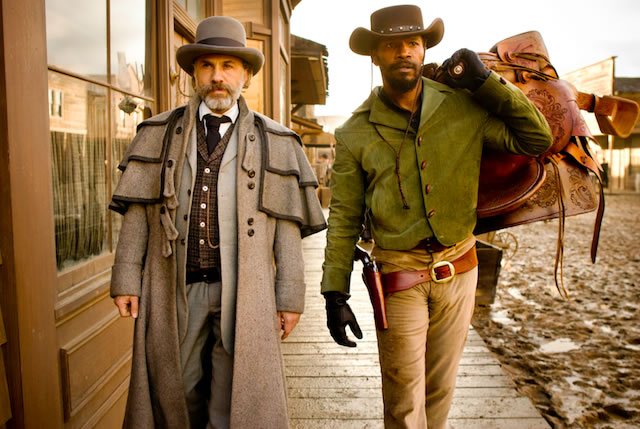
So what was wrong with Django Unchained? Let’s mention the positive first: I found the film very entertaining. It was funny, it had its tense moments, it was well crafted, it had good performances. Christoph Waltz was a joy to watch, Jaime Foxx was effective in the part, Samuel L. Jackson played a very different role from what I’m used to seeing. It’s just… I expect more than “very entertaining” from Tarantino. I remember sitting in the cinema for Jackie Brown and being hooked in the very first scene, thanks to the perfect combination of actress, visuals and music. I remember being pulled into the film immediately when Kill Bill started with a black and white close-up of the bloodied Bride and Bill doing his “Do you find me sadistic?” monologue, followed by the blackout and Nancy Sinatra’s “Bang Bang (My Baby Shot Me Down)”. With Death Proof it took longer – up until the halfway point I was prepared to hate the film for, well, finding it sadistic, but then things fell into place in the second part. And the first scene of Inglourious Basterds is pretty much perfect in how it creates tension and then ratchets it up to unbearable levels.

I felt giddy about all of Tarantino’s earlier films, sometimes due to the sheer exuberance of what he was doing, often because of the virtuoso way in which he remixed styles and genres to amazing effect, usually because the films had a sharp wit and intelligence that might not be apparent at a first viewing. Django Unchained, though? I never felt giddy. I never felt excited at what Tarantino was doing. The closest the film came was Christoph Waltz’s character and performance, which were pretty much pitch perfect, but other than that the film was strangely flat. No surprising juxtaposition (and no, it’s not enough to have Ennio Morricone and 2pac on the same soundtrack any more), not much in the way of subtext. Especially after Inglourious Basterds, which did some pretty intriguing things with its revenge plot(s), Django Unchained is strangely, disappointingly straightforward – and often it’s the lack of straightforwardness, the eagerness to stray of the most direct path, smell the daisies and cut them to shreds in an ironically postmodern homage to grindhouse gardening (“Alan Titchmarsh stars in The Gardener and his Hoe!“) that make Tarantino’s work stand out.

I’m wondering whether some of my disappointment comes from slavery being much more of a cultural issue in the States, and accordingly it wouldn’t resonate with me in the same way that it might with an audience that is still confronted with its racial past. Perhaps that adds an element that simply wasn’t there for me. Or perhaps Django Unchained is Tarantino light, at least with respect to the things I like best about Tarantino. Anyway, I’m in no particular hurry to see the film again (I saw both Kill Bills three times each at the cinema), but perhaps the film will grow on me if/when I sit down to watch it again. And in the meantime I’ll finally see what Pulp Fiction looks like on my TV…

We’re all going crazy, buck-jumping and Breaking Bad!

Wow. Just wow. Breaking Bad season 4 (yes, as always we’re a year or so behind the US) has done the series proud. Is it better than the previous seasons? I admit, there were moments when I felt the plot was spinning its wheels somewhat – we had scenes that were variations on earlier scenes without adding anything new, usually telling us something about Walter White’s personality that we already knew – and the season didn’t always maintain its well honed balance of plot, theme and characterisation, but when it worked (and it often did), boy, did it work… and off the top of my head, and before my first coffee of the day, I could mention scenes and whole episodes that were stronger than anything that had gone before.

He won.

And “Face Off”, the final episode of the season? I would put it up there with the most tension-building denouements I’ve seen or read in any medium. The way Vince Gilligan and his team have put together the individual building blocks to arrive at this ending for one of their most memorable characters, and the way it all comes together in Tio Salamanca’s muffled bell-ringing. As I’ve said: wow.

At the same time, Walter White – who I once thought to be a man trying to do as best he could in an impossible situation – has become one of the greatest villains in any visual medium. It’s difficult to read his tone of voice when he says “I won” at the end of the episode (it’s been described as smug and triumphant, but to me Walt’s shaking voice sounded not a little scared by what he’d become), but Bryan Cranston is pretty much perfect in his depiction of the character. Almost every episode of this season could serve as a master-class for budding actors, and a depressing one too – very few people will reaching the dizzying heights of Cranston’s performance and the character he has brought to life.

Just coming off the high of Breaking Bad‘s penultimate season, it’s difficult to segue neatly into the other season we’ve just finished watching, namely season 1 of Treme. I started watching David Simon’s latest with unrealistic, unfair expectations: The Wire is still the best thing I’ve seen on TV in many ways, and since Treme shares some of the earlier series’ main actors (Wendell “Bunk” Pierce, Clarke “Cool Lester Smooth” Peters) it’s even more difficult to shake these expectations. During Treme‘s first 4-5 episodes I kept repeating the mantra, “It’s not The Wire, it’s not The Wire“, which is true but not entirely fair: some of the themes are the same, but Simon and his cast and crew go for a different feel here. The series is much more meandering; it has a few plots threaded throughout the series, but character always comes before plot in this series.

I can’t pinpoint the moment when it all clicked – there were probably different moments for different characters – but by the end of the season, as the last episode of S1 transitioned into the flashback of all the characters preparing for Katrina, it definitely had. The writers and actors of Treme are impressively astute at balancing the depressing realities of post-Katrina New Orleans, at least for these particular characters, and the flashes of hope and humanity. I’ve never understood the people accusing Simon of cynicism (being a pessimist doesn’t make you a cynic!), and his deep sense of empathy has never been stronger than in Treme.

Except perhaps with Sonny, the Dutch louse – but given time even he could turn out to be human. Simon has a history of doing that… and I’ll gladly give him time to do so.

… when she says nothing at all

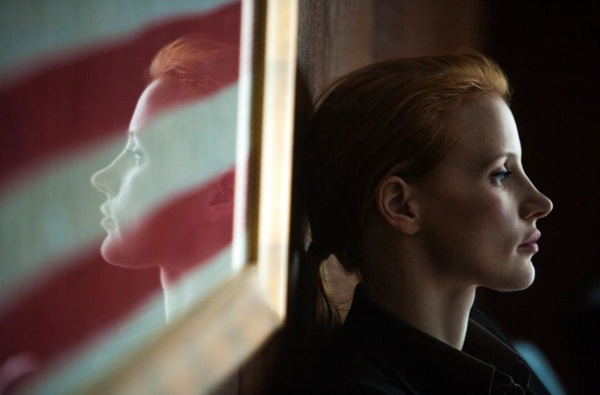
Anyone who’s used the words “Leni Riefenstahl” unironically to describe Kathryn Bigelow and her latest film, Zero Dark Thirty, needs to get a handle on themselves and a sense of proportion (and if they ever saw even an episode of 24, chances are that their frontal lobes would explode into mush). Seriously, if Zero Dark Thirty is supposed to be pro-torture propaganda, it is extremely inept at furthering a pro-torture agenda – and being inept at her craft is about the last thing you could criticise Bigelow for.

No, the problem with Zero Dark Thirty isn’t that it espouses problematic opinions – it’s that the film hardly has any opinion at all. It effaces practically every trace of an ideological or political position from its story, becoming one big Rorschach test in the process. Depending on one’s own view of the issues – the war on terrorism, the hunt for Osama Bin Laden, the use of torture – it’s easy to read any set of diametrically opposed intentions into the film. The same scenes can serve as evidence, with a bit of prodding and tweaking, that Bigelow approves of torture and that she sees it as a dehumanising evil, but without the outside input of the viewer’s opinions the movie does not forward any statement beyond “And then this happened.”

Zero Dark Thirty

I don’t particularly want to get into the quagmire of What Really Happened. I accept that this is a fictionalised version of the events, added to which I doubt there’s an unadulterated, unbiased, and most importantly unredacted version of what happened that Bigelow – or anyone, really – had access to. My issue with the film isn’t its political position but its blankness, which makes it difficult to engage with the film. I like cinema to be ambiguous, I enjoy making up my own mind and thinking for myself, so it’s not that I wanted Zero Dark Thirty to tell me how to feel about what was happening – but the film, its events and its characters are such blank slates that there isn’t even much there to engage with. There is a distinction between even-handedness and utter neutrality, and Switzerland could learn one or two (or two-hundred) things from Bigelow’s latest.

As a result, I found myself thinking and feeling relatively little about what was happening on the screen, beyond “Yeah, this – or something like it – did probably happen at some point.” Shouldn’t the events on screen carry some dramatic weight? The main adjective describing Zero Dark Thirty for me is this: professional. The film is well directed, shot, acted, edited; there is little to fault (except one clumsily manipulative scene that makes the characters involved look stupid) except its blankness. If anything, perhaps its very basic plotting can be criticised – a mere string of events reminiscent of a schoolchild’s essay on “What I did on my hols hunting for Bin Laden” – or its pedestrian characterisation, but both of these reflect what seems to be Bigelow’s intention, not to impose anything on the audience. But, Ms Bigelow, imposing on the audience and giving them something, anything, to work with, those are two very different things. Should I come away from a film on this topic feeling faintly impressed by the craft, faintly bored by the sheer length of the movie, but mostly just blank?

Trip the light fantastic

Okay, this could just as well be a variety pack, but I’m saving that option for another time, ‘kay? Anyway, with the two films there’s a theme to be made, however tenuous. And that theme is… the fantastic! Either that or big, growling, carnivorous CGI creatures that would chew your face off as soon as look at you. How’s that for themeitude?

The Hobbit

I’ve defended most of what Peter Jackson did to The Lord of the Rings. Jackson and his team had a good feel for what works in a book and what works on the screen. Cutting out Tom Bombadil? About the best thing that ever happened to Tolkien’s work. In fact, the film that gets the purists most riled up, The Two Towers, is my favourite of the trilogy.

I’m afraid that when it comes to The Hobbit, though, Jackson’s instincts weren’t quite as successful, at least with respect to the book-to-film transition. A lot has already been written about the decision to do yet another trilogy (seriously – what is it about fantasy and the number 3?), and I don’t want to come down too hard on Jackson et al. before I’ve seen all three of the Hobbit movies, but so far I have two main objections: 1) The Hobbit is a children’s book, it isn’t the big, world-shattering epic that its kid brother would be, and the relatively flimsy plot can’t carry the epicness that the film makers tried to inject. An Unexpected Journey tries to be two things at the same time – whimsical adventure and epic – and the film’s internal conflict makes it work less well as either of these two. 2) I understand that the writers’ team wanted to bring in all of the cool stories, scenes and characters from Tolkien’s other writings, but at least as far as this first film in the new trilogy is concerned there is no connection between the dwarves plot and the Necromancer storyline. As a result, the latter feels like a tenuously connected “Meanwhile at Dol Guldur…”

Still life with dwarves

Having said that, though, The Hobbit Part I (In Which Everyone Wonders Why This Had To Be Yet Another Trilogy) is an enjoyable film. It’s fun, it’s exciting, it’s got a fantastic rendition of the “Riddles in the Dark” chapter (it’s a shame that Gollum’s appearance in The Hobbit is done by the end of the first film), and Martin Freeman is a perfect Bilbo – and most importantly, the film did succeed at bringing back the good old Middle-Earth feeling right from the start. Let’s just hope, though, that by the third film hobbit fatigue hasn’t set in too much.

Life of Pi

Yes, I know – it isn’t exactly the same sort of fantasy as Jackson’s revisiting of Tolkien, but the fantastic plays an important – arguably more important – role in Ang Lee’s adaptation of Yann Martel’s novel. I wasn’t a huge fan of the book when I read it; Life of Pi is well written and perfectly charming for the most part, but its “I wanna be Le Petit Prince” whimsy, aiming for lightness mixed with profundity, grated. In addition, the novel’s final twist struck me as badly handled and gimmicky. I don’t mind stories that pull the rug from under your feet, and some of my favourite films and novels have similar elements, but Martel delivered his answer to “What’s the use of a story that isn’t even true (or is it?)?” too glibly.

Ang Lee’s film version of Life of Pi is beautiful to look at. I’d feared from the trailer that it would be tacky kitsch of a decidedly Kincaidy bent, but the film handles even the more outlandish, phantasmagoric images deftly. The 3D is integrated well, the CGI rarely looks computer-generated and the animation is just about as perfect as it gets. (Some scenes that I took to be CGI I later found out to have been shot with a trained tiger – go figure.)

Just when you thought it was safe to go back into the water...

In fact, I would go so far as to say that Lee’s film version may be the best film you can make of the novel – without changing it into something else altogether, that is. I enjoyed watching the film, but its twee attempts at depth, its facile final dilemma, it all bothered me. Life of Pi is quite the journey (minus the occasional bout of literary sea-sickness), but it’s one that ends in a disappointing destination. Perhaps the film depicts Pi’s story even too well, because it stacks the deck so much in favour of the fantastic version of his tale that the other version feels even cheaper. And it’s difficult to shake the feeling that in the end Pi is really saying, “Why let the truth get in the way of a good story?”, which is too much of a cop-out, both with respect to Pi’s story and the larger question of God he’s talking about. And cop-outs shouldn’t be delivered quite this glibly. Perhaps Life of Pi is a good story, and a good film, in dire need of a good ending.

These Dead are made for Walking

Zombies. How’s that for unlikely media stars? I used to think it’s only geek culture that goes for zombies in a big way, with stuff like the Marvel Zombies series (seriously!) and with even the most unlikely games having to shoehorn in a mode where you battle the undead hordes.

But no, zombies have arrived in a big way, and they seem to be here to stay. Perhaps the biggest success in this respect has been Robert Kirkman’s The Walking Dead, a comic series started in 2003 which by now has generated not only a TV series that is currently in its third season – and an adventure game series by Telltale Games that is one of the most unexpected gaming hits ever. Adventure games are a bit of a zombie genre themselves; back in the ’80s and ’90s there were many best-selling series, from the Monkey Island games to Sierra’s countless Quest titles, but these days there simply aren’t any triple-A graphic adventures. Telltale, too, have not always produced sterling games, often resorting to tired genre clichés in various series of games trying, with varying success, to revive old franchises, including video game follow-ups to the Back to the Future and Jurassic Park series of films.

To be honest, I didn’t expect much from The Walking Dead. I read the comics but quickly gave up; they start well and are admirably ruthless at depicting a world after the zombie apocalypse where no one is safe from being chowed on by shambling corpses, but the writing is often clumsy and the plotting increasingly became about little other than escalating worst-case scenarios with a touch of sadism towards the characters. (I don’t expect the scenario to be all sunshine and lollipops, but ceaseless grimness and brutality quickly become boring.) The TV series seems well made enough, but zombie fiction tends to rehearse two plots over and over again: 1) the zombies are coming! and 2) man is wolf to man (oh, and the zombies are coming!). How much story can you squeeze out of the overall setup?

Telltale Game’s The Walking Dead doesn’t tell a story that is fundamentally new, but it succeeds at taking the shopworn premise and giving it a spin. For anyone who’s ever despaired at people seriously discussing how they’d fare in the undead apocalypse (and listening to the kind of guys who’d seriously claim that they’ve got it all figured out: “Man, all I need is a sharp katana and 500 tins of baked beans…”), the game puts you in the shoes of a survivor and makes you take some hard decisions. Do you save the person who’s most likely to be of use but who hates your guts or do you throw him to the undead in favour of the woman you’re kinda sweet on? Do you distribute your limited food and water among the group or do you keep them for yourself and the eight-year old girl you’ve taken under your wing?

The game was advertised on the strength of the choices it gives the player, but admittedly the plot doesn’t change in any major ways based on what you do. What does change, though, is how the characters feel about you and how you feel about the characters. What Telltale does magnificently is engage you in the story of a small band of characters – none of which fit the typical video game template (no super heroes, space marines and busty female archaeologists in this one!) – and make you feel the escalating dread and weariness. Whatever you do, you don’t end up saving the world. You might not even save yourself. In The Walking Dead, winning may mean making sure that Clementine, the little girl that ends up in your care, survives another day, that she gets to eat, and that you’ll manage to keep her and the dwindling group of survivors from losing not only their lives but indeed the will to live.

In the end, Telltale’s take on the Walking Dead universe reminds me of nothing as much as of Cormac McCarthy’s The Road. It doesn’t have the same beautifully sparse prose, but it has the same trajectory – and it effectively puts me in the shoes of The Road‘s father, desperately wanting to make sure that the child I’m looking after is safe but at the same time knowing that I must not do so at the price of my own humanity. The relationship between Lee, the player character, and Clementine is one of the most successfully executed relationships in any game I’ve ever played, and it beats most similar relationships in films and TV. Hell (on earth), even Mr Ebert might appreciate this one when he isn’t yelling for those damn brain-eating kids to get off his laaaaarrrrgh-

P.S.: My apologies for the pun in the title – the only thing that’s funny about it is its smell…

Meet the new Bond…

… same as old Bond.

I have to admit this up front: I’m not a big fan of James Bond or the series of films he features in. I liked Casino Royale a lot, but even apparent series classic Goldeneye didn’t do anything for me, and while I could tolerate the Sean Connery films I wouldn’t want to sit through Roger Moore’s panto-style movies ever again.

Skyfall is both a call-back to old-school Bond and a deconstruction of the films and the character. In terms of both form and theme, it’s the most ambitious film in the series. At the end, as the credits were rolling, I was exhilarated and excited – yet I’m not sure I’m looking forward to what the Broccoli Gang will come up with next. For, see, Skyfall ends at a point where we could very easily segue into Dr No. Craig’s Bond at the film’s close is Connery’s original Bond, for all intents and purposes, complete with a male M and trusty Moneypenny.

Regardless of this, I come to praise Bond, not to bury him. After a boring, confused Quantum of Solace that barely works as a companion piece to Casino Royale – and that even then doesn’t add much to its predecessor – Sam Mendes has a much better handle on… well, everything. I haven’t yet seen a Mark Foster film that has convinced me the man deserves the praise he’s received, and he was most definitely the wrong man for Bond. Mendes hasn’t really done any action films, the closest being Road to Perdition, but he knows how to stage scenes effectively – and he knows how to pick his collaborators, with Roger Deakins turning in the most gorgeous film in the series yet. His aesthetic sensibilities complement Mendes’ directorial eye well, especially in a fight silhouetted against Blade Runner-esque Shanghai facades and in the Macao scenes. (Also, is it just me or is Mendes more overtly theatrical, though effectively so, in this than in any of his previous films?)

Skyfall

There’s more to like about Skyfall: the phantasmagoric-to-the-point-of-becoming-apocalyptic intro sequence (I didn’t like Adele’s song all that much until I saw it matched to the intro visuals), Craig’s co-stars (let me single out Javier Bardem who succeeds at being camp and chilling, gentle and deranged), a smart, witty script that doesn’t shy away from pathos when it is called for. It’s the first Bond film I’ve seen at the cinema that I wanted to see again as soon as the credits rolled, and it’s the second that has made me emotionally invested. Yet there remains that niggling feeling that Skyfall succeeds all too well at making everything that’s interesting about it superfluous for the next film in the franchise. Bond mentions at some point during the film that his hobby is resurrection – let’s hope that what this film has resurrected isn’t one of the undead, a revenant of the Bonds of old and nothing more.

P.S.: Ben Whishaw’s Q, while not much more substantial than a cameo, was much appreciated, as were Naomie Harris, Ralph Fiennes and Albert Finney.