Welcome to Six Damn Fine Degrees. These instalments will be inspired by the idea of six degrees of separation in the loosest sense. The only rule: it connects – in some way – to the previous instalment. So come join us on our weekly foray into interconnectedness!
I made my first kill before the age of 10. By the time I was a teenager, I must have killed hundreds. By the time I reached the age of 20, I expect the number was somewhere in the five-digit range, at least. And I suspect that the same is true for so many people these days, at least in the west – because murder is just a click away.
In 2021, we did a podcast episode titled “Second Chances” (which we’re hoping to turn into something of an annual thing). In it, we discussed films that, for one reason or another, didn’t work for us but that we’d been wanting to revisit because we thought it might’ve been a case of “It’s not you, it’s me”: that we watched these films with the wrong kind of expectation, or that we lacked the right lens through which to watch it.
Sometimes, though, there can be films (or books, plays, poems, TV series, albums, games etc. etc.) that simply work on a wavelength that we’re not receptive to. This doesn’t mean that they’re bad or that we’re wrong or stupid for not liking them. I’ve long believed that most art that is interesting won’t be for everyone. Ideally I can still get something out of culture that isn’t for me, but generally this is a matter more of appreciation than of enjoyment. Often these are works that I prefer to discuss or read or watch a good video essay about rather than to watch.
But these works still tend to leave me with lingering doubts, especially the ones that have elements or aspects that I genuinely do enjoy: a scene, a performance, or perhaps a shot that sticks in my mind. And the same can be true for certain directors: I don’t generally like their work, but there’s something about it that makes it difficult for me to just conclude that they’re not for me.
Join us every week for a trip into the weird and wonderful world of trailers. Whether it’s the first teaser for the latest instalment in your favourite franchise, an obscure preview for a strange indie darling, whether it’s good, bad, ugly or just plain weird – your favourite pop culture baristas are there to tell you what they think.
After something of a break from Nordic existentialism, Matt returned to his Bergman boxset, watching an early film by the director, Thirst (1949). Unfortunately the age of the film, and possibly the fact that Thirst isn’t exactly one of Bergman’s most memorable films, means that there isn’t a trailer to be found on YouTube – so, instead, please enjoy this trailer for Park Chan-wook’s 2009 vampire movie Thirst, loosely based on a 19th century French novel.
Welcome to Six Damn Fine Degrees. These instalments will be inspired by the idea of six degrees of separation in the loosest sense. The only rule: it connects – in some way – to the previous instalment. So come join us on our weekly foray into interconnectedness!
There is the sanitized version of murder in countless whodunits, where the rules are clear: someone might be dead by the hand of another, and some clever brain will figure it all out, preferably in a showdown before a chimney fire, holding a long speech that ends in a big revelation. The rules are clear; the culprit, more often than not, is punished by the law, as if this was only slightly more atrocious than any hockey game. And while any sturdily waxed moustaches might have been replaced by squint-eyed scientists, the rules still apply. Miss Marple is never wrong, but science can’t lie.
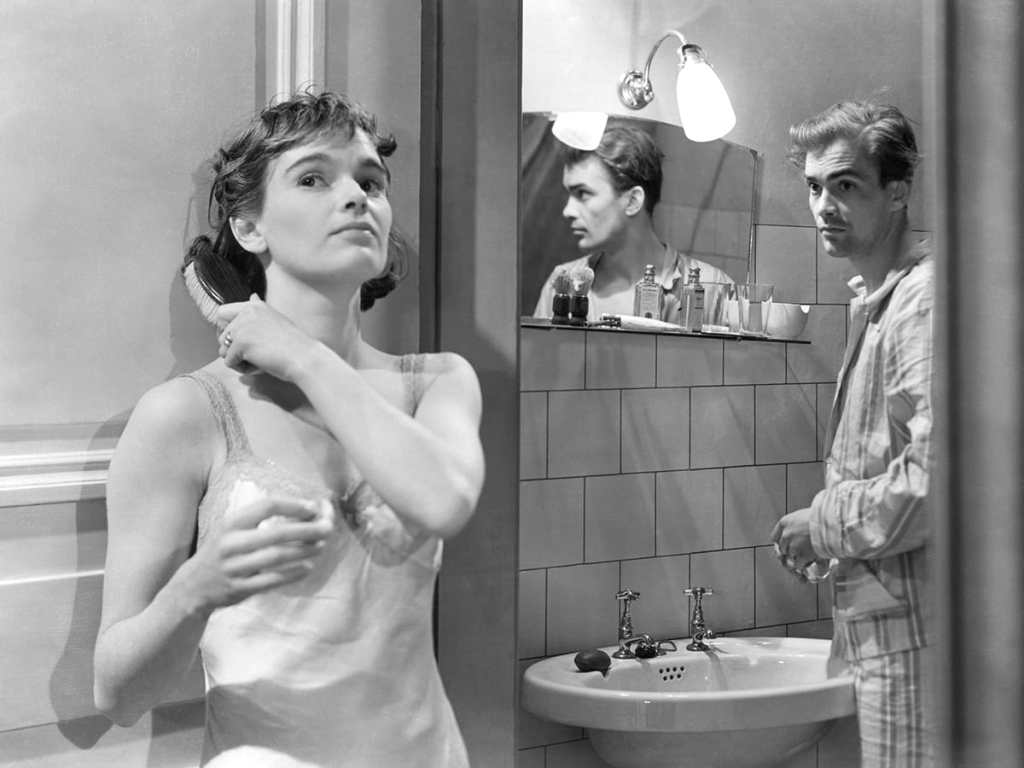
It’s a difficult act to follow Persona, and Criterion probably made the right choice when it decided to follow Bergman’s monolithic masterpiece with a number of his earlier, smaller films, in which he was trying to find his voice as a director. Thirst is one of those films. It’s by no means bad – in fact, some of the later films that are more clearly Bergman’s work are probably worse films (and yes, All These Women, I’m looking at you). However, it is a film that in the context of Bergman’s filmography feels like he was trying his hand at themes and techniques that he’d later use to better effect.
Join us every week for a trip into the weird and wonderful world of trailers. Whether it’s the first teaser for the latest instalment in your favourite franchise, an obscure preview for a strange indie darling, whether it’s good, bad, ugly or just plain weird – your favourite pop culture baristas are there to tell you what they think.
And our Summer of Directors continues: after celebrating the tactility of Jane Campion’s films last month, we continue with a very different kind of physicality, with the variform violence done to bodies and minds in the phantasmagoric cinema of Italian filmmaker Dario Argento. Join Sam, Julie and Alan as they dissect a trio of Argento’s films, from giallo classic The Bird with the Crystal Plumage (1970) via Deep Red (1975) – a film called by some the best giallo ever made – to perhaps the most famous film by Argento, the supernatural horror film Suspiria (1977). What makes these films potent to this day? How important is plot to an Argento film? How much of a successor was the director to Alfred Hitchcock? Just what is “impure cinema”? And just how does our gang draw a direct line from classic movie musicals to Dario Argento’s films?
Welcome to Six Damn Fine Degrees. These instalments will be inspired by the idea of six degrees of separation in the loosest sense. The only rule: it connects – in some way – to the previous instalment. So come join us on our weekly foray into interconnectedness!
Caveat: here be spoilers.
Peter Jackson’s Heavenly Creatures begins, after a 1950s type commercial for Christchurch, New Zealand, with two young women, girls really, running through shrubbery screaming hysterically. Covered in blood, they are found by a tea shop owner. “It’s Mummy,” says one, “she’s been terribly hurt.”
Join us every week for a trip into the weird and wonderful world of trailers. Whether it’s the first teaser for the latest instalment in your favourite franchise, an obscure preview for a strange indie darling, whether it’s good, bad, ugly or just plain weird – your favourite pop culture baristas are there to tell you what they think.
Welcome to Six Damn Fine Degrees. These instalments will be inspired by the idea of six degrees of separation in the loosest sense. The only rule: it connects – in some way – to the previous instalment. So come join us on our weekly foray into interconnectedness!
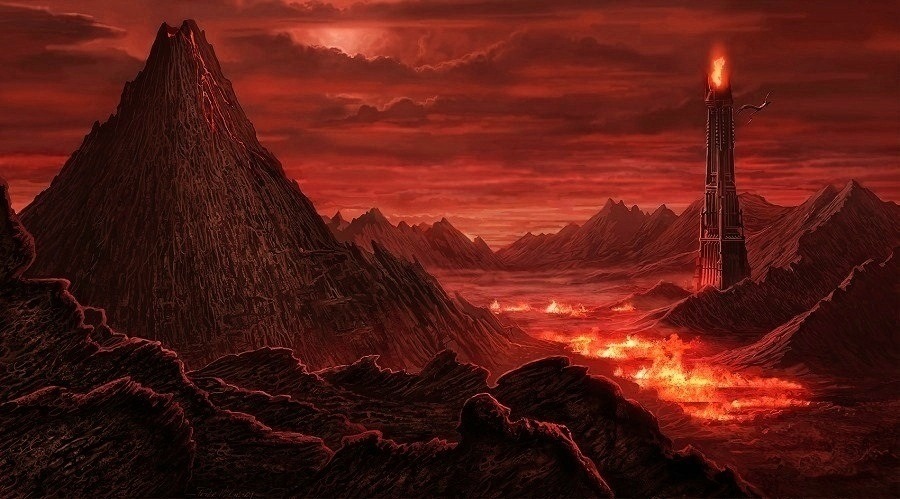
“Mount Doom” by Pete McKinstry
“Why didn’t they just send the Eagles to drop the Ring into Mount Doom?”