Welcome to One Best Picture After Another – where I attempt to watch all the winners of the Academy Award for Best Picture, starting at the very beginning. And attempt to answer two simple questions – is the film still actually any good? And why did it win?

6/10
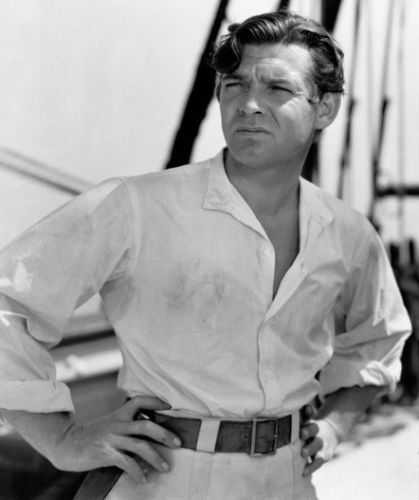
A year after It Happened One Night won the Oscar and Clark Gable is already back in the next winning film with Mutiny On The Bounty. Another triumph that reflected his popularity with audiences and critics in the mid-1930s. Or, to put it more bluntly, he was a Star.
Watching these two films you can see why – even though the roles are quite different he’s enough of a personality that he’s first and foremost Clark Gable in both. He has a striking look, and a voice that combines authority and a charming decency. He’s not the sort of actor who disappears into the role; instead he turns every role into another vehicle for his onscreen star persona.
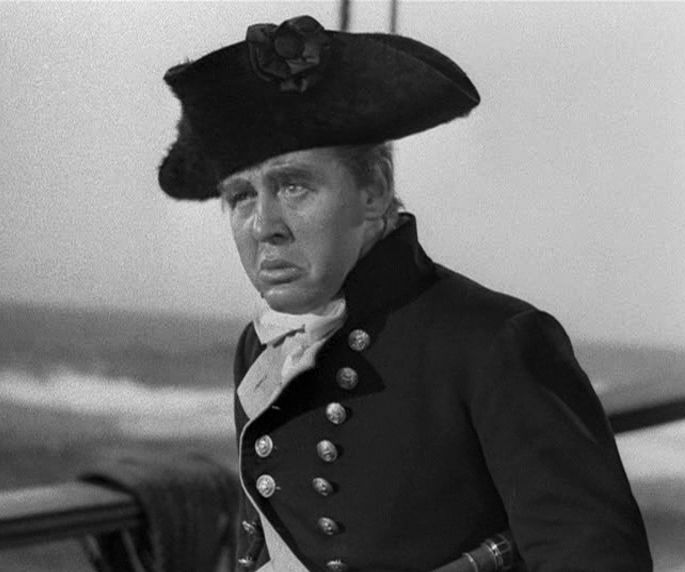
Pitting Clark Gable’s star person against Charles Laughton’s theatrical character performance in this film works really well. The contrast between the two styles fits perfectly the antagonism of the roles they are playing. A contrast that’s highlighted by the fact that Gable, as ever, seems to possess the air of a man who takes the job of relaxing very seriously, while Laughton’s Captain Bligh here is wound up tight. He brilliantly gives us a petulant child fixated on indulging his whims within the strict rules of law.
So the reason it works so well is that Laughton is excellent in his mannered portrayal of a big screen antagonist that genuinely feels dangerous and Gable effortlessly captures a sense of righteous decency you want to survive this danger. Their interplay is the highlight of the film, and its an energy the production misses for the long sequences the two men are apart.
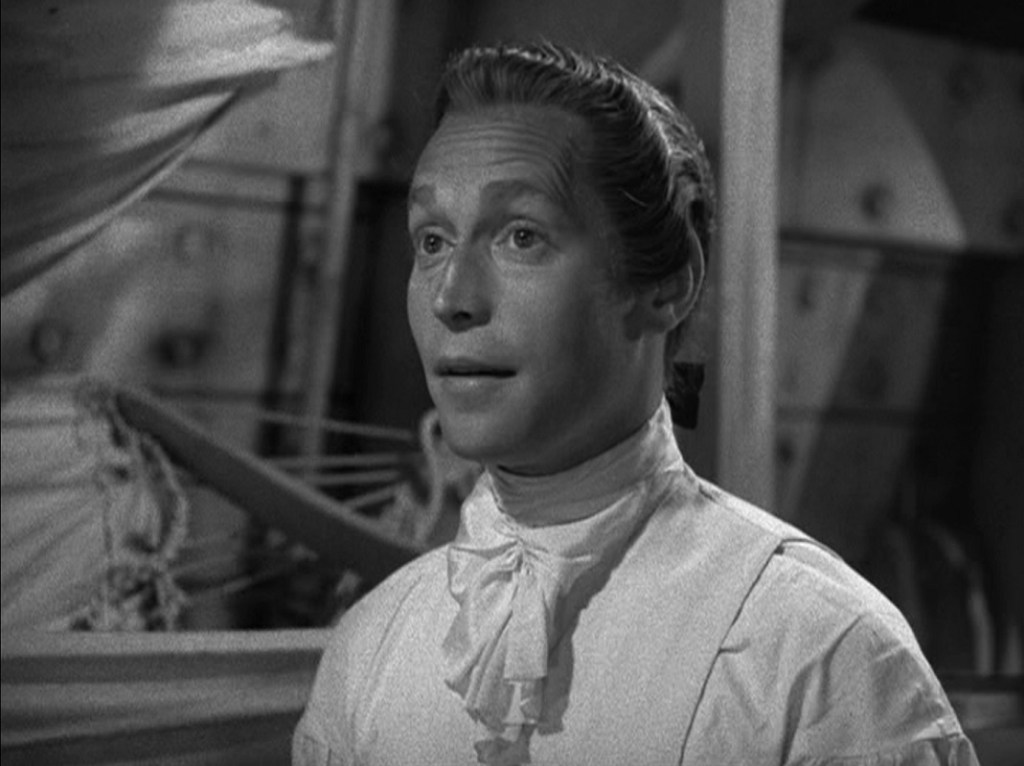
While Gable is still a recognised star within the world of Classic Film fans, and Laughton’s stock among film critics is still high for both his acting and directing, the third lead on this picture is interesting. Franchot Tone was huge in the ’30s. A good looking film star with a large fan club, including a fair few of his leading ladies, Tone has pretty much fallen off the radar today. Watching him in this, I think you can see why. He’s incredibly good looking, but conventionally so. His acting is solid, and he’s got a fine voice, but it never tips over into being memorable. Even as I write this, I feel I could probably walk past the guy on the street without realising that it was Franchot Tone. You can’t say the same about Gable.
But enough rambling thoughts about the actors. What about the film? It’s enjoyable. Sort of. I am glad I watched it, and I liked how the drama develops. Not knowing the story beforehand, its twists and turns were pleasing, and it was nice to see secondary characters get rather lovely moments. The exciting scenes on the big ships were effective enough but not as impressive as some of the big moments in previous winners. And it suffers because, watched in 2026, I know that Hollywood is going to get better at delivering epic high seas hijinks. Just as The Broadway Melody struggles with the benefit of hindsight, as any viewer knows that musicals are going to get a lot better, so the big boat sequences have aged poorly.
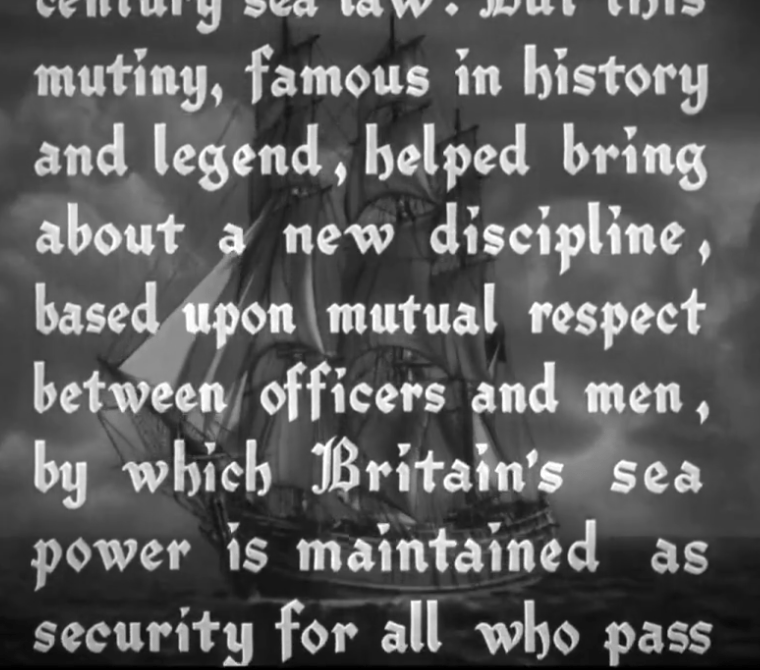
I’m assuming that the story was already well known to mid-’30s audiences because the opening crawl to the film pretty much gives away where things are going to go. And, just like Cavalcade, this is a strikingly Anglophile movie – it even ends with a rousing rendition of “Rule Britannia”. I’ve adjusted to the fact that Hollywood back then would happily present English-speaking productions that were set in a foreign country: Grand Hotel is set in Berlin and all the characters are meant to be German.
There’s fun in this pretence, just as there’s fun in Clark Gable declaring himself a proud Englishman. But it feels another level for the film to be delivering a patriotic message about England, and for the second time in three years the Oscar is going to a film that seems to revel in its Englishness. I mean, fair enough, in the mid-’30s, the countries are allies, but it’s weird to see things go this far.
Especially as the film itself was a huge hit. American audiences made it the highest grossing film of the year by some margin so clearly the English focus wasn’t a bar. The best theory I can come up with to explain this is that there were a lot of folk of English descent that hadn’t quite severed their transatlantic affection. While also the whole thing in its period setting, with odd clothes and social rules might just as well take place in a fantasy land, and audiences engaged with it as such.
Sadly it’s not a fantasy world, and the ‘real’ aspects of it are another area where things have not aged well. When the action moves to Tahiti, all the speaking Polynesian roles are very noticeably not played by Polynesians. Most striking their leader – played by the incredibly white William Bambridge – now just feels jarring in every scene he is in, whatever performance he might be given now lost behind skin darkening make-up and a near comical ‘native’ accent. The only other main roles for Polynesian characters are two young women who marry English sailors – in real life, one was Hispanic, the other half white, half Hawaiian Polynesian.
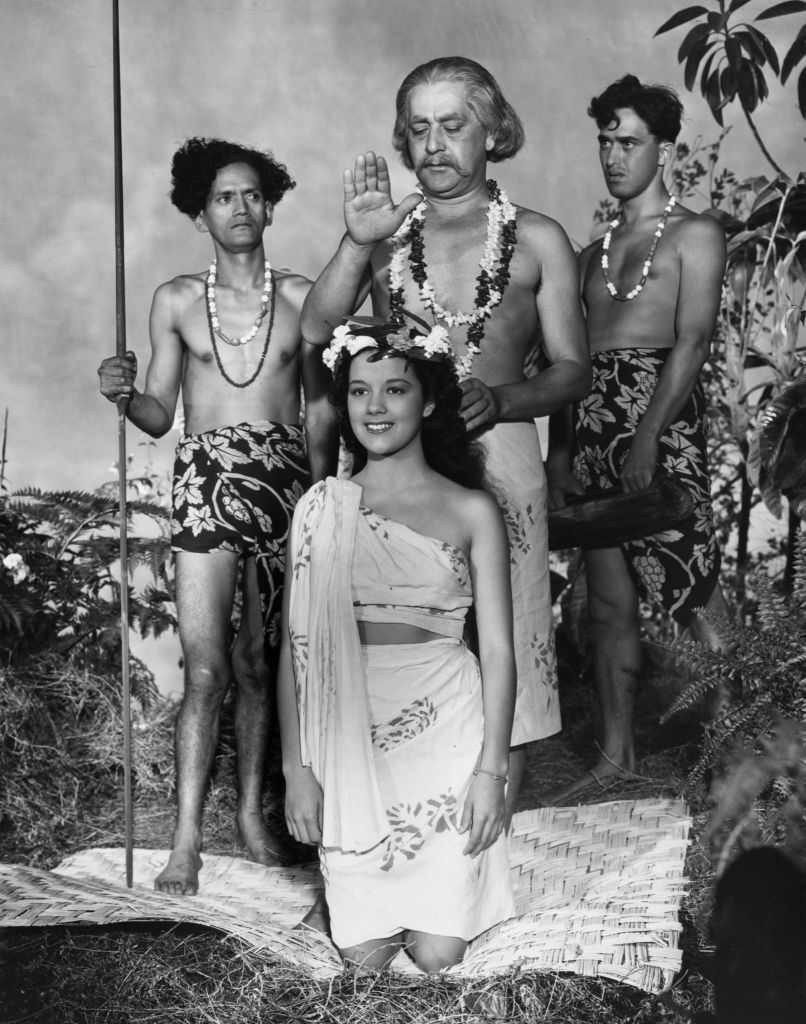
As the tale unfolds, many of the main characters take Polynesian wives. This seemed odd to me: the heavy censorship of the production code was being applied by now and that explicitly forbade race mixing on screen. This led me down the rabbit hole to learn that there were exceptions. The key purpose of the rule was to prevent black and white mixing. Other mixing could be allowed, although it invariably had to be a white man with a non- white but crucially non-black woman to stand a chance with the censors.
These are pretty big qualifications, but those aside, I did enjoy the film. It is overlong and seems to lose a lot of its energy before the end. But the Laughton/Gable dynamic works, and the story has enough twists and turns to be interesting. As for why it won – maybe a big star name, a critically well regarded actor and a fancy looking successful period drama with a good dash of spectacle were all the film needed to win over an already Anglophile Academy. This is what the studios want to be making to make them feel good about themselves, alongside making money.


One thought on “One Best Picture After Another #8: Mutiny On The Bounty (1935)”