 Reader, we are not in Jane Austen country anymore. Any Austen adaptation must end in a marriage, whereas Lady Macbeth starts with one, not a happy affair, and it gets worse from here on out. The source of this story is, of course, that famous Scottish play, and then there is Nikolai Leskov’s novella Lady Macbeth of the Mtsensk District from 1865, which is said to be loosely based on a real crime. William Oldroyd’s movie, from a screenplay by Alice Birch, could have approached the character of Lady Macbeth from one of those angles. Instead, the movie shows us a young bride called Katherine who initially does not object to be married to a wealthy nobleman who resides in a bleak, solitary country estate. The troubles start during their wedding night: the husband is a gruff alcoholic and under his father’s thumb. He orders her to undress and face the wall, and then he puts out the light and goes to sleep. She discovers that he is impotent and wants to keep her indoors. The mood of the movie has more in common with Wuthering Heights than any Merchant-Ivory movie. Continue reading
Movies
War is monkey hell
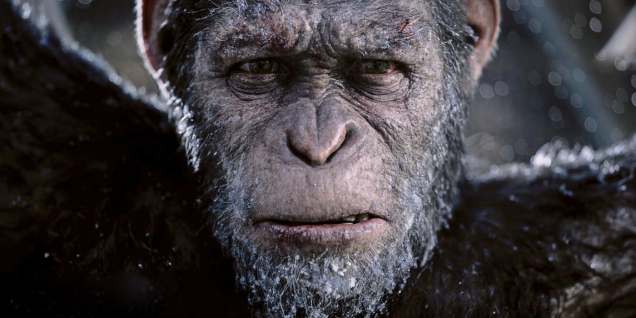
Technically, War for the Planet of the Apes is a triumph. There are no two ways about it. The fully computer-generated ape protagonists aren’t perfect all of the time just yet, but they have heft and weight and they’re expressive and believable – and while I cannot say how much of the performance is the work of the actors and how much is the animators’, all of these deserve all the praise they receive and more. Outside fully animated films of the Disney and Pixar kind, I cannot remember a film that relied so heavily on non-human protagonists where, after a few minutes, you accept and stop thinking about the fact that the leads in the story aren’t the same species as you.
For Jeanne, 1928-2017
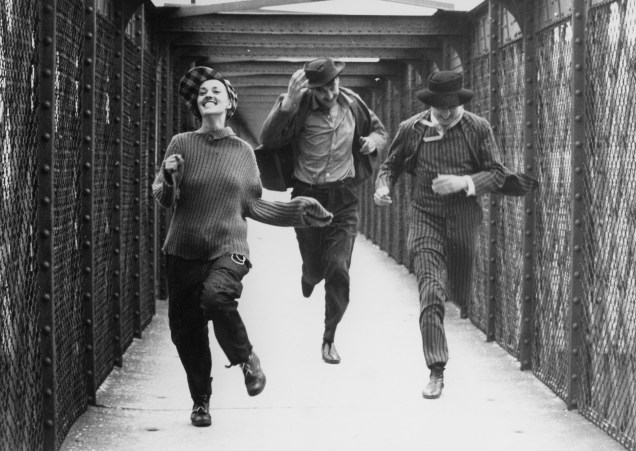
Today, legendary French actress Jeanne Moreau died at the age of 89.
From the School of Subtle Manipulation
 There is a wounded stranger in the music room of Mrs Farnsworth’s seminary, a Union soldier from Ireland, a deserter with a leg wound, a man, not exactly young, but handsome. What to do? He is a Yankee, they are all from the South, so shall they hand him over to the Confederate troops nearby, or should they do the Christian thing and dress his wounds first? Mrs Farnsworth herself, the head teacher Mrs Morrow and the five pupils all feel an undercurrent of fear because that deserter might bring the War to their school, a war they watch every evening through a telescope from the upper balcony of their mansion, and they see the black plumes of smoke just beyond the treeline. Sometimes the boom of cannon-fire can be heard. That’s the situation at the beginning of Sofia Coppola’s The Beguiled. It’s a must-see, because who tells stories about groups of girls or women better than Coppola? The movie is set in Virginia in 1864, but it resembles Coppola’s The Virgin Suicides (1999) in more ways than one. Continue reading
Between Us and Them, the Middle Ground Wins
 Zombies in themselves aren’t that interesting, are they? If they don’t want to eat your flesh and slurp your brains, they just stand around rotting and smelling badly. Some of them walk slowly, others are able to run towards you. There are some who learn a thing or two, like climbing a ladder after you, or bashing a glass door in with a heavy rock or their own head. That’s about it. The key, then, to rather long-running series like The Walking Dead, or to movies like 28 Days Later and 28 Weeks Later is that those stories are all about the living, who are the survivors in some post-apocalytpic world with scant food and shelter and safety, where they are the endangered species, and mostly vastly outnumbered by zombies. Yes, sometimes the zombies get the living, but it’s also the living who seem to be very good at killing each other off when pushed into a corner like that. Humans have become a minority. It’s a metaphor that every audience member immediately understands. Continue reading
An Amazon in her Prime

Wonder Woman gets Wonder Woman right. Princess Diana of Themyscira, daughter of Queen Hippolyta and mighty Zeus, speaks her mind and does what she damn well pleases. In this movie, she wants to end World War I singlehandedly. She talks freely about slavery and freedom and the duty to fight for the weak. And boy, can she kick ass. Sometimes she is serious about fighting because there are civilians who need saving, but there are a few moments where she seems to enjoy combat, and she has a little glint in her eyes, just like Errol Flynn did before another bout of swashbuckling. It’s just that Wonder Woman deserves a better movie than this one. Continue reading
Genocide by Xenomorph? Discuss.
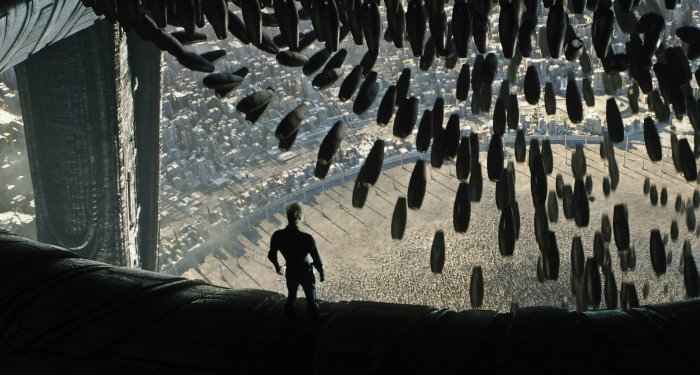 Alien: Covenant is a notch better than Prometheus, maybe two, but it still leaves much to be desired. The main problem, for me anyway, lies not within the film, but outside it. My main complaint is this: I am no longer afraid of the Xenomorph and its many manifestations. Oh sure, I am going to lose my shit for a moment at a jump scare (they are named that way for a reason), but even facehuggers and new-born chestbursters don’t do it for me anymore. I might suffer from what Mr Thirith calls Alien fatigue. Continue reading
Don’t take it personally, it just ain’t your story
I grew up roughly during the last dozen years of Apartheid, in a country that lived up to its tradition of supposed neutrality covering up business connections to an unsavoury regime. I faintly remember people boycotting Granny Smith apples and, somewhat less faintly, Eddy Grant’s song “Gimme Hope Jo’anna”. What I remember most from those times, though, is Cry Freedom, a 1987 film that zeroed in on the human cost of Apartheid: the exile of a liberal, middle-class white journalist and his family from their chosen home of South Africa.
Oh, and there was also something a corrupt, racist police apparatus torturing and killing the black activist and community leader Steve Biko.
Selma isn’t like that.

We are family
In the past I’ve called Hirokazu Koreeda’s films “gentle”, which is perhaps a misleading term. It makes the director and his works sound soft and pleasant and, well, sort of nothingy. Which is giving both them and the adjective short shrift – these days especially, both on and off the screen, we could do with more gentleness. It also suggests that it’s easy to underestimate Koreeda and his films, because doing what he does – and, more importantly, doing it well – is exceedingly challenging. Koreeda’s films have an uplifting humanity that is sadly rare, not just in cinema.

The one with the talking raccoon
Guardians of the Galaxy Vol. 2 is one of the most likeable films in recent years. It’s definitely the most purely fun film in the Marvel Cinematic Universe (MCU) since, well, Guardians of the Galaxy Vol. 1. It is funny, it has personality, and it is eminently quotable. Almost every scene has at least one great line, and that’s not even mentioning the visual humour the film excels at. It’s almost impossible not to like the movie.
Reader, I liked it – but I wanted to love it, and I didn’t.

Guardians Vol. 2 does so many things right. It takes the fun ensemble of the first film and builds on it – and this extends to some of the henchmen, sidekicks and minor characters from the first film. It avoids the mistake common to the MCU of generic villains who are uninteresting as characters and who don’t reveal anything about the protagonists either (even if Marvel does return to the well of daddy issues a bit too often, perhaps). Visually it continues the trend of Dr. Strange of making these films look good instead of mediocre and blandly competent, and there’s genuine wit to some of the film’s humour. Continue reading

