 Since I give every movie one chance, sometimes two, let’s call this one an experiment, because me watching Personal Shopper could go either way – I might like it, or I might not. Personal Shopper seems to lend itself particularly well to this experiment because it got booed first and later received rave reviews in Cannes – not a lot of middle ground. I admit I found Clouds of Sils Maria sometimes quite intriguing, sometimes weird and incoherent, and sometimes it dragged along for me. On the whole, Sils Maria was probably not as smart as it thought it was. So here we have the same director, Olivier Assayas, and one of its two stars, Kristen Stewart, in the main role. I know some people have huge problems with her, but I am not one of them. I liked her in The Yellow Handkerchief as well as in Welcome to the Rileys. Continue reading
Uncategorized
The old woman and the Sea
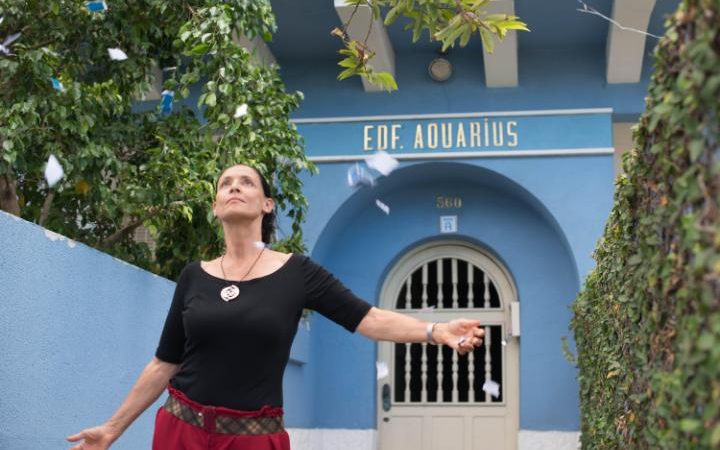 There is an apartment house on the beachfront of Recife, Brazil. It’s from a time when houses still had names, and this one is called the Aquarius. Throughout the years, towering hotels have been built around it; tenants move out until there is only Clara left. Developers turn up, friendly but smarmy, but Clara does not want to sell. For Clara, home is a place. That is why the movie is called by the name of the house, Aquarius. It’s impossible to separate the woman and the house, but the developers don’t realize that yet. We all have something outside ourselves that defines us. With Clara, it’s the place she lives in. In Clara’s living room, there is a wooden chest of drawers on which Auntie Lucia, a family legend, once made love to her lover and future husband. That is not a source of ridicule, but a way to fondly remember the past. Continue reading
The young woman and the Sea
 Pedro Almodóvar’s latest Movie Julieta is a Homeric family biography, bookended with Hitchcockian disquiet. I am not sure if those two moods go easy together; the story is loosely based on three Alice Munro short stories, so maybe this is what kept me watching. The movie starts when the older Julieta (played by Emma Suárez) gets word that her long-lost daughter Antía is alive and well and a mother of three, living in Switzerland. Julieta leaves her lover and moves back into the flat where she and Antía used to live so that the daughter can find the mother at the old adress – if she wants to. This and the brooding score made me expect some long-simmering family conflict. Continue reading
Has the mirror cracked?
I was a big fan of the first two series of Black Mirror, Charlie Brooker’s sci-fi/horror satire of how modern technology and media act to reflect our darkest impulses right back at us. I didn’t love every single episode, though while I found series 2’s “The Waldo Moment” possibly the weakest instalment, 2016 has proven it depressingly prescient. When Netflix announced that they were financing a third, longer series, I was definitely interested – though then it came out to, let’s say, uneven reviews. Many still loved it, and some thought the new series was simply uneven but still largely good – but eminent internet essayist Film Crit Hulk (if you don’t already know him, be warned: while he is usually insightful and well-reasoned, he does have his quirks and affectations) published a pretty damning post. Its title didn’t exactly promise a differentiated look at the series: “Why BLACK MIRROR Is Kinda Bullshit”. Ironically, FCH’s post increased my optimism about the new series; while usually get a lot out of his essays, even when I disagree, what he wrote about some of my favourite episodes of Black Mirror, such as series 2’s “White Bear”, made me think that he’d misunderstood several fundamental things, mainly this: in its first two series, Black Mirror wasn’t about how technology was evil, it was about how technology acts as an amplifier and accelerant for some of our worst impulses. The metaphor’s not subtle, but it’s effective: new technology and media acts as a dark, distorted reflection of ourselves, they’re (all together now!) a black mirror to mankind.

So, having dismissed FCH’s argument, I got started on the third series of Black Mirror – and found that, yeah, it was kinda bullshit. Continue reading
Giving us some song and dance
 Damien Chazelle’s La La Land harks back to another era of moviemaking, but it stands entirely on its own two feet. Sometimes those feet jig and hoof and skip and jump, but they are also able to stand completely still while the head looks at someone else across a crowded jazz bar. It’s a musical, but it is much more. It starts as an exuberant fantasy, and when the romantic bits or the musical numbers run the danger of getting too much, real life comes crashing in, rooting the whole dream in firm ground, only to take off again later. It’s over two hours long, but there are no boring bits. There is funk, soul, jazz, tap-dance and waltz, there are vinyl records and live bands, there is beer and coffee. There is love, and there are kisses, and there are fights. Continue reading
Bring me the head of 2016
 In a lot of ways, 2016 was the year to get suspicious about a lot of things, most of all about the future, and maybe some of us even got superstitious a little bit. As far as my movies are concerned, I think I detect a pattern: the two movies I liked best in 2015, Whiplash and Birdman, ran here in January, and 2016 began with Carol and The Big Short, another couple of great movies. Superstition? Coincidence? Perhaps. I can’t quite shake the feeling that this year, you had to dig slightly deeper to find a really good movie. I wrote about The Assassin and American Honey, which are far from light entertainment, but are immensely rewarding and beautiful to look at. I also highly recommend Sing Street for its youthful irreverence and its music; Arrival, for its use of the sci-fi genre to learn a lot more about us humans than about the extraterrestrials (if you haven’t read thirithch’s excellent review, you should do so). And Rogue One, which tried hard not to be a blockbuster and was all the more successful because of it. Continue reading
Fan service, nostalgia and storytelling
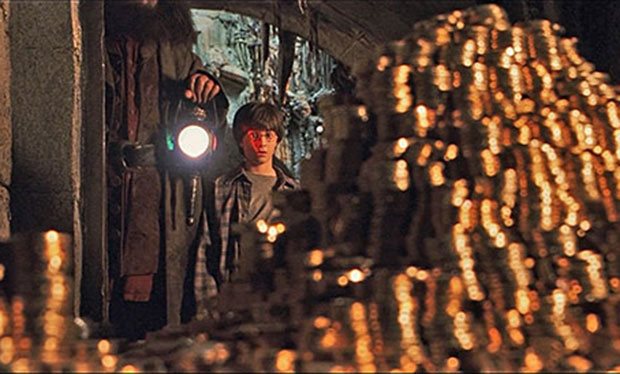
When I first heard about Warner Bros. Pictures’ plans to bring the Potterverse back to the big screen with Fantastic Beasts and How to Find Them, I pretty much dismissed those plans as them going back to their favourite cash cow: a decision based primarily on monetary interests. Rowling’s book, published in between the fourth and fifth Harry Potter novels, was more of a sourcebook for the fans, so why turn this into a film – or, indeed, a series of films? For the many shiny sickles and galleons the producers would add to their hoard at Gringotts, obviously.
She can handle the truth
 I like the Dardennes. Their movies have something immediate and unfiltered, something of the here and now. Their realism isn’t intrusive or voyeuristic, it’s simply part of their world without being moralistic or downtrodden. All of their features are set in or around the same area, in Seraing, Belgium, where they are from, a down-on-its-luck area of industrial estates and anonymous apartments. We’re amongst the working class, and things generally look bleak. But the people are real and breathing, and there is no need to zoom in on their weaker moments. Just look at them, and their glow and zeal will reveal itself. Continue reading
Bittersweet bird of youth
 I like drifters. I am fascinated by them because I am not one of them, and never really have been. Story-wise, you never know what’s going to happen to them, or where they will go. Neither do they. Their stories are full of surprises, and screenwriters and directors often use them as the center of a road movie, the kind that doesn’t seem to have a destination. Star, the young heroine in Andrea Arnold’s American Honey, played by newcomer Sasha Lane, is not a drifter in the strictest sense, but she is on the road because she’s had it with her old life: looking after two kids that are not her own, avoiding her lecherous boyfriend, eating out of dumpsters, being broke. Something needs to happen, and soon. Continue reading
The long dark journey through The Night Of
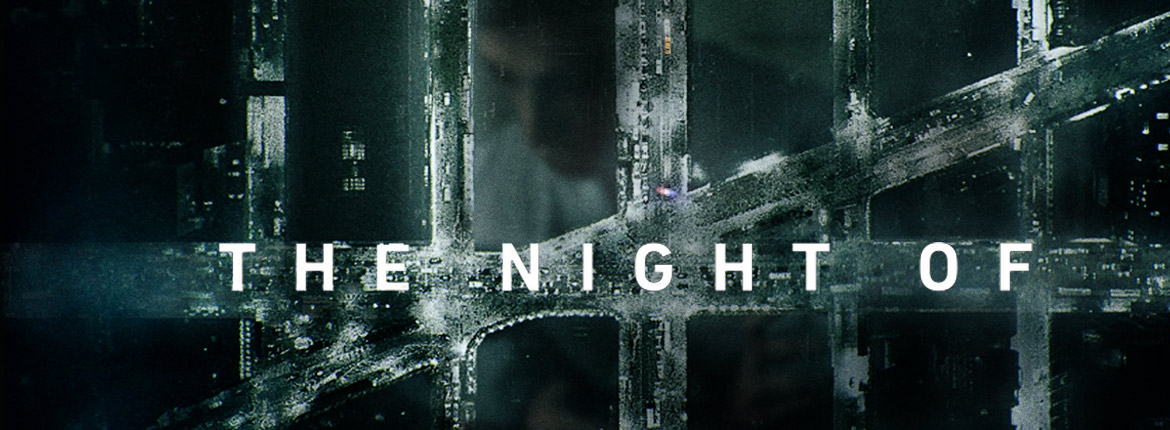 I was hypnotized by The Night Of for five or six episodes, which isn’t bad at all considering that it’s an eight-part HBO miniseries. To me, it seemed to scratch the itch that season 2 of True Detective left me with. It’s on the dark side of things: it mostly takes place at night and/or indoors, but even the exterior daylight scenes look sort of gloomy. It’s about crime and punishment, and about the law, about justice and injustice, and about courts and prison. It’s set in New York, but is based on the British TV series Criminal Justice from 2008-09, starring Ben Whishaw. The Night Of, however, has no problem standing on its own. Continue reading
 A Damn Fine Cup of Culture