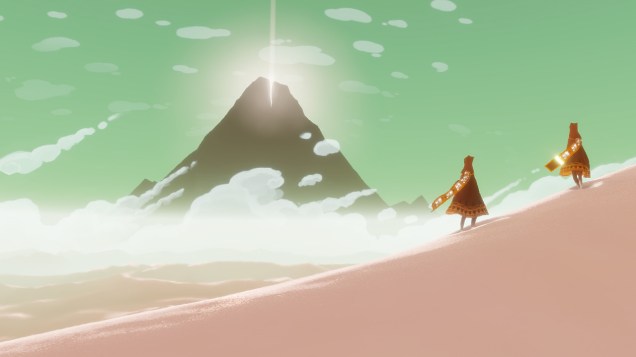
In 2012, a game called Journeywas published on the PlayStation 3. It was pretty much the consummate indie art game: there were no puzzles, no boss encounters. Heck, you couldn’t even shoot anyone. What you could do is control your avatar, a figure in a red robe, to walk around the desert dunes. You could jump and even fly, in very limited ways. And you could sing. And as you crossed the desert, you could bump into other robed figures and communicate with them – by moving around, jumping, flying and singing. Whoever you were, and whatever you were hoping to achieve in this desolate yet beautiful landscape: you were not alone.
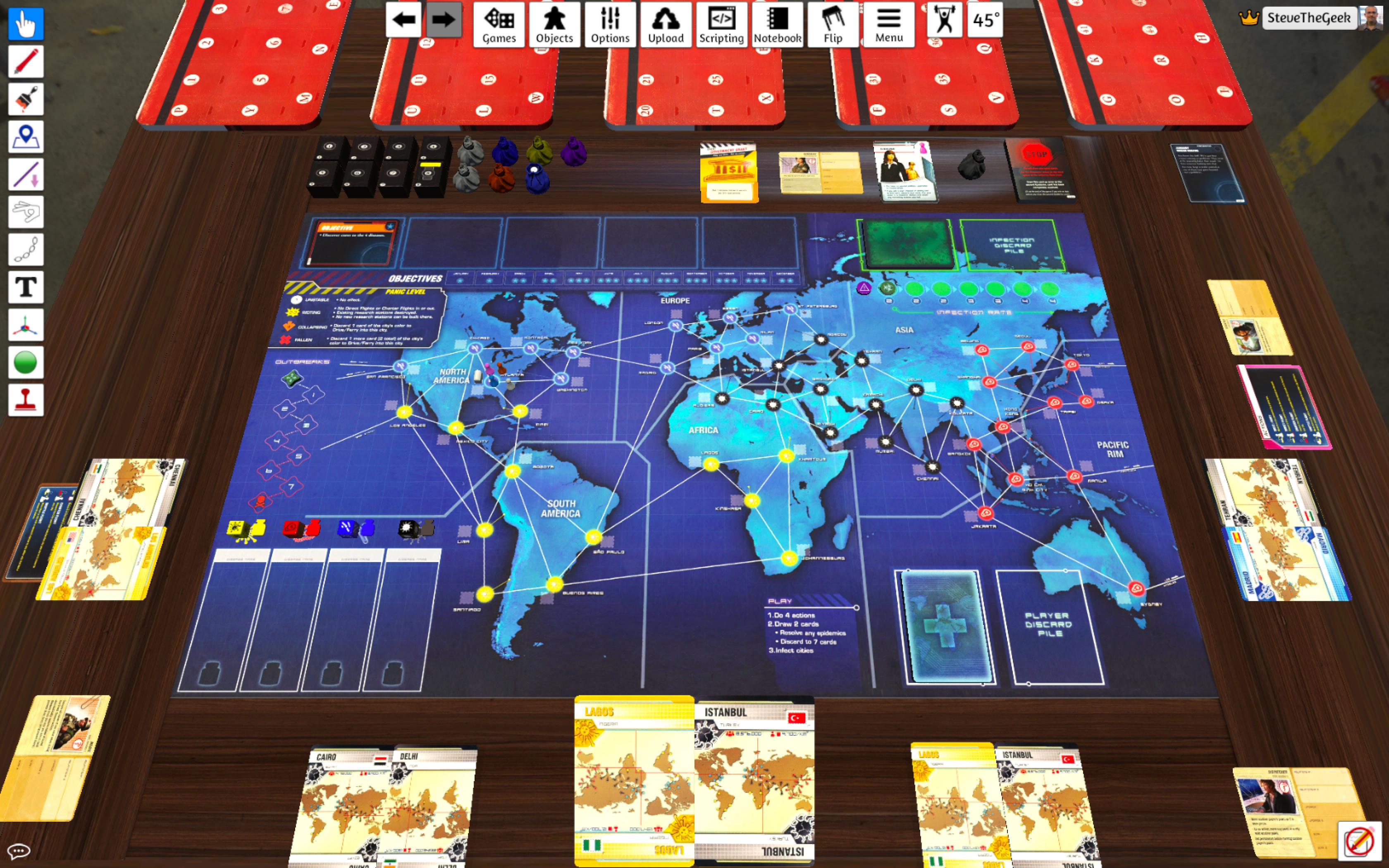
Mid-February in the Swiss capital: as the pandemic grinds on it’s definitely getting to me more. Differently from many, it’s not the relative lack of social contact: I’m not the most social animal at the best of times. I would even say it’s been quite good for me and my wife that we’ve both been working from home for much of the last year, which means that we don’t just see each other in the morning when we’re still tired and in the evening when we’re tired again. I have been seeing a friend once a week for coffee, but beyond this I don’t acutely miss going out and meeting people in larger numbers than what I can count on one hand; I can get most of the social interaction I need via Skype, Zoom and Tabletop Simulator – the latter of which allows us to rule at the boardgame Pandemic during an actual pandemic. What times we live in!
One of the things that video games can do magnificently is create worlds. These posts are an occasional exploration of games that I love because of where they take me.
So many video game world I’ve experienced were inspired by the aesthetic of cinema, and mostly by a fairly narrow range of movies: Star Wars, Aliens, James Bond, the Lord of the Rings movies and these days obviously the Marvel behemoth. Which isn’t a bad thing: I’ve greatly enjoyed inhabiting movie-inspired pastiches of New York and Los Angeles, I’ve had good times fighting my way through space stations, mansions and snowy castles. I’ve been wowed by the worlds that games create for their spectacle, but mostly it’s a familiar kind of awe: this is the best-looking Nazi stronghold or Death Star-alike I’ve ever sneaked through, this feels just like Blade Runner‘s futuristic Los Angeles or like Peter Jackson’s version of the Mines of Moria.
It is rare that a game world feels truly different, unexpected and surprising.
Welcome to Six Damn Fine Degrees. These instalments will be inspired by the idea of six degrees of separation in the loosest sense. The only rule: it connects – in some way – to the previous instalment. So come join us on our weekly foray into interconnectedness.
We started our free-fall association into culture with Julie’s sublime entry on John Garfield. We continue with a sudden, nauseating lurch towards something rather more ridiculous. Have you ever had a close look at the things you liked as a child… and shuddered?
One of the things that video games can do magnificently is create worlds. These posts are an occasional exploration of games that I love because of where they take me.
Stroppy teenagers. Authoritarian dads. Absent mothers. Intrusive family. Oh, and myriads of monsters, mythological creatures, divine powers, mythological weapons, snark, flirtation, style, and the best tunes this side of the river Styx. Who’d have thought that the underworld could be this much fun?
Join us every week for a trip into the weird and wonderful world of trailers. Whether it’s the first teaser for the latest instalment in your favourite franchise, an obscure preview for a strange indie darling, whether it’s good, bad, ugly or just plain weird – your favourite pop culture baristas are there to tell you what they think.
After more than two years, we’ve finally arrived at the end. This is the very last Rear-View Mirror. And what do you see when you look into the mirror?
Join us every week for a trip into the weird and wonderful world of trailers. Whether it’s the first teaser for the latest installment in your favourite franchise, an obscure preview for a strange indie darling, whether it’s good, bad, ugly or just plain weird – your favourite pop culture baristas are there to tell you what they think.
One of the things that video games can do magnificently is create worlds. These posts are an occasional exploration of games that I love because of where they take me.
Over the last ten years or so, the technical advances in video games have been breathtaking, even if this progress hasn’t always been matched by the creativity on display. I’ve walked Renaissance Rome and Victorian London, I’ve driven through a parodic version of Los Angeles and ridden a horse through the dying Old West. One of the most venerated gaming series, named simply Flight Simulator, is about to release its latest instalment, which lets you take off and land anywhere on earth. Judging from pre-release material, the way the game looks is out of this world – except it is this world. I half expect that if I were to buy the 2020 Flight Simulator and fly over its representation of where we live, I’d be able to catch a peek of a little virtual me, sitting at a computer and playing Flight Simulator. In terms of scope, fidelity and detail, video games offer amazing worlds – though all too often these worlds take a real, considerable toll on the people that create them.
What we’re seeing more and more, though, is small but beautifully realised worlds created by indie developers. Worlds that are more lo-fi and homespun, clockwork universes, even worlds made almost entirely of words. Worlds that don’t strive to recreate reality as much as possible so much as create a distilled version of a very subjective reality. These games may be much smaller in scope and shorter to play from beginning to end, but this needn’t make them any less breathtaking.