Stop me if you’ve heard this one. Two contract killers, their mark, a seductive woman. A philosophical road trip towards death, though it’s not entirely clear who will die and who will live. Psychological games, tense stand-offs, sudden violence. You may not be able to name any specific title, but it still sounds familiar, doesn’t it? Tarantino, McDonagh, or indeed Hemingway. Cheap suits, hidden guns, strong language: hitmen make for very effective cinema.

The Rear-View Mirror: The Road (2006)
Each Friday we travel back in time, one year at a time, for a look at some of the cultural goodies that may appear closer than they really are in The Rear-View Mirror. Join us on our weekly journey into the past!
It’s utterly puzzling to me that Cormac McCarthy’s novel The Road was published only in 2006. It feels older. Sometimes you open a novel and you can sort of guess the decade, at least roughly. I had read The Road twice until I realised it was not from the 1980s, but only six or seven years old. Maybe that’s because it tells such a timeless story. Of course, an apocalypse where everything is covered in grey ash and food, and shelter and friendly people are in short supply can take place anytime. Or maybe my mistake was that I didn’t know that its author was an octagenarian.
Continue readingIs he having a laugh?
I’m in a playful mood, so let’s have a little game, shall we? Ok, here is movie number one – see if you can guess the title. It’s about a filmmaker who lives in a country where a serial killer goes around and kills famous filmmakers. Our protagonist is upset because the killer hasn’t sought him out and tried to kill him because isn’t he an excellent filmmaker, too? He doesn’t have a death wish, but being almost killed would be a badge of honor. Continue reading
The Rear-View Mirror: The Assassination of Jesse James by the Coward Robert Ford (2007)
Each Friday we travel back in time, one year at a time, for a look at some of the cultural goodies that may appear closer than they really are in The Rear-View Mirror. Join us on our weekly journey into the past!
“Do you want to be like me? Or do you want to be me?”

Jesse James, as played by Brad Pitt, is a canny creature. He observes the nervous, deferential Robert Ford (Casey Affleck) and sees a fanboy, though one whose adoration and longing could easily turn into something else, something darker. If you can’t be your hero, what can you do? You can depose him. You can kill him.
Continue readingGetting into the swing of things
I have walked 500 miles and much, much more, through virtual New Yorks, irradiated zones, Wehrmacht fortresses and zombie-infested streets. I’ve parkoured and teleported, I’ve driven, hovered and flown. Traversing spaces that only exist as zeroes and ones on digital media is one of the things that I love about video games, and it’s one of the things that modern gaming does so much better than the 8-bit pixelscapes I grew up with. It’s not even graphical fidelity, although that’s part of it; more than that, it’s that modern hardware allows for vastly more ambitious, three-dimensional environments, whether that’s the Hollywood realism of GTA V‘s parody of Los Angeles or the stylised aesthetics of Journey‘s deserts and snowy wastes.

A Damn Fine Cup of Culture Podcast #14: The End is Nigh
 It’s September, and the world is coming to an end on this month’s episode. Join Mege and Matt as they talk about the post-apocalypse in pop culture, from Obsidian’s epic role-playing game Fallout: New Vegas via Mad Max: Fury Road to – bear with us on this one – the HBO series The Leftovers. We also discuss Spike Lee’s latest joint, BlacKkKlansman, and talk about Sarah Vowell’s book Assassination Vacation.
The Rear-View Mirror: Revanche (2008)
Each Friday we travel back in time, one year at a time, for a look at some of the cultural goodies that may appear closer than they really are in The Rear-View Mirror. Join us on our weekly journey into the past!
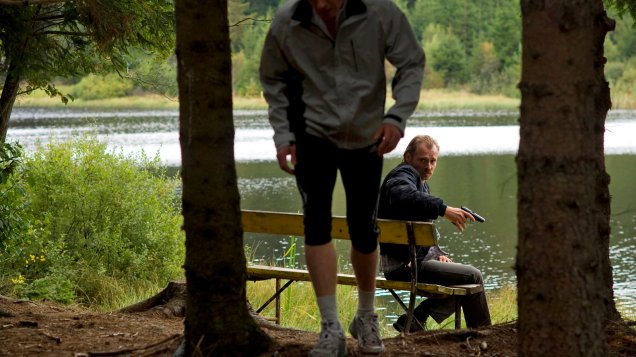
There is that guy, Alex, a gopher and bag man for a pimp called Konecny, somewhere in Vienna. One of Konecny’s girls, Tamara, has a secret affair with Alex. They want to escape while Konecny wants to make a high-end call-girl out of Tamara. Alex has to act if they want to have a future together. He decides to rob a bank. What sounds like a movie of the week is actually the Austrian entry for Best Film of 2009 called Revanche, written and directed by Götz Spielmann. Spielmann has said in an interview that he doesn’t know what his movie is about. I respectfully disagree: he knows exactly what he is doing, and his characters are made of flesh and blood and don’t just hurtle from one plot development to the next.
Continue readingThe Rear-View Mirror: Fantastic Mr Fox (2009)
Each Friday we travel back in time, one year at a time, for a look at some of the cultural goodies that may appear closer than they really are in The Rear-View Mirror. Join us on our weekly journey into the past!
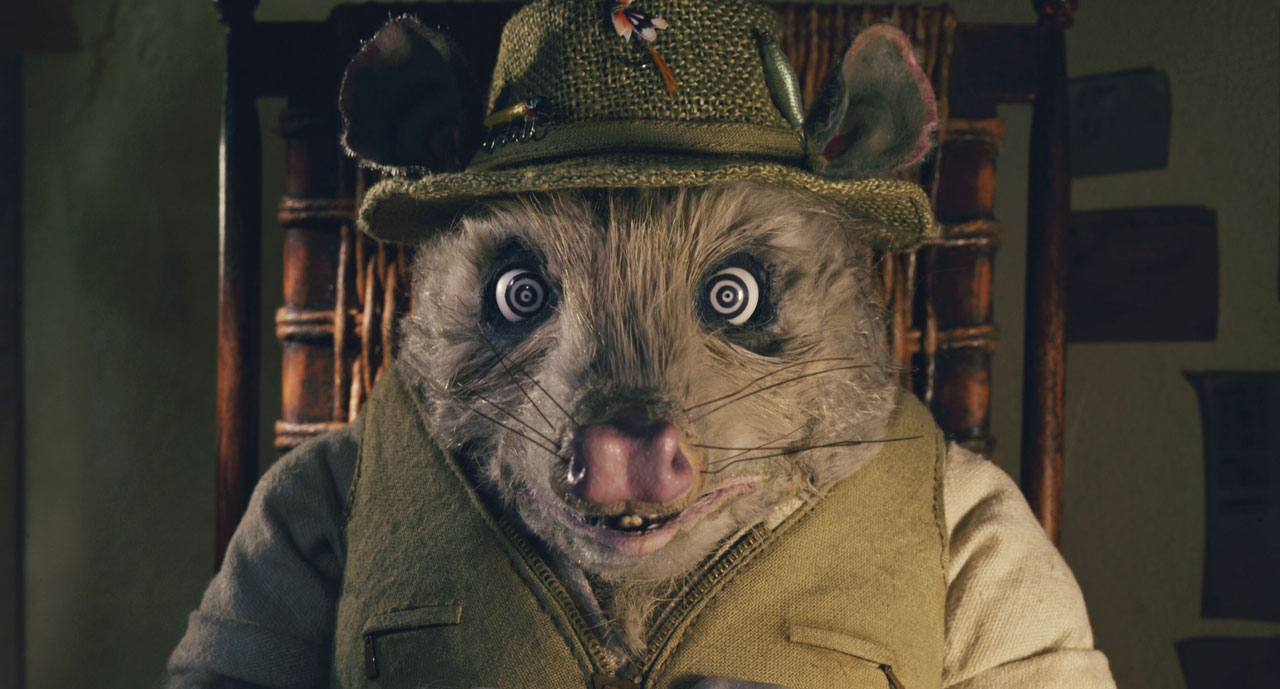
My first Wes Anderson movie was The Royal Tenenbaums – and I wasn’t a big fan of it. To some extent that may be because I wasn’t yet used to Anderson’s particular cinematic idiom, but at least as much as that I think it’s that Anderson himself was still looking for that idiom. There’s a lot in the film that looks instantly familiar, but my main problem was the way it tried to blend the arch stylistics and Andersonian characters we’ve become familiar with on the one side and poignant drama on the other. There’s one scene in particular, a suicide attempt late in the film, that felt to me like Anderson was flipping a switch: one moment the film’s characters were cartoons, the next we were supposed to take them seriously as characters with depth and genuine suffering. I sat there seeing what Anderson was aiming at, and the scene is effective in itself – but I wasn’t buying it.
Your mission: to file out
 Gosh, there is no really bad Mission: Impossible movie, and no really good one, is there? Let me count the ways: the first one, Mission: Impossible (1996), has the courage to kill most of its illustrous cast quite early on, and it has that famous scene wherein a helicopter is chasing a high speed train through a tunnel. That sequence is so preposterously over the top that the rest of the movie sort feels muted in comparison. And if you can make sense of the plot, then you are a better person than me. Continue reading
It’s the pictures that got small
This week I saw my first Hitchcock on the big screen. I grew up in the ’80s, which meant that I first and, more often than not, only saw the classics of cinema on TV – and in the ’80s that meant, what, screens that were 30 inches across if you were lucky? TVs were big, bulky monstrosities, but the screens weren’t particularly big – which was good, really, because television channels broadcast images that were relatively fuzzy. If you sat close enough to the screen so that it filled your field of vision (and you could smell that weird electric smell), what you saw was basically impressionist art.


