Three women: a queen, fragile of body and mind. Her confidante, advisor and lover, ready to do what it takes to protect her monarch and her country – however much pain it will cause. And then there’s the social climber who, willing to do anything so she’s no longer a victim, tears them apart.
Add nonsensical social rules, wanton psychological cruelty, hilariously strange dancing and lobster references, and yup: we’re in Lanthimos Country.
Last year – while I was in Sweden during the week when Ingmar Bergman would have had his 100th birthday, fittingly – Criterion revealed its plans to release Ingmar Bergman’s Cinema, a collection of 39 of the director’s films, later that year. (It is telling that when you ask Google how many films Bergman actually made, the answer is “At least 36”. If Google doesn’t know a more exact answer than that, how should we?) As a self-confessed Criterion addict, I knew that there’d be no better way to get close to completing my Bergman collection than that, even though I already had some of the films on DVD and others on Blu-Ray. Still, getting all the remaining ones individually would be more expensive than getting the collection, not to mention more cumbersome. So, to cut things short: Reader, I ordered it.
Each Friday we travel back in time, one year at a time, for a look at some of the cultural goodies that may appear closer than they really are in The Rear-View Mirror. Join us on our weekly journey into the past!
BUY CONDOMS
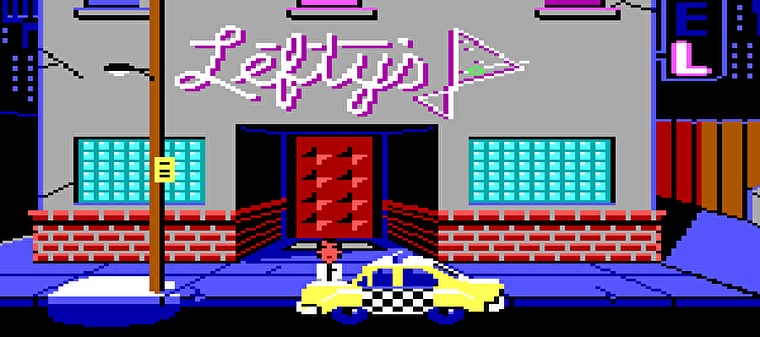
How many 1980s nerds had their first sexual experience at Lefty’s Bar? How many teenagers learned about the perils of sex by catching an STD and having to reload an earlier savegame – or restart the game because they forgot to “Save early, save often”? How many never made it past the pimp in the first place, or forgot to properly prepare (also known as GET NAKED) to do the deed?
Two cloaked figures sliding down a glittering dune, singing to each other. A hunter in Victorian garb, facing down a gigantic hairy creature on a dilapidated bridge. A grizzled middle-aged man and a young woman making their way through a ruined, overgrown city. Grinning figures, half-human, half-squid, swimming salmon-like through splotches of paint. Hundreds of extraterrestrial worlds, the skies above them in hundreds of different hues. An eagle, half visible through the trees, half concealed by the empty gaps between them.
Each Friday we travel back in time, one year at a time, for a look at some of the cultural goodies that may appear closer than they really are in The Rear-View Mirror. Join us on our weekly journey into the past!
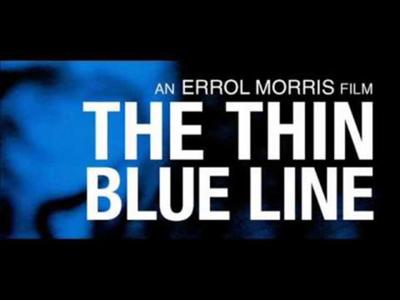
If you have seen other Erroll Morris films (Tabloid, The Fog of War, Gates of Heaven), you will know that he likes for people to tell their own stories. At the time of its inception Morris was doing in investigation on Dr. James Grigson, nicknamed Dr. Death, a psychiatrist who invariably advised a death sentence, because defendants would “kill again”. During this research he stumbled onto Adams’ story. The Thin Blue Line is about the murder of a police officer, and in it Morris has access to seemingly all the players in the drama, and the subsequent court case. Through their own versions of what transpires, or what they think transpires, Morris makes an uncharacteristically solid case for the defense. It is not much of a spoiler that an innocent person was convicted. After all, Adams was not only acquitted (partly) due to the film, but subsequently sued Morris for the rights to his story. As is so often the case with Morris’ films, the fascination in The Thin Blue Line is for the viewer to be allowed to form their own opinion as to why and how an innocent man was convicted, a guilty man went free (at least for a while), and several witnesses testified to facts they could not possibly have seen or heard.
If you are ready for an agonisingly slow descent into hell, then Panos Cosmatos’ Mandy is the film for you. There are many reasons to instinctively refrain from watching it in the first place: yet another Nicholas Cage over-the-top performance; outrageous violence and buckets of blood; killer demons on motorcycles. What’s more, the film might change from one viewing to the next, but for me, it worked because I was in the right kind of mood, and that might prove crucial with movies like this. And I never watched a chainsaw duel I didn’t like. Continue reading →
For the first episode of 2019, Julie, Mege and Matt revisit Martin Scorsese’s much-awarded but rarely-discussed The Aviator. Is it one of Scorsese’s best or a bit of a mess? Does Cate Blanchett’s Katherine Hepburn enter parody territory, and is it any less awesome for this? Will Mege pounce in defense of Leonardo DiCaprio? Find out the answers to all these questions and more, as the gang of pop culture baristas serves up some smaller helpings on AMC’s TheTerror (a heady blend of Master and Commander and The Thing) and the interactive Black Mirror episode, “Bandersnatch”.
Also, we’re premiering our new theme tune “Mystery Street Jazz” at the end of the episode, so make sure to give it a listen. Thanks to composer Håkan Eriksson for his damn fine tune!
Each Friday we travel back in time, one year at a time, for a look at some of the cultural goodies that may appear closer than they really are in The Rear-View Mirror. Join us on our weekly journey into the past!
Love is a free agent. We may say that opposites attract, or that birds of a feather flock together or whatever; we have our kinks and fetishes and predilections and our angsts when it come to relationships and love and sex; we describe ourselves as homo- or heterosexual or polyamorous or bi or as of many colors of the rainbow, but we really don’t know why we fall for this person or that person. It’s a mistery, at its core, that crazy little thing called love.
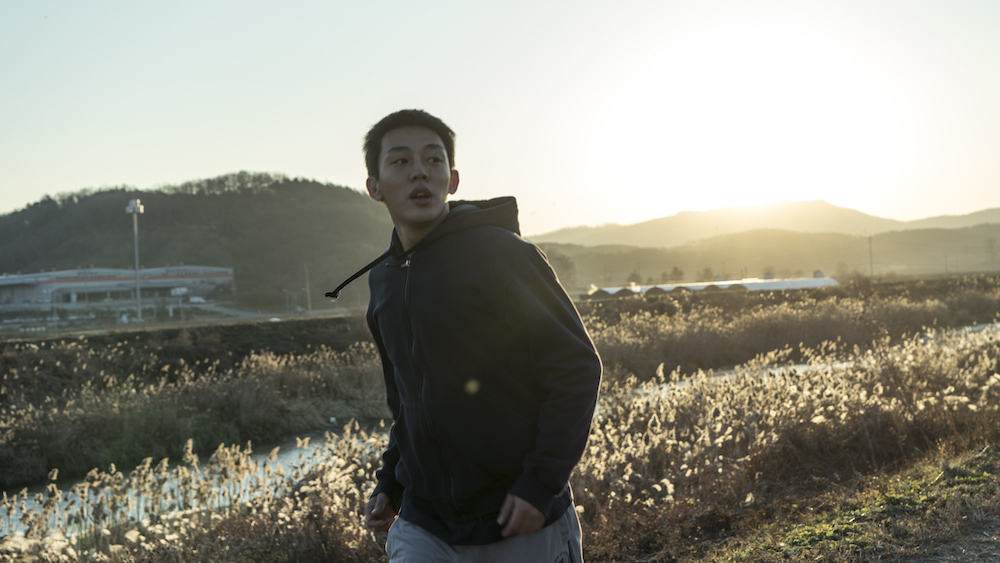
How do we know what we know? More importantly, how do we know anything when the supposed evidence consists of absences? Does a cat exist that we never see or hear, and all we do is fill its bowl with food and clean the litter box regularly? Is a charmer’s glib confession that in order to feel alive he burns greenhouses every couple of months enough proof to convict him of these crimes – and of worse ones? And when a loved one vanishes, is her absence proof that something horrible has happened? Does Lee Jong-su (Yoo Ah-in) make himself believe that something is there, or does he make himself forget that what he is looking for actually doesn’t exist – as with the tangerine in the pantomime his friend Hae-mi shows him?
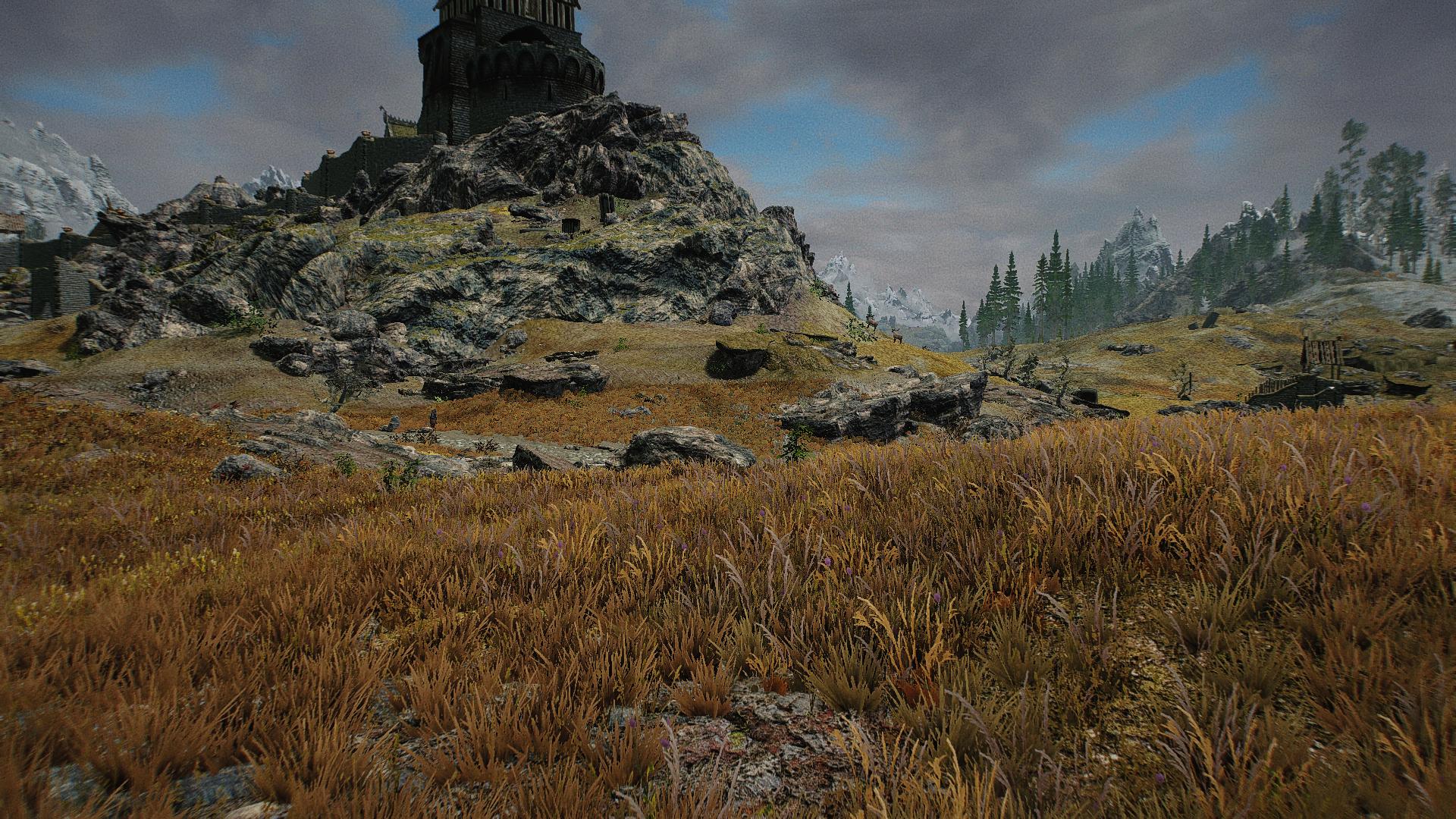
I’ve written about it before: as much as I love virtual reality and its sense of immersion, we haven’t quite arrived at the holodeck yet. You can’t really touch things, though with the right kind of controllers implemented well it’s amazing how well you can fool your brain into believing that you’re actually holding that floppy disk, handgun or lightsaber in VR. However, what is much more difficult, at least in the comfort of your home, is walking. Sure, you can walk a few steps depending on how much space you have, but after more than a metre or two you’re likely to bang into a wall. And since few people live in empty warehouses or vast, echoing halls, not to mention the cable by which you’re generally attached to the PC, developers generally have to find workarounds.




 For the first episode of 2019, Julie, Mege and Matt revisit Martin Scorsese’s much-awarded but rarely-discussed The Aviator. Is it one of Scorsese’s best or a bit of a mess? Does Cate Blanchett’s Katherine Hepburn enter parody territory, and is it any less awesome for this? Will Mege pounce in defense of Leonardo DiCaprio? Find out the answers to all these questions and more, as the gang of pop culture baristas serves up some smaller helpings on AMC’s The Terror (a heady blend of Master and Commander and The Thing) and the interactive Black Mirror episode, “Bandersnatch”.