The Rear-View Mirror: The A-Team (1983)

Each Friday we travel back in time, one year at a time, for a look at some of the cultural goodies that may appear closer than they really are in The Rear-View Mirror. Join us on our weekly journey into the past!
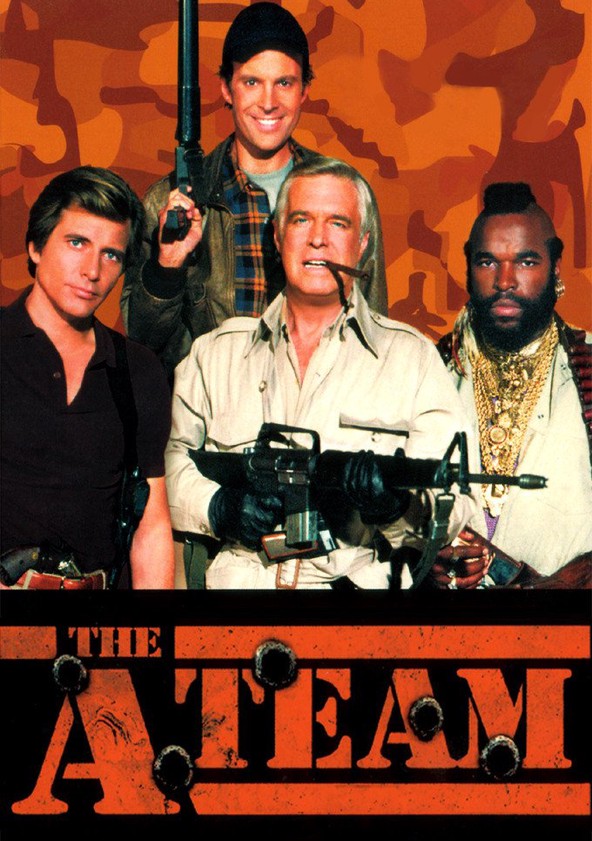
The A-Team

In 1984, when they visited The Netherlands, they were received like superstars. Dwight “Howling Mad Murdoch” Schultz, Dirk “Face” Benedict and Laurence “B.A. Baracus” Tureaud (a.k.a. Mr. T). The A-Team (Cue theme). They even met our Queen. George “Hannibal” Peppard was absent. According to Schultz and Benedict, because he considered himself too big of a star (he had, after all, been in the classic Breakfast at Tiffany’s, opposite Audrey Hepburn).

Continue reading →
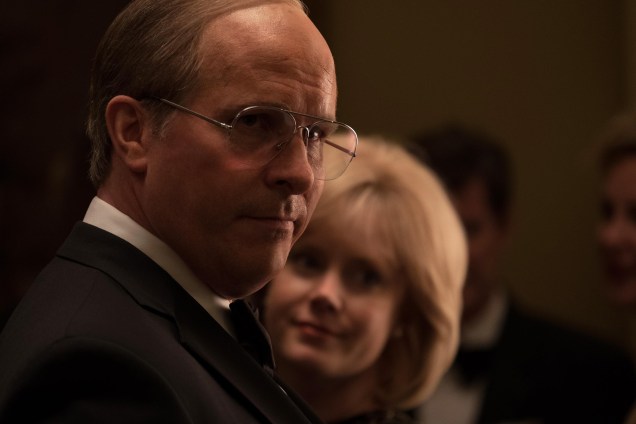
Faint heart, strong ambition

Vice is not a comedy. It’s not a drama either. It has platypus-like qualities, so it’s probably best to describe it as a mash-up of a Michael Moore style documentary and a bumpy farce with a very talented cast. It’s bumpy because it not only jumps around in time, attributes real footage of carpet bombing to Cheney’s daydreams, and suddenly lets fake credits roll at half-time, but also because it’s almost as eclectic as Adam McKay’s earlier opus The Big Short. Consider the scene in which Dick Cheney (Christian Bale) and his wife Lynne (Amy Adams) recite from Macbeth in their bed. That’s funny, with an undercurrent of dread. Continue reading →
A Damn Fine Cup of Culture Podcast #19: Losing the Plot – The Golden Age of Television

d1ad56da-abce-4afe-9f45-79294aede9e3In this month’s podcast, we look back at TV series before the so-called Golden Age of Television and what has happened since – what we’ve gained and what we’ve lost in times of HBO, prestige television and binge watching. Are series the novels of the 21st century or is it all sexposition, soap operatics and narratives dragged out way past their sell-by date? Featuring our theme tune, “Mystery Street Jazz” by Håkan Eriksson (make sure to listen to the very end of the podcast)… and a very special appearance by Trillian the Cat!

Continue reading →

The Rear-View Mirror: Amadeus (1984)

Each Friday we travel back in time, one year at a time, for a look at some of the cultural goodies that may appear closer than they really are in The Rear-View Mirror. Join us on our weekly journey into the past!

It is a riveting scene, and one that at a glance would seem entirely uncinematic: the younger man, sick, pale and sweaty, lies in bed and dictates music to the older man, who scribbles musical notes onto paper as if it was a race against time – which it is. The brilliant composer will not live much longer. It is a scene that doesn’t seem to need the big screen: it could just as well be performed on stage, and this is in fact where it originated. None of this seems immediately cinematic – yet it is one of the great moments of 1980s cinema: Mozart and and his bitter, envious rival Salieri racing against death to get his final masterpiece, the Requiem in D minor, K. 626, out of the dying man’s head and onto paper so it would be preserved for posterity.

Amadeus
Continue reading →

Sad: The Video Game

One of the greatest achievements of the emergence of indie gaming is the sheer diversity of themes, genres, stories and characters that have come with it – and this diversity is slowly spreading to the AAA space. Where games for a long time catered to the power fantasies of gamers and problems were both created and solved with big guns and other deadly weapons, these days there’s much more of a wide range of games that let you run restaurants with a friend, experience giddy romances with a whole bevy of dream daddies, overcome anxiety and impostor syndrome, escape dystopias, or try not to lose your soul working as an immigration officer or the editor in charge of a news network. It is exciting to see developers trying to find ways in which games can say something about topics other than “What happens when you shoot a big monster in the head until it dies?”

Gris

Continue reading →

Déjà-Vu is the new Orange

There is a multi-layered irony at work in Russian Doll. To start with, it’s almost as if they airlifted Nicky Nichols out of Orange Is The New Black and gave her a series of her own. What happens in Russian Doll could, in fact, easily be Nicky’s alternate backstory: the protagonist in it, Nadia Vulvokov, is just as sharp-witted and foul-mouthed as Nicky. And then of course, both Nadja and Nicky are played by the same actress, Natasha Lyonne, who must be wholly unafraid of being typecast. Both Nadja and Nicky say what they want and do what they want, and they choose the man or woman they want to have sex with. They both have a drug problem, but Lyonne manages to keep it interesting. Continue reading →

The Rear-View Mirror: Back to the Future (1985)

Each Friday we travel back in time, one year at a time, for a look at some of the cultural goodies that may appear closer than they really are in The Rear-View Mirror. Join us on our weekly journey into the past!

It’s the day after Valentine’s Day, and in the spirit of society’s collective post-venereal fugue, I’m going to come clean: I thought it would be cheeky to write a Rear-View Mirror post about a movie that literally stars a time-travelling car.

Because, let’s face it, there’s no more obvious vehicle for one of popular culture’s most famous movies than the DeLorean that, in a beautiful visual gag, tips up and takes to the sky at the end of Back to the Future. But first, in the spirit of the movie, let’s rewind.

Continue reading →

The past isn’t dead. It isn’t even past. Unless it’s in Technicolor.

In the movies, the past has a certain specific look. Depending on which era is depicted, the film stock is different, the grain is more pronounced, colours are graded according to decade. The ’60s have the yellow-tinted look of an old photo, the ‘80s look neon, and anything before the First World War looks like a painting, its colours burnished. If the past doesn’t look like the past, well, it ain’t authentic, is it?

blog_1

Continue reading →

The Rear-View Mirror: Bruce Springsteen and The E-Street Band, Live/1975-85 (1986)

Each Friday we travel back in time, one year at a time, for a look at some of the cultural goodies that may appear closer than they really are in The Rear-View Mirror. Join us on our weekly journey into the past!

Bruce Springsteen seems to be a part the bedrock of the music business, but he is the first to admit that he is a fraud. He has never held down a working-class job in his life, he has never seen a factory from the inside. (If you don’t believe me, then go watch Springsteen on Broadway, currently on Netflix.) He is one of the greatest posers ever. And yet nobody sees him that way because he has unearthed something, a kind of poetic common denominator, an idealised, romanticised version of the USA, or of working class life, or of being young – maybe a bit of everything. There is a sense of wanting to get out of this town that he caters to with his music. Or why do you think his biggest hit is called Born To Run?

Continue reading →

Dog Years

The movie’s title is in English because that is the name of the shop: Dogman. Marcello is a dog-groomer, and he is so good with dogs that he is able to eventually talk down a ferocious pit-bull into a massage. He also looks after dogs when their owners are on holiday and walks them through a run-down seaside town near Naples. The area looks a lot like it’s the same spot where director Matteo Garrone also set Roberto Saviano’s Gomorra (2008). Everyone is poor, it’s a touristy waterfront utterly devoid of any tourists; many buildings are run down or boarded up. It’s no wonder that organised crime is thriving in areas like this. Dogman, however, does not have a lot to do with the Camorra, but is about the people populating the area. There is Marcello the dogman, the gold merchant next door, the owner of the videogame parlor, and the owner of the restaurant where they all meet and talk. Life is hard, but they take it as it comes. Continue reading →