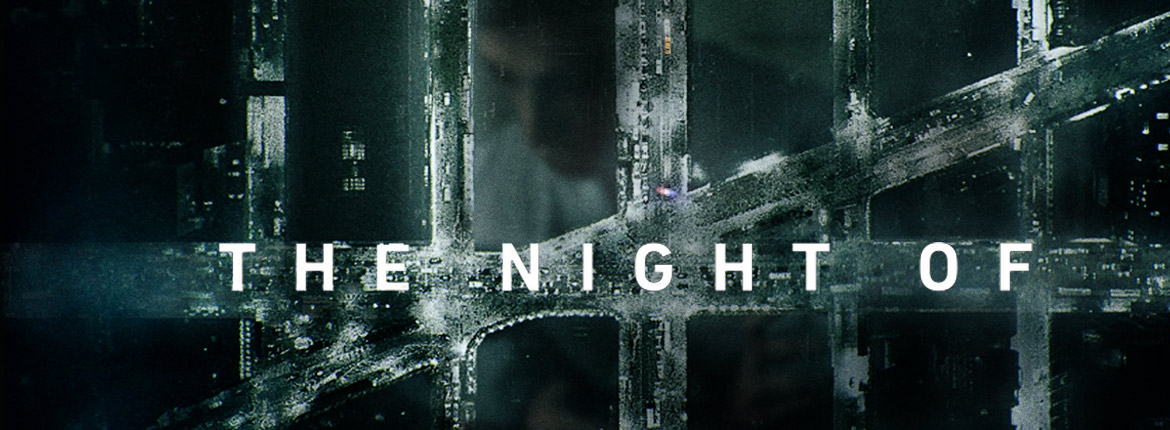
 I was hypnotized by The Night Of for five or six episodes, which isn’t bad at all considering that it’s an eight-part HBO miniseries. To me, it seemed to scratch the itch that season 2 of True Detective left me with. It’s on the dark side of things: it mostly takes place at night and/or indoors, but even the exterior daylight scenes look sort of gloomy. It’s about crime and punishment, and about the law, about justice and injustice, and about courts and prison. It’s set in New York, but is based on the British TV series Criminal Justice from 2008-09, starring Ben Whishaw. The Night Of, however, has no problem standing on its own. Continue reading
TV and Streaming
All these worlds can be yours (but will you want them?)
Last week we went to see the latest of the new Star Trek films, the one whose title is certain to trigger a Pavlovian response in any fan of the English ska band Madness. I’d greatly enjoyed the first of the reboot movies back in 2009, though Star Trek Into Darkness hadn’t done much for me, but I hadn’t given up on the franchise yet. Star Trek Beyond, though… It’s a competent enough film in some ways, the main cast is still the best reason to watch the reboot – but I simply didn’t feel it. Most of the time it wasn’t the plot that kept me engaged; instead I found myself distracted, not least by remembering the recent death of Anton Yelchin and thinking, wistfully, that he should have had his final appearance as Pavel Chekov in a better film.

Donuts and Depression
 While watching Olive Kitteridge, the 2014 four-part HBO miniseries, I kept thinking back to Six Feet Under more than once. Both are HBO, both feature Richard Jenkins, and while SFU has a lot to say about death and dying, OK deals with depression and suicide. Before you quit reading: it is surprisingly upbeat and wise about it. All right, upbeat is probably the wrong word, but it is not as dark and… well, as depressing as you might think. It’s a well-told story about a Maine family, so there is also good reason to think of John Irving’s stories. The series never goes for broke with guns and gore, but skates over thin ice while hinting at the dark waters underneath. Continue reading
… or: How I learned to stop bingeing and love the wait
Let’s say I was given a choice: either I give up all the movies in my collection or I say goodbye to all the box sets I’ve got. Which do I let go of? The Criterion disks I’ve amassed since I first discovered the Collection would make this a difficult choice, but in the end I think I would want to hang on to the series I’ve got. The thought of not having constant and (nearly) instant access to Six Feet Under, Deadwood, The Wire, The Sopranos, as well as some of the later additions such as Treme or Hannibal is arguably worse than suddenly being bereft of the many, many films filling the shelves of the many, many Billy bookcases that we have accrued.

First Infinity, then a Tour
 Against some pretty serious odds, I very much love James Ponsoldt’s The End of the Tour. I didn’t think too much of Jason Segel before. I sort of liked him in the goofy Jeff Who Lives at Home, but he was slightly too neurotic for me in How I Met Your Mother (yes, I know, neurotic behavior was that show’s trademark). Jesse Eisenberg is always watchable, even if he has to play uptight, angsty mid-twens most of the time.
The Art of the Watchable
I like good political TV. If done well, I like politics both as a theme and as a setting; arguably, a series such as the original BBC House of Cards looks like it’s about politics, but it’s really Richard III in a pinstripe suit, set in and around Westminster. It’s very much concerned with power and corruption, but does it tell us anything meaningful about politics? You may very well say think that; I couldn’t possibly comment. Then there are series such as The West Wing, and while may be something of a US-centric liberal fantasia, it is intensely concerned, and not a little in love, with the democratic process, which makes it a very different beast from House of Cards. Even if you look beyond conventional drama to genre TV, you’ll find politics: for much of its running time, I’d absolutely say that Battlestar Galactica (the Olmos/McDonnell one, not the ’70s extravaganza) was a deeply political series in both senses.

Until all that’s left over is the question mark
I don’t know. It’s a mystery.
— Tom Stoppard, Shakespeare in Love
Remember the days when we were all wondering what was down that hatch and what the hell those numbers meant? (I sometimes can’t remember what I ate the previous evening, but I will be able to list those damn numbers on my deathbed: 4, 8, 15, 16…) Remember when we were itching to find out more about Jacob, or the Others, or what the hell that black fog creature was? And remember those last couple of seasons that basically mocked us for wanting to know by saying, “Answers? Answers are for dummies. Have a trite, saccharine scene in a church instead.”

2009-2014: HBO’s Second Coming, or its Silver Age?
I consider myself lucky for discovering HBO’s series during their Golden Age. Starting with The Sopranos, then moving on in short order to Six Feet Under, Deadwood, The Wire and Rome, showed me the potential of ambitious TV: ambitious in terms of direction, acting, writing, structure and production values. Even a more flawed offering like Carnivàle seemed infinitely more daring than most regular series with their standalone episodes, 20+-episode seasons and heavy padding.

I still love HBO’s output during that time, but the problem of getting into something during such a strong period is that whatever follows is likely to disappoint. HBO still does strong programming, and I’d count miniseries like Generation Kill and The Pacific among their best, but then there are series whose premise wasn’t enough to keep them interesting for their entire run, like In Treatment, or guilty pleasures that increasingly become more guilty and lesspleasurable, like True Blood. I haven’t seen John from Cincinatti or Luck yet, but neither sounds like it measures up to the heydays of Tony Soprano, Al Swearengen, McNulty or the Fisher family.
Boardwalk Empire is probably a good example of latter-day HBO. There’s no doubt that it’s a handsome series, with gorgeous production values. It’s well written, the cast is pretty much impeccable, it looks and sounds the part: this is quality TV. However, by comparison, it’s also average TV. For all its qualities (and there are many of them), it doesn’t have the freshness or the audacity of The Sopranos. It looks cinematic enough, but it meanders, feeling like a movie stretched out to several seasons. The same material, the same cast and crew, might be served better by a shorter format with more focus; instead, Boardwalk Empire feels somewhat rote at best and flabby at worst. Compared to so much TV, it’s still great – but compared to the pioneers, the real greats, shows that had something to prove and proved it, it can’t help but disappoint. It’s a shame, because there are moments when it’s up there with its stronger predecessors: disfigured war veteran Richard Harrow going to the woods to kill himself, or Chalky White interrogating an increasingly frightened Klansman after a racist killing. There are scenes of wit and intelligence, there are surprising and thrilling moments, and there are those insanely intense eyes of Federal Agent Nelson Van Alden: we never know from one scene to the next if Michael Shannon’s Fed is a stony-faced straight man or a psychopath waiting to happen, or both.

Most of the time, though, Boardwalk Empire feels like HBO by the book: there’s nothing wrong with it, it’s quality TV, but in being handsome and exquisitely crafted, it lacks the scathing punk attitude of The Sopranos or the squishy, pulsating heart and mock-Shakespearean grandeur of Deadwood, nor does it have the Dickensian scope of The Wire. One could argue that it’s its own thing, but I’m not sure yet what it brings to the table that is unique and that could only be done by this particular series. Boardwalk Empire is enjoyable, but it’s also strangely forgettable from one episode to the next.
Yet, there is also Treme, which was broadcast around the same time. David Simon’s series of post-Katrina New Orleans suffers by a rash comparison to The Wire – it lacks the structural focus of Simon’s Baltimore saga, which had a main case and storyline each season to peg its themes onto. Admittedly, it took me a while to get into Treme, but I’m now almost through the second season and have fallen in love with its world and characters. It’s less showy than Boardwalk Empire, which aims at the burnished looks of a Once Upon a Time in America and tries to recall mobster drama from The Untouchables (the Prohibition setting) to The Godfather (the ghost of Fredo Corleone haunts various characters), but it has attitudes, heart and a righteous anger at what ails New Orleans, both from outside and from within.

What seems flabby in Boardwalk Empire I’ve come to see as an asset in Treme: its many characters and plot strands all contribute to a portrait of a city that has been dealt a near-fatal blow but that is struggling to survive. As he did with Baltimore, Simon has crafted a passionate ode to a place and its people that does not shy away from its own faults but that is an example of essential, loving humanism. It’s not in the series’ individual moments, though there are many strong ones, but in their accumulation: each scene, each character, each moment of growth constitutes a brushstroke in Simon’s grand portrait of a city in struggle. Where Boardwalk Empire suffers from the TV format and practically calls for a more focused narrative format, Treme needs its sprawl to unfold its full effect. Simon’s rhythms and structures may not lend themselves to lean, muscular storytelling, but the way he portrays a society and culture could not function in a medium that calls for discipline and brevity. Is Treme up there with HBO’s greatest? Well, I’m not even halfway through the entire series, but I will say with confidence that few TV series have made me care as much about a place I’ve never been to and people I’ll never meet.
But does it work as advertised?
How long is long enough to shake the unfairly high expectations created by everyone loving a new series? I never watched Mad Men back when it first aired, but now that the series has come to an end I finally decided to dust off my Season 1 box set and acquaint myself with Don Draper and company. The result: I don’t dislike it, I find it intriguing, it’s beautifully made, and yes, Don is an attractive figure – but I have to admit that I don’t find myself caring all that much.

Jus Sauli
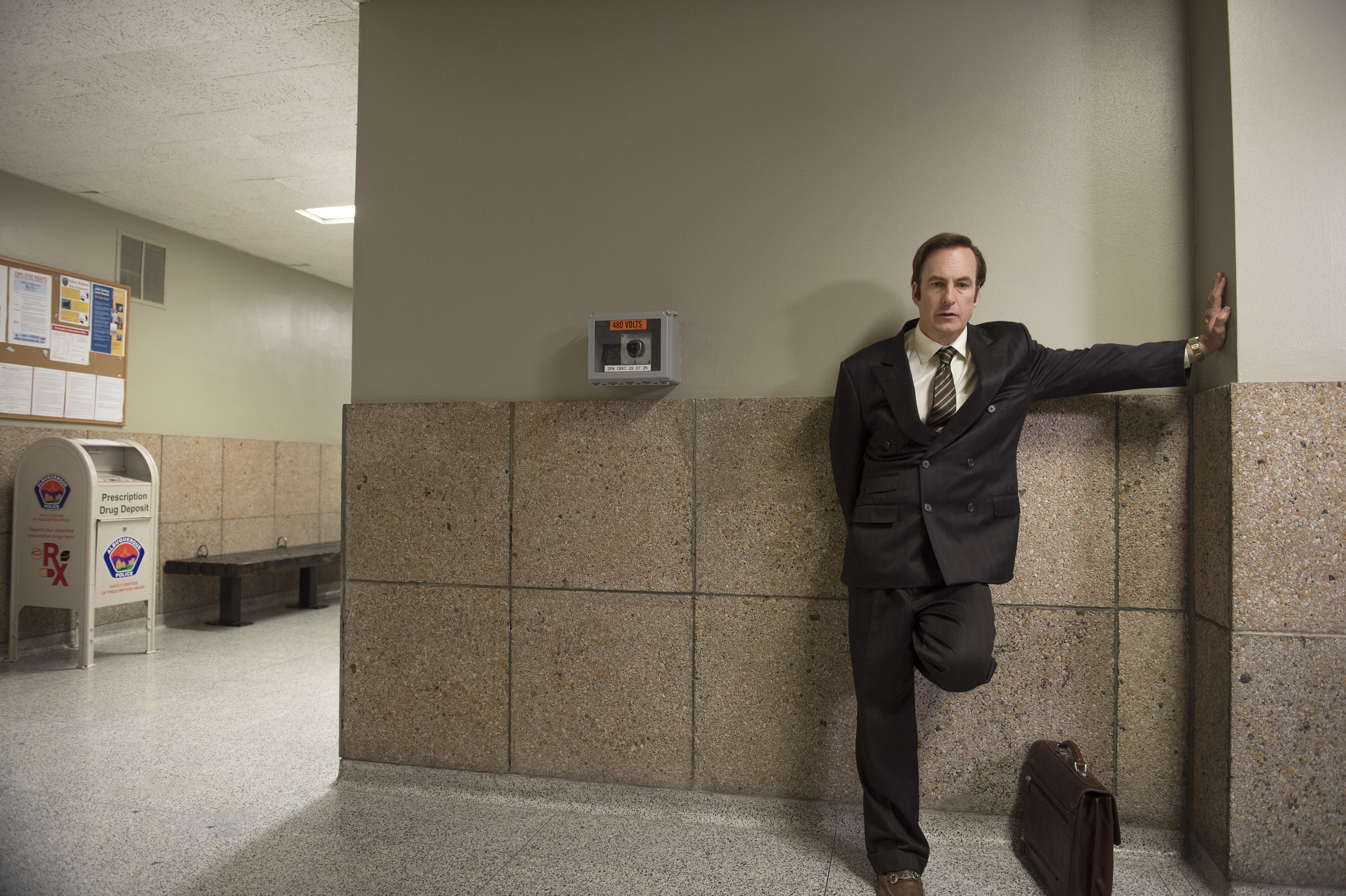
Saul Goodman is one of TV’s greatest supporting characters. He’s definitely one of the funniest, with Breaking Bad‘s writing and Bob Odenkirk’s acting working together to create comedy magic. At the same time, the humour is never at the expense of the character, which is a rare thing – each wisecrack, each lopsided bit of legal advice adds to the character, an amoral cynic with the surprising occasional flash of a moral compass underneath all the quips and jadedness. However, supporting characters do not necessarily make good leads. Is Saul a Walter White – or, better, is he a character entirely of his own that can support his own series?