2009-2014: HBO’s Second Coming, or its Silver Age?

I consider myself lucky for discovering HBO’s series during their Golden Age. Starting with The Sopranos, then moving on in short order to Six Feet Under, Deadwood, The Wire and Rome, showed me the potential of ambitious TV: ambitious in terms of direction, acting, writing, structure and production values. Even a more flawed offering like Carnivàle seemed infinitely more daring than most regular series with their standalone episodes, 20+-episode seasons and heavy padding.

We miss you, Al.

I still love HBO’s output during that time, but the problem of getting into something during such a strong period is that whatever follows is likely to disappoint. HBO still does strong programming, and I’d count miniseries like Generation Kill and The Pacific among their best, but then there are series whose premise wasn’t enough to keep them interesting for their entire run, like In Treatment, or guilty pleasures that increasingly become more guilty and lesspleasurable, like True Blood. I haven’t seen John from Cincinatti or Luck yet, but neither sounds like it measures up to the heydays of Tony Soprano, Al Swearengen, McNulty or the Fisher family.

Boardwalk Empire is probably a good example of latter-day HBO. There’s no doubt that it’s a handsome series, with gorgeous production values. It’s well written, the cast is pretty much impeccable, it looks and sounds the part: this is quality TV. However, by comparison, it’s also average TV. For all its qualities (and there are many of them), it doesn’t have the freshness or the audacity of The Sopranos. It looks cinematic enough, but it meanders, feeling like a movie stretched out to several seasons. The same material, the same cast and crew, might be served better by a shorter format with more focus; instead, Boardwalk Empire feels somewhat rote at best and flabby at worst. Compared to so much TV, it’s still great – but compared to the pioneers, the real greats, shows that had something to prove and proved it, it can’t help but disappoint. It’s a shame, because there are moments when it’s up there with its stronger predecessors: disfigured war veteran Richard Harrow going to the woods to kill himself, or Chalky White interrogating an increasingly frightened Klansman after a racist killing. There are scenes of wit and intelligence, there are surprising and thrilling moments, and there are those insanely intense eyes of Federal Agent Nelson Van Alden: we never know from one scene to the next if Michael Shannon’s Fed is a stony-faced straight man or a psychopath waiting to happen, or both.

Crazy-ass Mike. Don't you ever change.

Most of the time, though, Boardwalk Empire feels like HBO by the book: there’s nothing wrong with it, it’s quality TV, but in being handsome and exquisitely crafted, it lacks the scathing punk attitude of The Sopranos or the squishy, pulsating heart and mock-Shakespearean grandeur of Deadwood, nor does it have the Dickensian scope of The Wire. One could argue that it’s its own thing, but I’m not sure yet what it brings to the table that is unique and that could only be done by this particular series. Boardwalk Empire is enjoyable, but it’s also strangely forgettable from one episode to the next.

Yet, there is also Treme, which was broadcast around the same time. David Simon’s series of post-Katrina New Orleans suffers by a rash comparison to The Wire – it lacks the structural focus of Simon’s Baltimore saga, which had a main case and storyline each season to peg its themes onto. Admittedly, it took me a while to get into Treme, but I’m now almost through the second season and have fallen in love with its world and characters. It’s less showy than Boardwalk Empire, which aims at the burnished looks of a Once Upon a Time in America and tries to recall mobster drama from The Untouchables (the Prohibition setting) to The Godfather (the ghost of Fredo Corleone haunts various characters), but it has attitudes, heart and a righteous anger at what ails New Orleans, both from outside and from within.

Butter wouldn't melt in his 'bone-playing mouth.

What seems flabby in Boardwalk Empire I’ve come to see as an asset in Treme: its many characters and plot strands all contribute to a portrait of a city that has been dealt a near-fatal blow but that is struggling to survive. As he did with Baltimore, Simon has crafted a passionate ode to a place and its people that does not shy away from its own faults but that is an example of essential, loving humanism. It’s not in the series’ individual moments, though there are many strong ones, but in their accumulation: each scene, each character, each moment of growth constitutes a brushstroke in Simon’s grand portrait of a city in struggle. Where Boardwalk Empire suffers from the TV format and practically calls for a more focused narrative format, Treme needs its sprawl to unfold its full effect. Simon’s rhythms and structures may not lend themselves to lean, muscular storytelling, but the way he portrays a society and culture could not function in a medium that calls for discipline and brevity. Is Treme up there with HBO’s greatest? Well, I’m not even halfway through the entire series, but I will say with confidence that few TV series have made me care as much about a place I’ve never been to and people I’ll never meet.
How to die

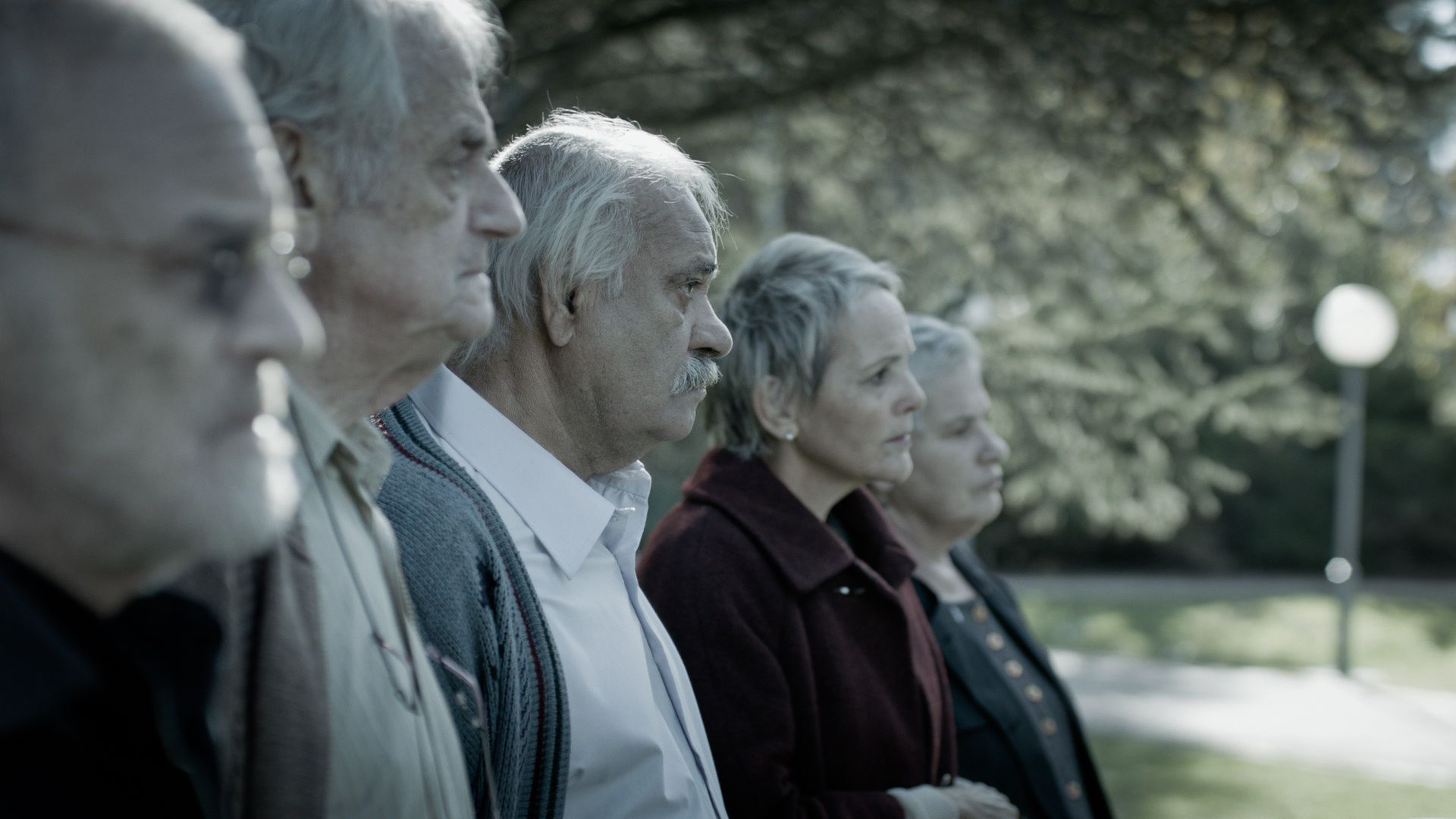
The Farewell Party, or Mita Tova, its original title, is a small miracle. It takes place at a retirement home in Jerusalem, but could happen in many other places. It is about death and euthanasia, but is not a downer. It contains many heartfelt moments, but is often very funny as well. It even has the courage to feature a musical number.

021072014172212_media1

The movie works because none of the cast are over-playing their scenes, and none of the scenes stray too far away from the main story. It starts with Max, who is so ill and in pain that he wants to die. His wife Yana wants his suffering to end. Yehezkel, a friend of theirs, is a bit of an inventor; he invents a small machine out of spare parts like a bicycle chain and a digital readout. Daniel, a former veterinarian, provides the medication. Max presses a button, and within a minute, he is asleep. He won’t wake again.

Mita_Tova_The_Farewell_Party_Still

Yehezkel’s wife Levana is strictly against euthanasia, on moral principles, but also because it’s her husband supervising the procedure. Yehezkel, Yana and Daniel want to keep their machine a secret, but Levana finds out. So do others: they are approached by an old man at Max’ funeral. His wife is very sick, and would they please consider helping her? The movie tackles a few questions with great grace: to what degree is euthanasia moral – or immoral? How much self-determination is there in a dying person’s decision? How about the law? How about Elohim?

mitatova

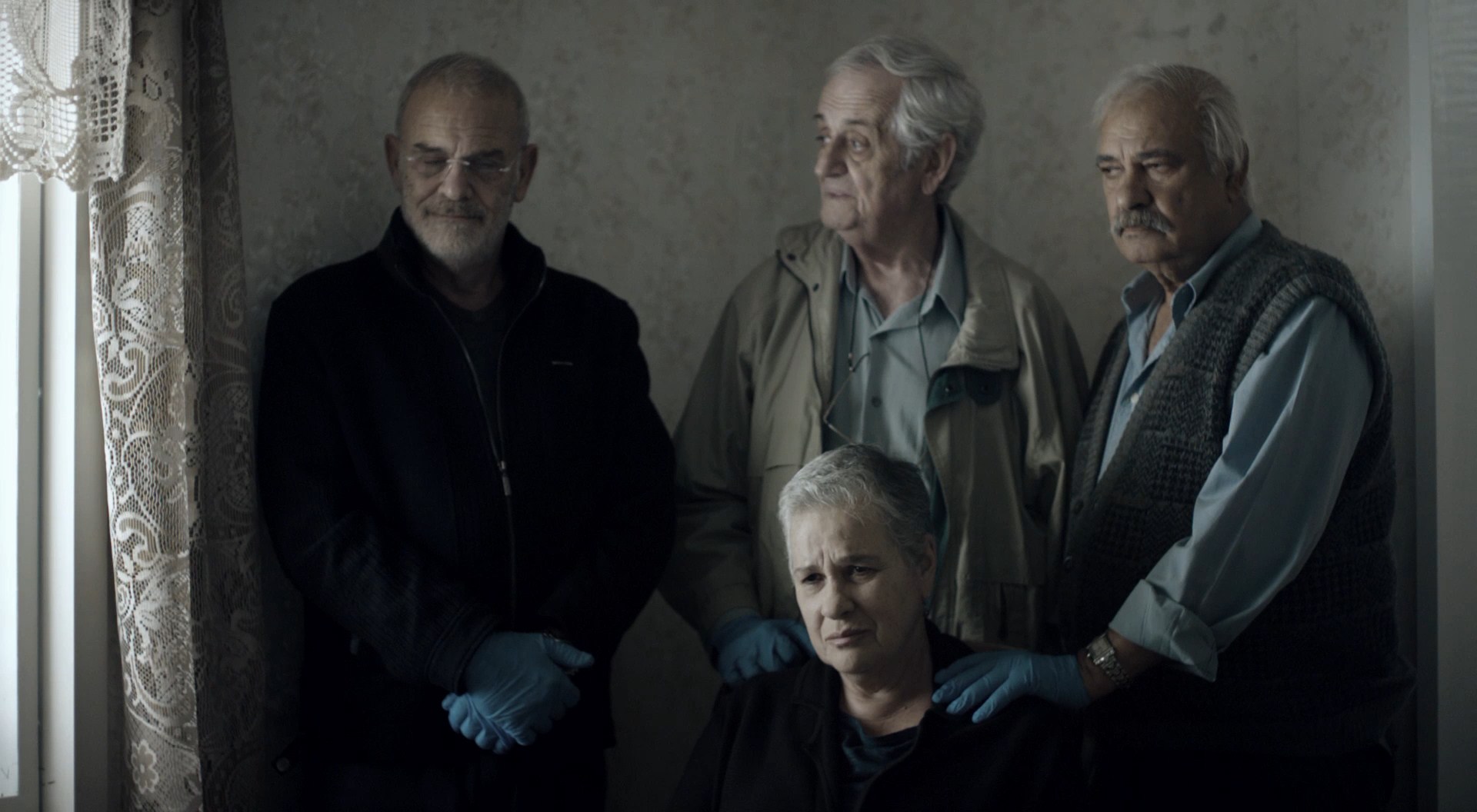
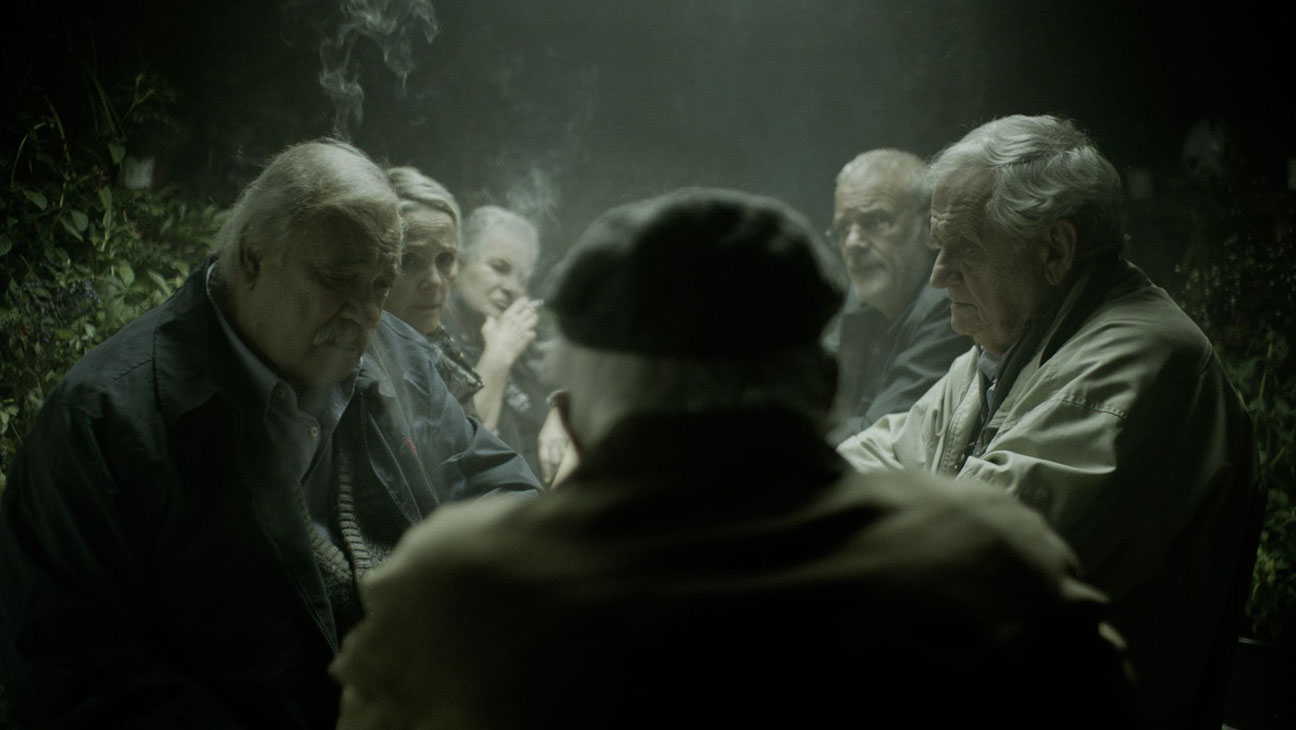
The most powerful image is the gang standing in the corner, wearing blue rubber gloves, watching someone press the button. On the other hand, there is gentle fun in some of the scenes. The gang is meeting in the greenhouse at night, chain-smoking and discussing the loved ones they lost to cancer. Their car is stopped by a policeman who wants to book them for speeding, but has to deal with five maudlin and tearful senior citizens all at once. He thinks they just want to avoid the ticket.

The secret of the movie is in its cast: they stay themselves during the death scenes as well as the comedy. It’s refreshing to know that the end of our days can be a comfort. Mita Tova seems to claim that euthanasia is the right thing to do if it is an option at the right time. It’s up to you to determine when and if the right time has come, but think about how it affects others. In both senses of the term, you are not alone. That is a comfort as well as a responsibility.

More attitude, yo.

I wanted to like Straight Outta Compton, but the movie made it hard for me. When the credits rolled, I asked myself why I didn’t like it more. The answer: it’s not angry enough.

cms-image-004643091

To be clear: it’s angry when it absolutely needs to be. There is a scene where a young, disappointed Ice Cube is smashing the gold records and glass furniture of his white record company connection. There are three or even four scenes where the Compton police cuff each and every black guy they see standing on the sidewalk just because they are black and therefore suspicious. The concerts are atmospheric and dense; you don’t need to know any N.W.A. song to realize that these are angry young men. But the rest of the movie is steeped in mild nostalgia instead of a stubborn feeling of resistance or… well, attitude.

Hip-Hop is essentially hate music, in the best sense of the word. It’s about how badly black neighbourhoods are treated, and how that can piss off men who are not musicians, but find a way to play their stuff, which in turn is powered by their anger. It’s smarter and more nuanced than most of heavy metal. Hip-Hop is also hate music in the worst sense of the word because of its rampant sexism. If you think young black males in Compton had it bad, you may be right, but there are always young black females who had it worse. And they didn’t even have a voice until later.

The movie gets the casting right. Ice Cube (O’Shea Jackson Jr., playing his real-life dad) and Eazy-E (Jason Mitchell) are immediately recognizable; same goes for Snoop Dogg and Tupac, both in minor roles. Dr. Dre (Corey Hawkins) less so; I kept confusing him with the actor playing MC Ren (Aldis Hodge). No matter – the acting is spot-on.

2B50ADB800000578-3199198-image-a-2_1439645508213

But there are unexplained lapses, mostly due to the screenplay. Consider the scene where Dr. Dre learns that his younger brother Tyree has died. The tour bus stops, and the group gets out onto the sidewalk to mourn his death. It’s a heartfelt scene, but nobody mentions how Tyree has died. Was he killed? What happened? Is that a piece of N.W.A. lore that everybody knows anyway?

On the other hand, if you know a lot about N.W.A., you might get confused during the very first scene where Eazy-E wants to sell his drugs. There is a woman called Tomica pointing a shotgun at him. Tomica is also the name of Eazy-E’s widow. They didn’t have their meet cute on opposite ends of a gun barrel, did they?

Straight-Outta-Compton-album

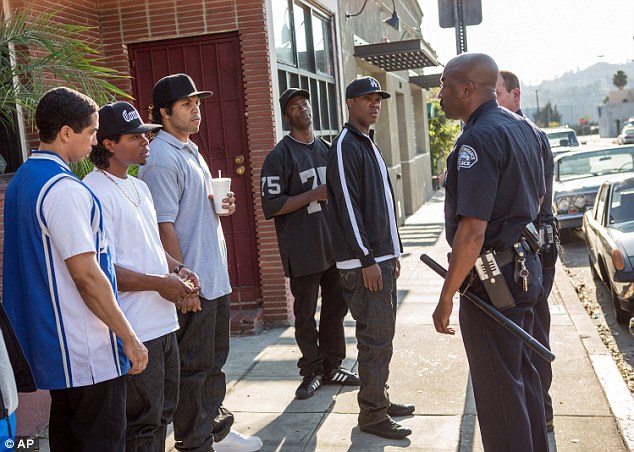
There are scenes of undisputed power, too. N.W.A. take a break from recording their debut album and are standing on the sidewalk, eating and talking. Police cruisers pull up and start insulting and harrassing them, forcing them to lie down (note that the officer telling them to do so is black). They don’t get arrested, but return to the studio and write Fuck Tha Police, their most famous track. If it’s not true, then it’s very well invented.

I accept that N.W.A. started a rap band, not a social movement, but some scenes are tinged with an atmosphere of those good old times that jar with the concert clips or the moments when Suge Knight takes his security job way too seriously. Why does their white manager (Paul Giamatti) start to cry when confronted with syphoning off money? Why isn’t mysogyny adressed properly? Eazy-E died of Aids, after all, caused by his womanizing. If you’re doing a biopic of the most dangerous group in the world, you need to go out there and let at least some of that shine through.

Double trouble

The One I Love, directed by first-timer Charlie McDowell and starring Mark Duplass and Elisabeth Moss, is a neat little Twilight Zone-style examination of Sophie and Ethan, a couple in their 30s trying to rekindle that original spark. When their couples therapist sends them to a secluded vacation home, they find that the adjacent guest house seems to accommodate uncanny doppelgängers: an Ethan who has cooler hair, doesn’t wear glasses, works out and does a much better job of taking Sophie and her frustrations with the marriage seriously, whereas the other Sophie doesn’t resent Ethan for his past infidelity, doesn’t nag and cooks a mean scrambled eggs and bacon for breakfast. Is this just the thing that their marriage needs, a reminder of who they fell in love with? Or is something else going on, something more ominous?

The One I Love

Continue reading →

Don’t let it follow you

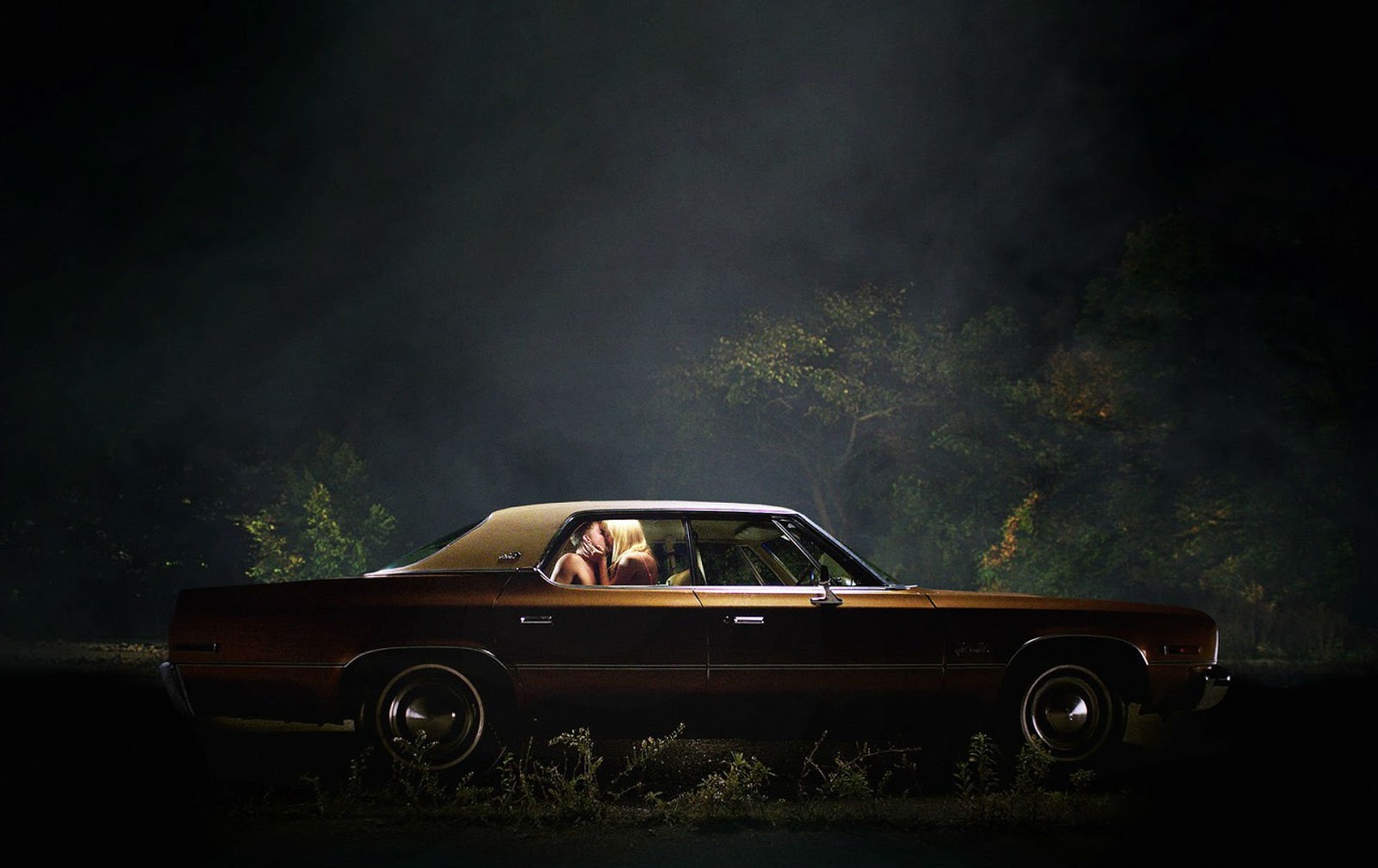
It Follows is a very effective horror flick because it follows (ha!) an old tradition that has been set up by classic flicks such as Halloween and Friday the 13th. All of them tell a story of sexual guilt. If you are a virgin, you survive; if you have sex, you die. Like Halloween, it is set mainly in suburbia. It Follows has found a new way to scare the hell out of sexually active teenagers.

it-follows-2-1427212209

Whereas the older two classics were whodunits, It Follows shows us teenagers who are being followed by an evil force inhabiting seemingly random persons. That evil force is passed on by intercourse. Jay, the female protagonist, makes the mistake of sleeping with Hugh, who is being followed, and now Jay is being followed by random persons, too. See how the title is one huge spoiler?

It-Follows-1-620x400

Those random persons can be complete strangers, but sometimes they are someone close to you. Just watch out for persons walking straight towards you, oblivious to their surroundings. Only Jay can see them. There are only two ways of escape: you either move faster than them, which means being on the road most of the time for the rest of your life, or you can sleep with someone and pass on the curse. Not really much of a choice. Imagine you’re a teenager: what would you do?

639b74f30f55702995d2aa4017a761c7

I rented this flick because I was looking for a good horror movie, pissed off that The Babadook only played in synchronized German around here, and because I missed Goodbye Mommy at the theatres. It Follows is not at all a bad substitute. Jay’s sister and friends are smart about her dilemma, and instead of going off alone into the woods with a broken flashlight, they stay together and try to figure out the phenomenon and devise a solution. They quote Dostoevsky and T. S. Eliot. Jay consults Hugh for finding a way out instead of yelling at him. There are no boo moments where someone or something jumps into the frame for a cheap scare. The followers mostly appear from quite a long way away, and that is scarier than it actually sounds here.

it-follows-tv-spot-story-

The faces are new and fresh, and they all can act. It Follows takes teenagers seriously. David Robert Mitchell, the director, also made The Myth of the American Sleepover, not a horror movie, but a drama, that also knows a lot about teenagers. He tells his story in a straightforward manner. It Follows refuses to be a CGI fest with shadows and spectres; instead, it opens with a scene that hooks you by its weirdness, but makes perfect sense later. There is only some gore. The horror is in the fact that only Jay can see the followers, whereas her friends cannot. They stick with her all the same. That makes the horror survivable. How many times have you yelled at the screen for the group of friends to stick together and don’t split up and don’t ever, ever go into the basement? This time around, the characters in the movie are smarter than the average audience.

They create worlds: Fez

One of the things that video games can do magnificently is create worlds. These posts are an occasional exploration of games that I love because of where they take me.

I love exploration in games. I love it when developers create virtual worlds that hint at a story about its history and inhabitants: the shack in the wilderness with the single plate on the table and the gravestone in the back garden; the eerie, sparsely lit alleys with people whispering for you to go away and leave them alone; the ornate mansions with their ostentatious displays of wealth and the secret compartment hidden behind the owner’s portrait; the desolate, windy  good at creating memorable characters, but their biggest strength for me lies in creating places.

Continue reading →

The Prisoners’ Dilemma

I like the idea of Paolo and Vittorio Taviani’s 2012 film Cesare Deve Morire (Caesar Must Die) a lot: a group of inmates at a high-security prison in Rome, all former drug criminals, mafiosos and murderers, portray themselves rehearsing for a production of William Shakespeare’s Julius Caesar. The boundaries between reality and fiction are dissolved, as everything is a performance of some sort to one audience or another.

Caesar Must Die Continue reading →

Longing for that paper moon

For all the imagination that goes into creating new worlds and fantastic creatures on screen, film and TV are predominantly beholden to naturalism. For these media, suspension of disbelief means being able to accept wholeheartedly what is on screen as real, at least for the purpose of the story you’re watching. Directors, VFX crews and CGI artists need to keep happy the twin deities of Spectacle and Realism: that dragon, that lizard the size of a building, that planet that no one has ever set foot on, they all need to fool us into believing that they are real.

Infinithéâtre's Kafka's ApeI am not immune to the lure of big screen spectacle, and I like a well made special effect as much as the next geek. I too get pulled out of a film if the greenscreen fakery is too obvious, if the orcs, goblins or giant worms look like My First Photoshop. At the same time, there is something limiting to the extent to which we’re conditioned to expect a narrow, superficial expression of naturalism. There is something liberating to forms that are overtly unreal: even at their most real-seeming the animated worlds of, say, Hayao Miyazaki are made rather than found, and the audience is aware of this, whereas the Pandora of James Cameron’s Avatar needs to look as much as possible as if Cameron and his crew had filmed on location. And the more what we see is removed from the Real Thing (or the Convincing Fake), the more we as audiences are tasked with co-creating these worlds in our imagination. Continue reading →

They create worlds: Grand Theft Auto

One of the things that video games can do magnificently is create worlds. These posts are an occasional exploration of games that I love because of where they take me.

Rockstar Games’ Grand Theft Auto series has received a lot of flak, from all sides of the political and ideological spectrum. They aspire to being The Great American Satire, and sometimes they achieve moments of wit and insight, but while they’re great games, all too often as cultural critique they resort to lazy, crass caricature that says little more than, “America, huh?”

iAxXlG-dCEaUueypHMWaXg_0_0_recut Continue reading →

Better Holmes and Gardens

The British have perfected a certain kind of movie. They are tasteful, well-wrought, polite, but utterly unexciting. At best they are charming due to their cast – The King’s Speech comes to mind, which mainly works because of Colin Firth and Geoffrey Rush – but at worst they’re lukewarm and somewhat boring, expecting nothing from their audiences and going out of their way not to challenge them.

Mr HolmesMr Holmes is a prime example of such a film. It’s nicely shot, the script is well crafted and inoffensive, it all smacks of a certain middle-of-the-road blandness. Unless you’re into bucolic idylls, there is little about the movie that is memorable – with one major caveat: the central performance by Ian McKellen is a thing of beauty. Continue reading →